
No products in the cart.
 By
Black Canvas Studio
By
Black Canvas Studio
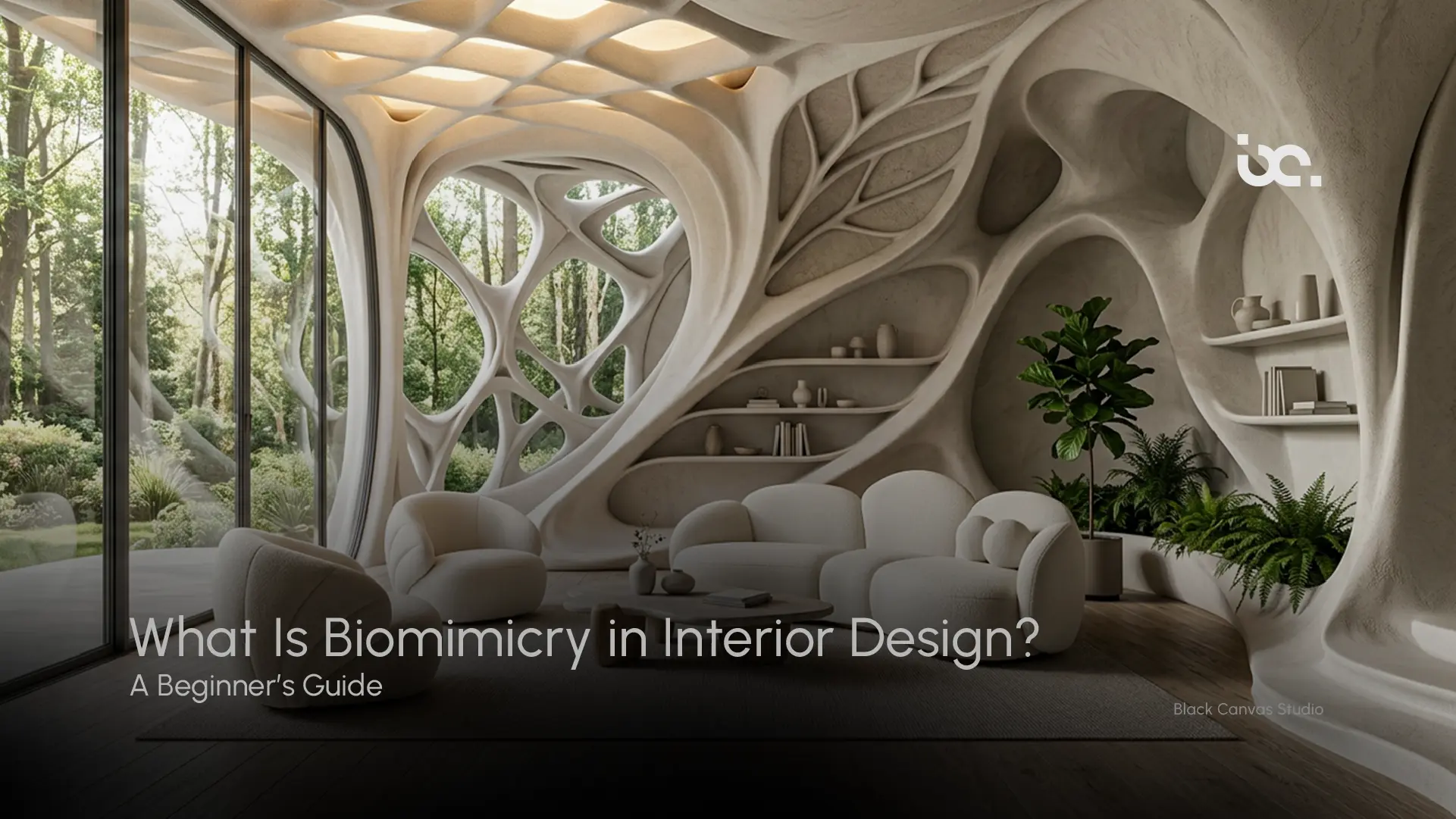
Interior design has always borrowed inspiration from art, culture, and technology. Yet the most timeless source of innovation has existed long before architecture or furniture design ever did — nature itself. From the graceful curves of seashells to the intelligent structure of honeycombs, nature has spent millions of years perfecting forms that are both functional and beautiful.
This philosophy forms the foundation of Biomimicry in Interior Design, a transformative approach where designers study nature’s patterns, structures, and processes to create interiors that are elegant, sustainable, and deeply connected to the natural world.
As the design industry evolves toward sustainability and experiential luxury, biomimicry has emerged as one of the most sophisticated and forward-thinking design philosophies. In India, Blackcanvas Studio has pioneered this movement by introducing biomimicry-driven interior elements and Sculptural Luxury Lighting Collections that transform spaces into living expressions of nature-inspired art.
This guide explores the essence of biomimicry, its principles, benefits, and how it is shaping the future of luxury interiors.
Biomimicry in Interior Design refers to the practice of studying natural forms, patterns, and systems and translating them into interior architecture, furniture, materials, and lighting design.
The word biomimicry comes from the Greek words:
However, biomimicry goes far beyond simple imitation. It is not merely decorating a space with plants or nature-themed colors. Instead, it involves understanding how nature solves problems and applying those solutions to design.
For example:
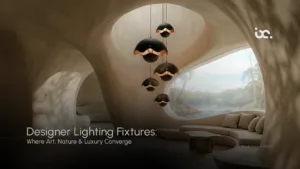
In luxury interiors, biomimicry often manifests through Sculptural Lighting Design, where organic forms resemble blooming flowers, flowing water, or branching trees. These pieces act not just as lighting elements but as artistic statements within a space.
At the forefront of this movement, Blackcanvas Studio, India’s first biomimicry design studio, crafts lighting and décor pieces that bring the intelligence and elegance of nature into modern living spaces.
Biomimicry is guided by three core philosophical principles that help designers interpret nature’s intelligence in meaningful ways.
In this principle, designers study natural forms, processes, and systems and translate them into design solutions.
Nature has perfected countless functional forms through evolution. By observing these structures, designers discover solutions that are both efficient and aesthetically compelling.
For example:
These ideas are not decorative coincidences. They are functional translations of nature’s engineering.
At Blackcanvas Studio, many Sculptural Lighting Design pieces take inspiration from botanical structures, marine formations, and natural movement, turning lighting into immersive art.
Nature operates through systems that are inherently sustainable and efficient. In biomimicry design, nature becomes the standard against which design solutions are measured.
This means asking critical questions such as:
Nature produces no unnecessary waste, and biomimicry design strives to follow that principle.
For instance, biomimetic lighting fixtures may use:
When applied thoughtfully, Biomimicry Lighting Design allows designers to create luxurious yet environmentally conscious interiors.
The third principle shifts the designer’s mindset.
Instead of controlling nature, designers learn from nature.
Nature becomes a teacher that demonstrates:
When designers adopt this mindset, interiors become harmonious ecosystems rather than purely decorative environments.
At Blackcanvas Studio, this philosophy guides the creation of Sculptural Luxury Lighting Collections, where every piece reflects a deep observation of natural structures and movement.
The rise of biomimicry in design is not just an aesthetic trend. It offers profound benefits that influence sustainability, human well-being, and spatial experience.
One of the greatest advantages of Biomimicry in Interior Design is its strong alignment with sustainable design practices.
Nature thrives through cycles of regeneration, efficiency, and minimal waste. When designers adopt these principles, interiors naturally become more sustainable.
Examples include:
Luxury design no longer needs to be environmentally harmful. Biomimicry demonstrates that sustainability and elegance can coexist beautifully.
Humans have an innate connection to nature, often referred to as biophilia.
Spaces that incorporate natural forms, textures, and patterns can have measurable psychological benefits, including:
Biomimicry-based interiors subtly evoke the calming influence of natural landscapes.
For example, a Table Lamp inspired by flowing petals or organic curves can soften a room’s atmosphere, creating a sense of calm and harmony.
Natural systems are remarkably efficient. By studying these systems, designers can create interiors that reduce energy usage.
Examples include:
Through Biomimicry Lighting Design, modern interiors can achieve both visual sophistication and energy efficiency.
Perhaps the most striking benefit of biomimicry is its distinctive visual language.
Nature rarely creates straight lines or repetitive forms. Instead, it produces organic curves, flowing geometries, and intricate textures.
These elements translate into interiors that feel:
This is why Sculptural Lighting Design has become such an important aspect of biomimetic interiors. Lighting fixtures inspired by natural forms transform rooms into immersive artistic environments.
Blackcanvas Studio’s Sculptural Luxury Lighting Collections exemplify this philosophy by merging art, nature, and illumination into breathtaking design pieces.
Designers today are exploring biomimicry across multiple interior elements, creating spaces that feel both futuristic and deeply natural.
Lighting is one of the most powerful expressions of biomimicry.
Natural elements like:
often inspire Sculptural Lighting Design.
These pieces create dramatic lighting effects while serving as artistic focal points in luxury interiors.
At Blackcanvas Studio, Biomimicry Lighting Design transforms lighting into a sensory experience where form, shadow, and illumination interact organically.
Traditional furniture often relies on rigid geometry. Biomimicry introduces fluid, organic shapes that mimic natural growth patterns.
Examples include:
These designs create spaces that feel alive and dynamic.
Biomimicry also influences the materials used in interiors.
Designers explore materials that replicate natural performance, such as:
These materials enhance both sustainability and tactile richness.
Architectural biomimicry also influences airflow and ventilation systems.
For instance, termite mounds regulate temperature through complex internal structures. This concept has inspired ventilation strategies that reduce the need for artificial cooling.
Such biomimetic approaches create interiors that are energy-efficient and environmentally responsive.
Biomimicry has already influenced some of the most innovative architectural and interior projects worldwide.
Examples include:
In interiors, biomimicry is most visible through lighting and sculptural décor, where natural forms are translated into functional art.
India’s design landscape is now embracing this philosophy, and Blackcanvas Studio stands at the forefront with its biomimicry-based lighting installations and sculptural design pieces.
The future of interior design is increasingly shaped by three powerful trends:
Biomimicry sits at the intersection of all three.
As technology advances, designers will be able to study natural systems with greater precision, translating them into intelligent materials, adaptive lighting, and responsive architecture.
Future interiors may feature:
In this evolving landscape, biomimicry will define the next generation of luxury design.
Studios like Blackcanvas Studio are already shaping this future by creating Sculptural Luxury Lighting Collections that merge scientific inspiration with artistic craftsmanship.
Biomimicry in Interior Design represents one of the most exciting and meaningful directions in contemporary design.
By studying nature’s intelligence, designers can create interiors that are not only visually stunning but also sustainable, efficient, and emotionally enriching.
From organic furniture forms to innovative ventilation systems and Biomimicry Lighting Design, this philosophy transforms spaces into living reflections of the natural world.
In India, Blackcanvas Studio has emerged as a pioneer in this field. As the country’s first biomimicry design studio, it brings the elegance of nature into interiors through breathtaking Sculptural Lighting Design and exclusive Sculptural Luxury Lighting Collections.
The result is more than just interior decoration — it is a harmonious dialogue between nature, art, and human living spaces.
Biomimicry in Interior Design is a design approach where natural forms, patterns, and systems inspire interior elements such as furniture, lighting, materials, and architectural features.
Common examples include:
Biomimicry helps create interiors that are sustainable, efficient, and visually unique. It also improves well-being by incorporating natural forms that humans instinctively find calming and inspiring.
Yes. Many modern architects and designers use biomimicry to create energy-efficient buildings, innovative materials, and nature-inspired interiors that combine functionality with aesthetic appeal.
Biomimicry is applied through elements such as:
Studios like Blackcanvas Studio integrate these principles into Sculptural Luxury Lighting Collections, bringing nature’s elegance into contemporary interiors.
Experience radiant guidance tailored to your unique vision.