No products in the cart.

Interior design is often described through the language of light. We talk about brightness, warmth, fixtures, and illumination, carefully choosing how a room should glow at different times of the day. Yet there is another element quietly shaping every interior: shadow.
Shadow is not simply the absence of light. It creates contrast, reveals form, defines boundaries, and gives architecture a sense of character.
A beautifully illuminated room can still feel flat if every surface is evenly lit. Introduce carefully considered darkness, however, and suddenly the same space can feel layered, intimate, and remarkably sophisticated.
This is where shadow lighting design becomes especially important. By understanding how light interacts with surfaces, materials, furniture, and architecture, designers can use both illumination and darkness to create interiors with greater visual depth and atmosphere.
Imagine a room where every corner is equally bright. Nothing is technically wrong, but the eye has little reason to pause. There is no hierarchy, mystery, or contrast. Shadows change that experience.
They can draw attention towards a sculptural staircase, emphasise the texture of a stone wall, or create a quiet sense of enclosure around a seating area. Rather than making a room feel darker for the sake of darkness, thoughtful shadow design gives light something to work against.
The result can be:
In refined interiors, the most memorable moments are often created by the relationship between what is illuminated and what is deliberately left understated.
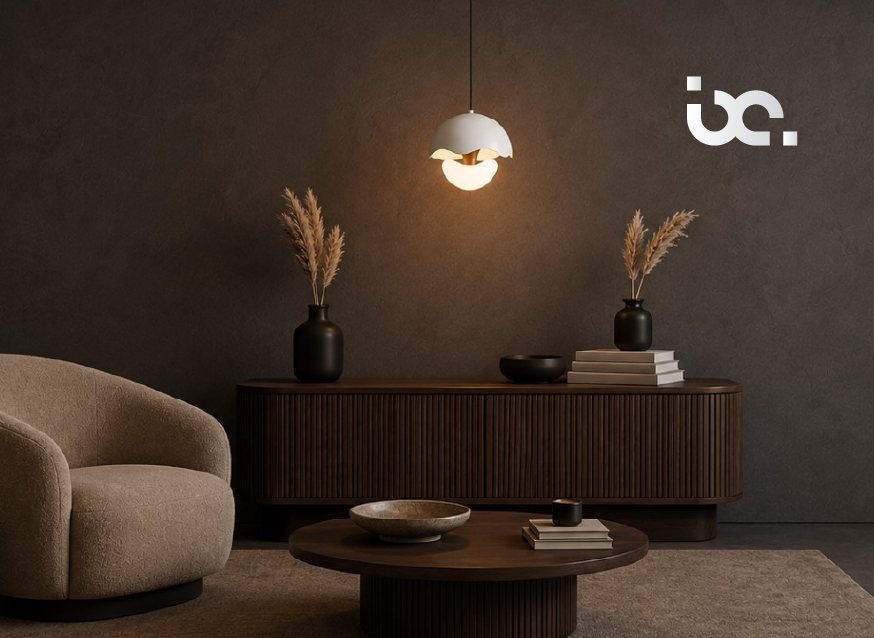
Light and shadow work as a pair. One defines the other.
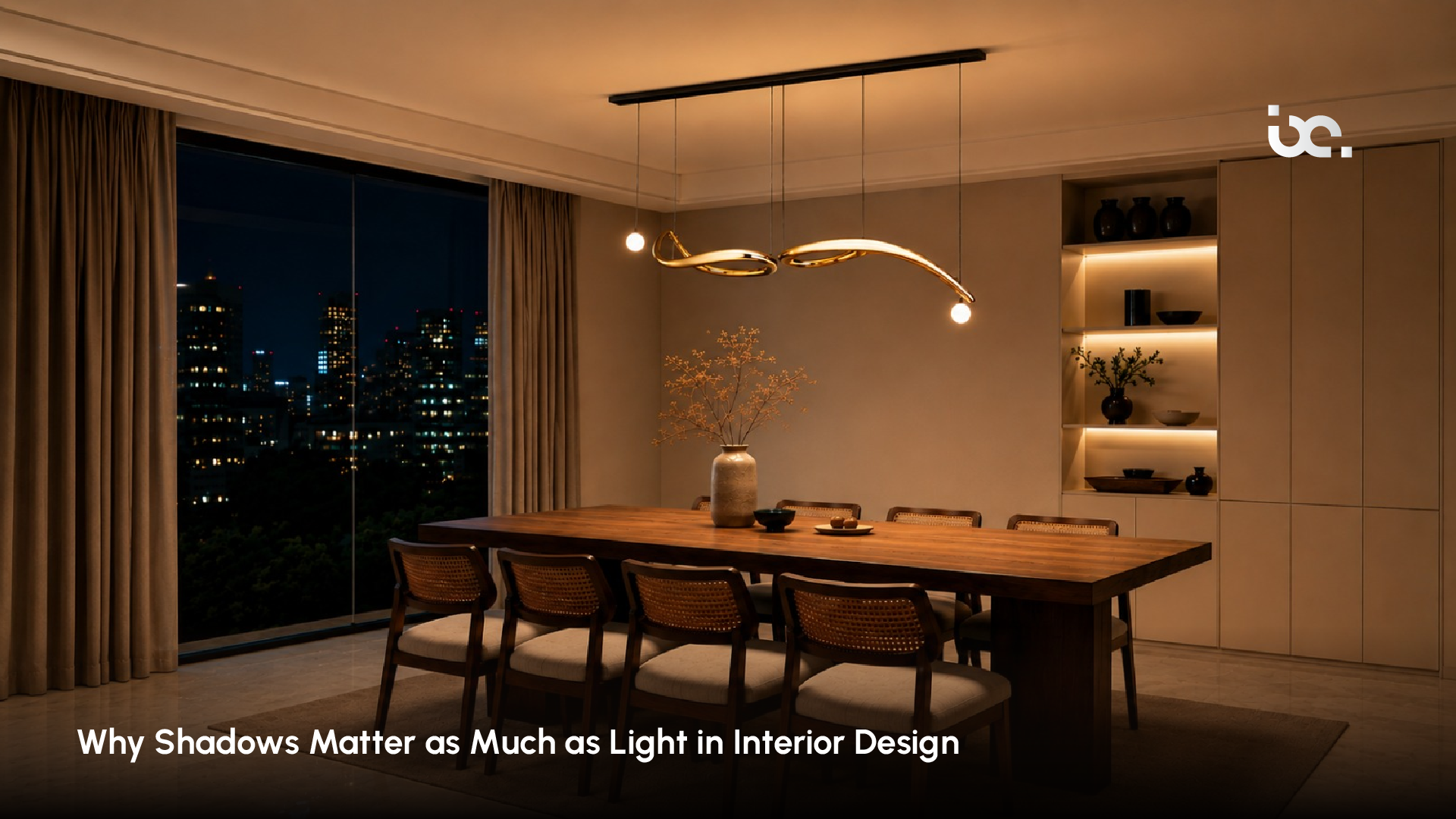
A focused light source can reveal the curve of a chair while allowing the surrounding wall to recede gently into darkness. A pendant positioned above a dining table can create a pool of illumination that makes the table feel like the centre of the room. Wall lighting can highlight artwork while leaving neighbouring surfaces softly shaded.
This balance is particularly important when planning ambient lighting. Rather than flooding an entire room with equal brightness, designers can establish a general level of illumination and then introduce carefully positioned sources for emphasis.
The objective is not maximum brightness. It is visual balance.
Architecture naturally creates shadows. Recessed ceilings, deep window frames, textured walls, niches, columns, beams, and projecting surfaces all interact with daylight and artificial illumination. These architectural shadows can become part of the design language.
For example, a recessed wall niche illuminated from within can create a subtle contrast between the object on display and the darker surrounding surface. Similarly, concealed lighting beneath a floating staircase can emphasise its form without exposing the light source itself. Architectural shadows can help:
Instead of attempting to eliminate every shadow, designers can use existing architectural conditions to create visual interest.
Visual depth is essential in interiors that are intended to feel layered and sophisticated. Without contrast, materials and forms can blend together.
Consider a room with a pale stone wall, sculptural furniture, and warm timber details. If everything is illuminated equally, the individual textures may lose their distinction. Carefully positioned light can create subtle shadows across the stone and beneath the furniture, allowing each element to retain its identity.
This principle works particularly well in neutral interiors, where colour may be intentionally restrained. Shadows introduce variation without requiring additional decoration. That is one reason they are so effective in elegant spaces: they add complexity without adding clutter.
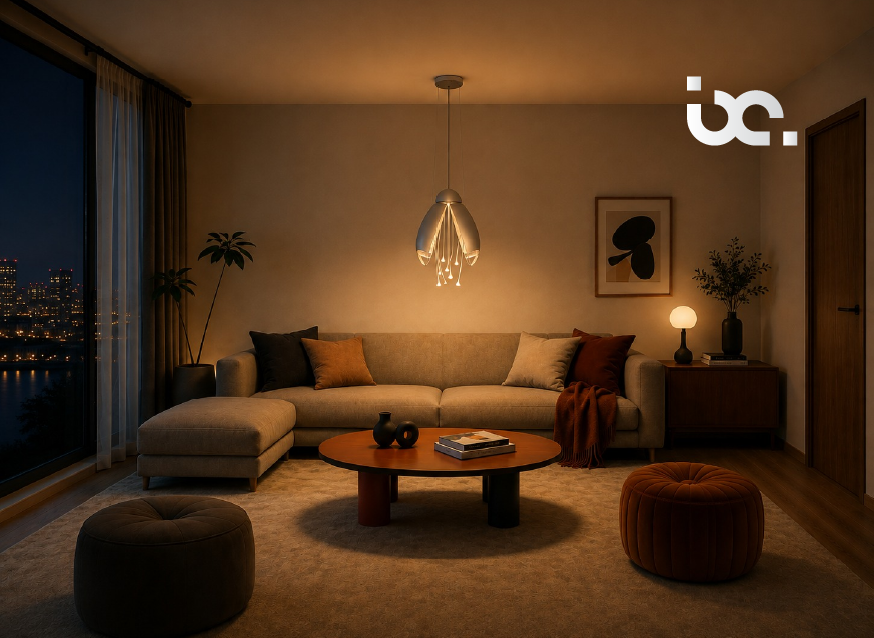
Materials respond differently to light. Marble can reveal veining, timber can display its grain, textured plaster can produce delicate gradients, and brushed metal can shift dramatically depending on the direction of illumination. Shadow lighting design allows these characteristics to become more visible.
Grazing light, for instance, can be positioned close to a textured wall so that small surface variations cast shadows. Instead of simply illuminating the wall, the light reveals its tactile quality. This approach is particularly effective with:
The right combination of illumination and shadow can make materials feel richer and more dimensional.
Mood lighting is often associated with warm colour temperatures, and understandably so. Warm light can create a welcoming and intimate environment. But mood is also shaped by where light falls and where it does not.
A softly illuminated reading corner surrounded by darker surfaces can feel considerably more intimate than the same corner under uniform overhead lighting. Similarly, a dining room with concentrated illumination over the table can create a sense of occasion while allowing the rest of the room to remain understated.
Different shadow patterns can create different emotional qualities:
The best mood lighting considers both brightness and darkness.
In open-plan interiors, lighting can help establish separate zones without physical partitions.
A kitchen, dining area, lounge, and reading corner may share one large room, but different lighting levels can give each area its own identity.
For example:
The darker spaces between these zones help reinforce the distinction. In this way, shadow becomes an invisible architectural tool.
Luxury interiors rarely depend on excessive visual noise. Their elegance often comes from restraint, proportion, material quality, and carefully controlled details. Lighting follows the same principle.
A concealed strip of light beneath a cabinet can be more sophisticated than a highly visible fixture. A softly lit artwork surrounded by shadow can feel more important than a wall covered in evenly distributed illumination.
This is where shadow becomes particularly valuable. It allows certain elements to remain quiet while others receive attention. Not everything needs to announce itself.
Although shadows can enhance an interior, they should still be intentional. Poorly positioned lighting can create uncomfortable glare, awkward facial shadows, or areas that feel unintentionally neglected.
Common mistakes include:
A layered lighting plan can prevent these issues by combining ambient, task, and accent sources.
The most successful approach is to consider shadow from the beginning of the design process rather than adding it as an afterthought.
Before selecting fixtures, consider:
These questions help create a lighting scheme that feels integrated with the architecture rather than simply installed within it.
Light may reveal an interior, but shadow gives it depth, rhythm, and character. When thoughtfully considered, shadows can transform plain surfaces into textured compositions, architectural details into focal points, and ordinary rooms into atmospheric experiences.
From ambient lighting and architectural shadows to carefully controlled mood lighting, every layer contributes to the way a space feels. Shadow lighting design is therefore not about making interiors darker. It is about creating contrast with intention.
The most elegant interiors understand that illumination is only half of the composition. The other half exists quietly beside it, shaping what we see, what we notice, and sometimes, what we are invited to imagine.
Shadow lighting design is the intentional use of light and darkness to create contrast, emphasise architectural features, enhance textures, and shape the atmosphere of an interior.
Yes. Ambient lighting establishes general illumination, while carefully controlled shadows prevent the space from appearing flat or overly uniform.
Shadows create contrast between surfaces, objects, and architectural elements. This difference helps separate layers within a room and makes spaces appear more dimensional.
Absolutely. Minimalist interiors can benefit greatly from subtle shadows because they introduce visual interest without adding unnecessary decorative elements.
As daylight changes throughout the day, the direction and intensity of shadows also change. This creates a dynamic quality that can make an interior feel naturally connected to its surroundings.
Experience radiant guidance tailored to your unique vision.