No products in the cart.

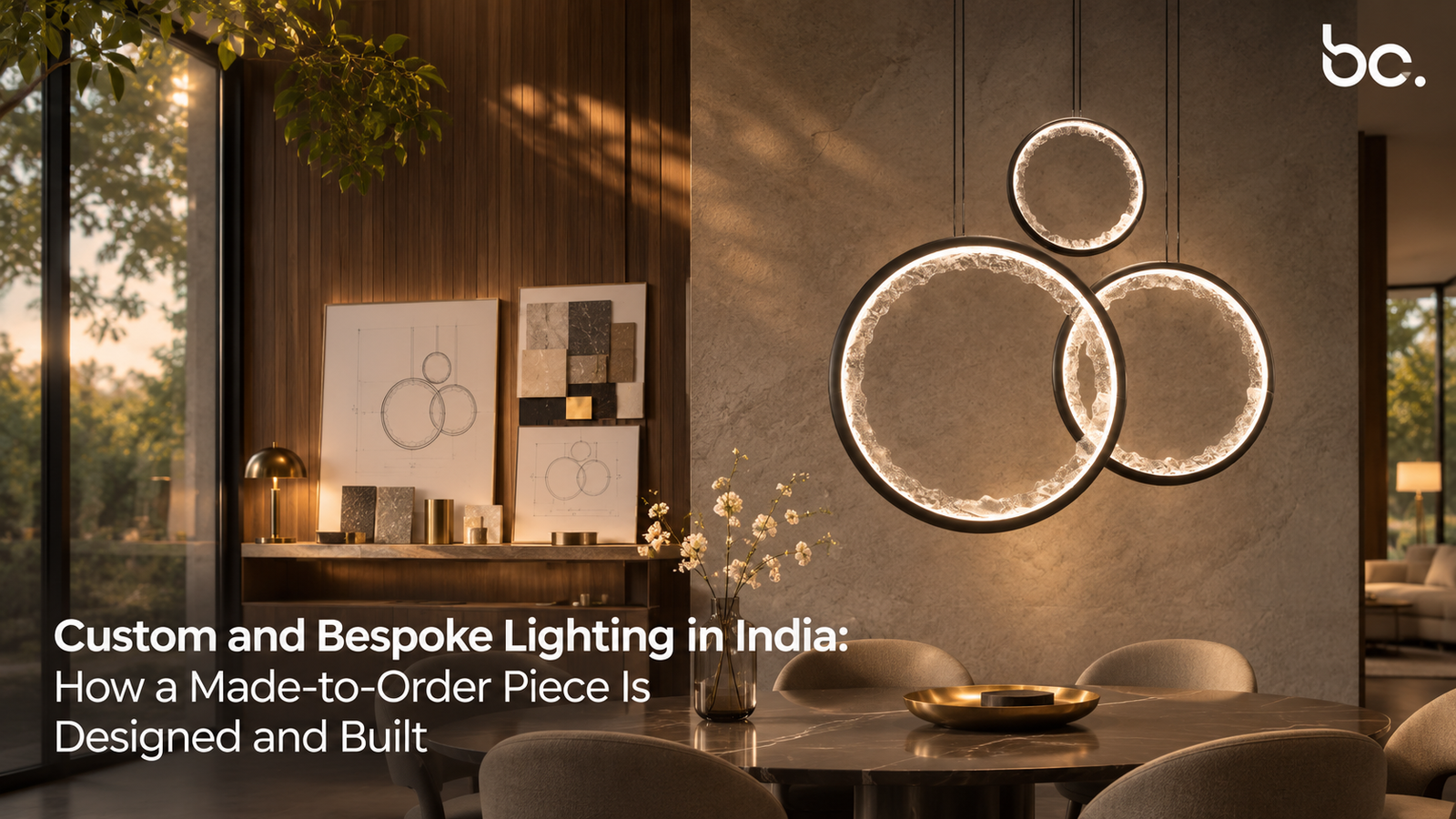
Lighting can do far more than illuminate a room. A carefully designed fixture can become a defining architectural feature, introduce a distinctive material into an interior, or create an atmosphere that feels personal and unmistakably refined. In luxury interiors, lighting is often treated as an object of design in its own right.
This is where custom lighting becomes particularly meaningful. Rather than selecting a fixture from a standard catalogue, homeowners, architects and interior designers can collaborate with a studio to create something shaped around the space, aesthetic and individual preferences.
A custom chandelier, for instance, may be designed to complement a particular ceiling height, dining table, architectural feature or interior palette. Its proportions, materials, finish and illumination can all be considered together.
In India, made-to-order lighting offers an opportunity to combine contemporary design with traditional craftsmanship, distinctive materials and specialised production techniques. Understanding how these pieces are designed and built helps clients appreciate both the creative process and the attention to detail involved.
Custom lighting refers to fixtures developed according to specific project requirements rather than selected entirely from ready-made designs. Bespoke lighting takes this approach further by placing individual preferences, architectural context and craftsmanship at the centre of the design.
The terms are often used interchangeably, although bespoke lighting is commonly associated with a highly personalised design process.
A made-to-order piece may involve modifications to an existing concept or the development of an entirely new fixture. Depending on the project, the customisation may include:
The objective is not simply to create something unusual. It is to develop a fixture that feels naturally connected to its surroundings while retaining its own character.
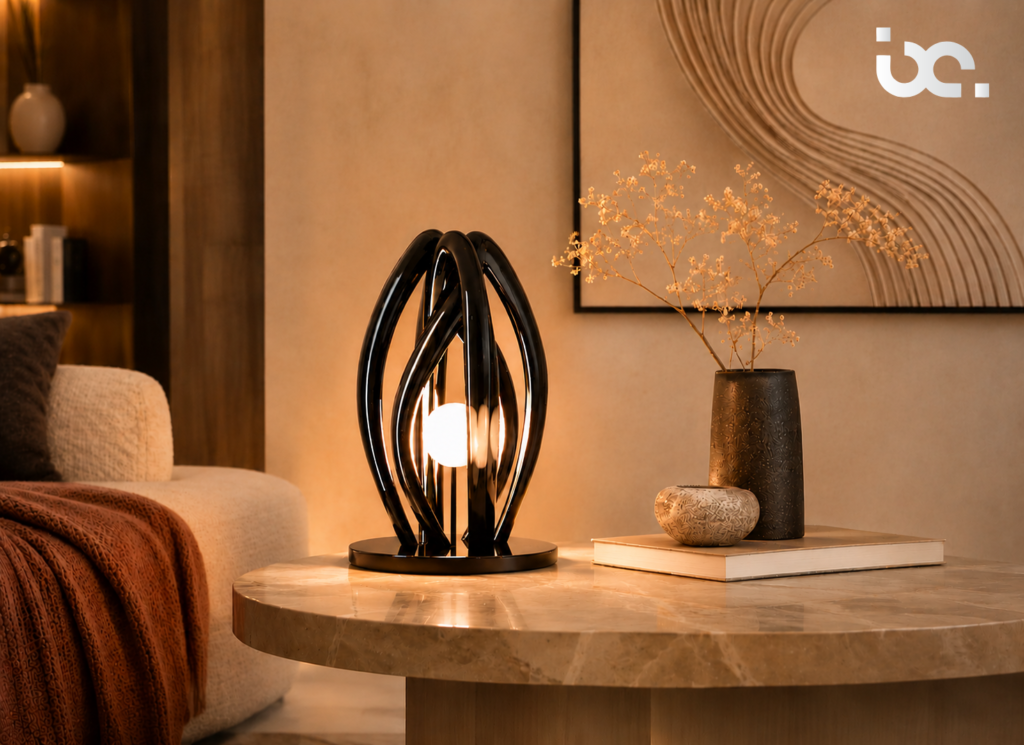
Every successful custom lighting design begins with understanding the environment in which the fixture will exist.
A lighting studio typically starts by discussing the project with the client, architect or interior designer. This conversation establishes the desired aesthetic, functional requirements and practical limitations.
For example, a chandelier intended for a double-height entrance will have very different requirements from a pendant designed for an intimate dining area. The first may need considerable scale and visual presence, while the second should create an inviting atmosphere without overwhelming the table.
During the initial consultation, the studio may consider:
Reference images, sketches and existing interior drawings can help communicate the client’s expectations.
This stage establishes a clear creative direction and ensures that the final piece is designed for the actual space rather than simply admired as an isolated object.
Once the brief is understood, the designer begins translating the client’s ideas into a visual concept.
This may involve hand-drawn sketches, digital illustrations, mood boards or preliminary three-dimensional models. The purpose is to explore the fixture’s form, proportions and relationship with the surrounding architecture.
A custom chandelier might take inspiration from sculptural forms, natural elements, geometric patterns, contemporary minimalism or traditional Indian craftsmanship.
The concept development stage often explores:
The outline of a fixture determines much of its visual identity. A linear chandelier may suit a long dining table, while a circular or cascading arrangement may work beautifully in a foyer.
The fixture should feel appropriate to the room. An oversized piece can create drama in a generous space, but may appear intrusive in a smaller setting.
Some clients prefer lighting that becomes the centrepiece of a room. Others want a discreet design that complements the architecture without drawing excessive attention.
The fixture should work with the furniture, flooring, wall finishes and decorative elements. A design that looks beautiful in isolation may not feel harmonious within the completed interior.
The strongest concepts balance individuality with a sense of belonging.
Material selection is one of the most important aspects of bespoke lighting. It influences not only the appearance of the fixture but also its weight, durability, maintenance and interaction with light.
Depending on the design, a studio may explore:
Each material introduces a different visual and tactile quality.
Brass can create warmth and a sense of permanence. Glass offers transparency, reflection and visual lightness. Textured materials may produce subtle shadows, while polished surfaces can add sparkle and depth.
In handmade lights India, material selection may also involve working with specialist artisans and workshops. Traditional metalworking, glass techniques and decorative craftsmanship can contribute distinctive character to a contemporary design.
The studio must consider how the materials will behave under illumination. A finish that appears attractive in daylight may look different when illuminated at night. Samples and finish tests can help establish the intended result before production begins.
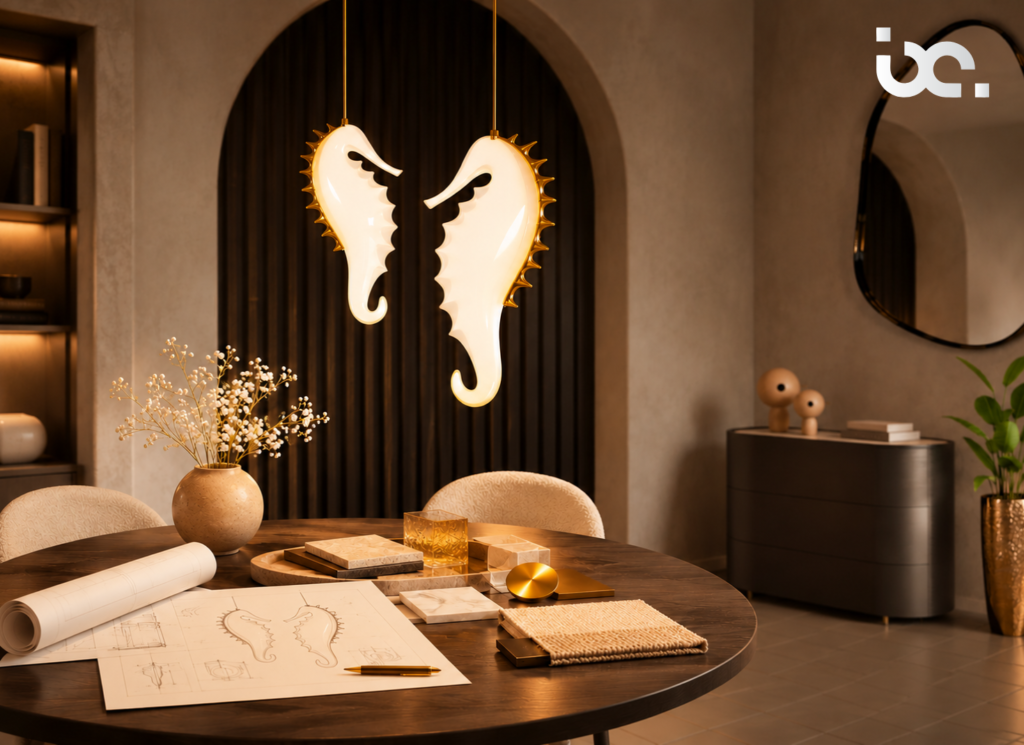
After the concept and materials are approved, the design moves into technical development.
This stage transforms the visual idea into information that manufacturers and craftspeople can use to build the fixture accurately.
Technical drawings may include:
For a custom made chandelier, dimensions are particularly important. The fixture must fit the intended location and maintain suitable clearance from furniture, circulation areas and other architectural elements.
The studio may also coordinate with architects, interior designers and electrical contractors to confirm ceiling support, wiring access and installation requirements.
A beautifully designed fixture must be structurally appropriate and practical to install. Technical detailing ensures that creative intent can be translated into a reliable finished object.
For more complex designs, a prototype or sample may be developed before full production.
A prototype allows the studio and client to assess the fixture’s appearance, scale, materials and construction. Depending on the design, this may be a partial sample, a full-scale mock-up or a representative component.
This stage can reveal details that are difficult to judge from drawings alone.
The review may consider:
Changes may be made before production begins. Adjusting a detail during the design stage is generally easier than altering a completed fixture.
Prototyping is particularly valuable when a piece includes unusual shapes, intricate components or multiple materials.
Once the design has been finalised, the fixture enters production.
This is where the concept becomes a physical object through a combination of technical processes and skilled craftsmanship. The exact methods depend on the materials, complexity and production capabilities of the workshop.
A made to order lighting piece may involve several processes:
Metal components may be cut, shaped, welded, formed or assembled according to the approved drawings.
Glass elements may be formed, cut, textured or finished using suitable techniques. Their dimensions and placement must align with the overall design.
Surfaces may undergo polishing, brushing, coating or other finishing processes to achieve the intended appearance.
Individual components are brought together, with attention to alignment, proportions and structural stability.
The completed fixture is reviewed for workmanship, finish consistency and conformity with the design specifications.
The production process may involve multiple specialists rather than a single artisan. This collaboration is especially important when a design combines metalwork, glass and electrical components.
The value of handmade lights India lies not merely in the fact that they are made by hand, but in the skill, precision and thoughtful execution behind each piece.
A bespoke fixture must perform as beautifully as it looks.
The designer considers the light source, brightness, colour temperature, light distribution and control requirements. These decisions influence how the fixture illuminates the space and how its materials appear.
For example, a chandelier designed for a dining room may require warm, comfortable illumination that supports relaxed evenings. A sculptural pendant may focus more on creating a visual effect than providing all the room’s ambient light.
Important considerations include:
Lighting technology should support the design rather than compromise it. The most successful pieces integrate the technical elements discreetly, allowing the form and craftsmanship to remain the focus.
Installation is the final stage of bringing a bespoke fixture into the home.
Because custom pieces may differ significantly in size, weight and construction, installation should be planned carefully. The studio, manufacturer and electrical contractor may coordinate to ensure that the mounting system and site conditions are suitable.
Before installation, the team should confirm:
After installation, the fixture should be reviewed in its intended environment.
The final assessment may include checking alignment, light distribution, dimming functionality and visual balance. Small adjustments to suspension height or positioning can make a meaningful difference to the finished result.
A chandelier that feels perfectly proportioned above a dining table or within a double-height foyer demonstrates the importance of considering the entire journey, from concept to installation.
Made-to-order lighting offers flexibility that standard fixtures may not provide. It allows a client to respond to the architecture, create a distinctive focal point and choose materials that complement the interior.
The advantages may include:
However, bespoke lighting requires planning. Production timelines may be longer than those for ready-made products, and the design process may involve additional consultation, approvals and coordination.
Clients should discuss the scope, costs, timeline, installation requirements and maintenance expectations before confirming an order.
Custom and bespoke lighting brings together design, craftsmanship and technical precision to create fixtures that are deeply connected to their surroundings. From understanding the client’s vision and developing the concept to selecting materials, building the piece and completing installation, every stage contributes to the final experience.
A custom chandelier is not simply a decorative purchase. It is a carefully developed design object that can reflect the architecture, personality and atmosphere of a home.
When the process is approached thoughtfully, made-to-order lighting offers something beyond visual distinction: a sense of permanence, individuality and considered elegance.
Custom lighting is developed or modified according to specific requirements. Bespoke lighting generally refers to a highly personalised design created around the client, space and project vision. The terms are often used interchangeably.
The timeline depends on the complexity of the design, materials, approvals and manufacturing process. A simple modification may take less time than a completely new design involving specialist craftsmanship. The studio should provide an estimated schedule before production.
It can be, as the cost may include design development, specialised materials, fabrication, craftsmanship and individual production. The final price depends on the scale, complexity and specifications of the piece.
Yes. Bespoke lighting can be created for existing homes as well as new projects. However, ceiling conditions, electrical infrastructure, mounting support and available space should be assessed before the design is finalised.
Maintenance depends on the materials and finish. Regular gentle cleaning, avoiding unsuitable chemicals and following the manufacturer’s care instructions can help preserve the fixture. Electrical maintenance should be handled by a qualified professional.