No products in the cart.

Few architectural features create an immediate sense of grandeur quite like a double-height space. A soaring ceiling can make a foyer feel ceremonial, a living room feel expansive, and a staircase feel almost sculptural.
Yet height alone does not create elegance. Without carefully considered illumination, a double-height room can feel cold, visually unbalanced, or surprisingly difficult to navigate after sunset.
This is where double height lighting becomes an important part of the architectural composition.
Lighting in a tall space has to work across several levels at once. It should illuminate the lower areas comfortably, draw attention towards the architecture, create visual rhythm, and make the height feel intentional rather than simply enormous.
For luxury residences, the most successful approach is rarely about installing one oversized fixture and calling the job finished. Instead, designers combine ambient, architectural, accent, and decorative lighting to create layers that work together.
A conventional room allows light to be installed relatively close to the areas where it is needed. Double-height architecture changes that relationship. The greater vertical distance can affect:
A fixture that looks substantial in a showroom may appear surprisingly small once suspended several metres above the floor.
Likewise, a bright light positioned incorrectly can create glare while leaving important areas below insufficiently illuminated.
Before selecting fixtures, study the architecture. Consider the room’s proportions, sightlines, windows, staircase position, wall finishes, furniture arrangement, and primary viewpoints.
A successful lighting plan should respond to these elements rather than compete with them. Ask:
These questions help determine whether lighting should emphasise height, width, texture, movement, or a particular architectural feature.
Layered illumination is especially effective in tall interiors. A refined scheme may combine:
Using these layers means the room does not depend on a single source of illumination. It also allows homeowners to change the atmosphere according to the occasion.
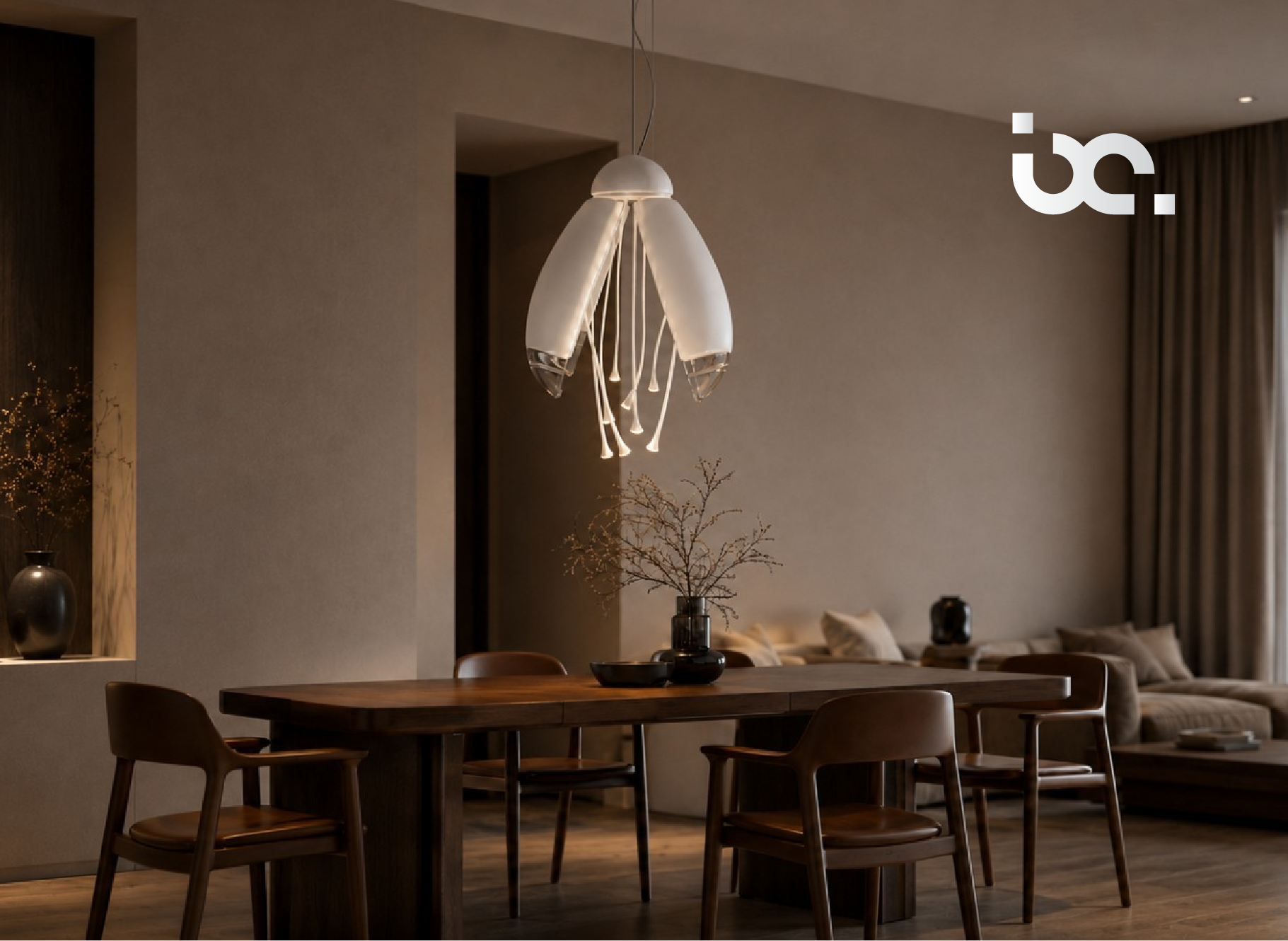
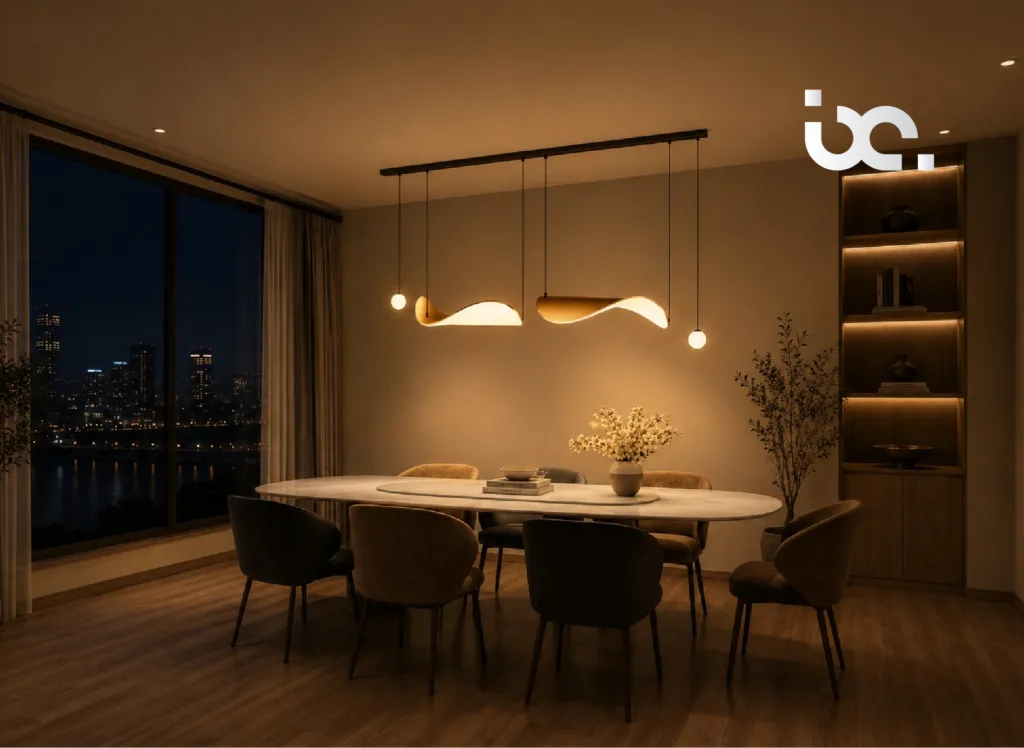
Few fixtures take advantage of height as beautifully as pendant lighting. In a double-height room, a carefully proportioned pendant can become a visual anchor. It draws the eye upwards and connects the upper volume with the living space below.
However, scale matters. A fixture that is too small can disappear within the architecture. One that is too large can dominate everything around it. When selecting a pendant, consider:
The most elegant result usually comes from a fixture that feels substantial without making the architecture feel secondary.
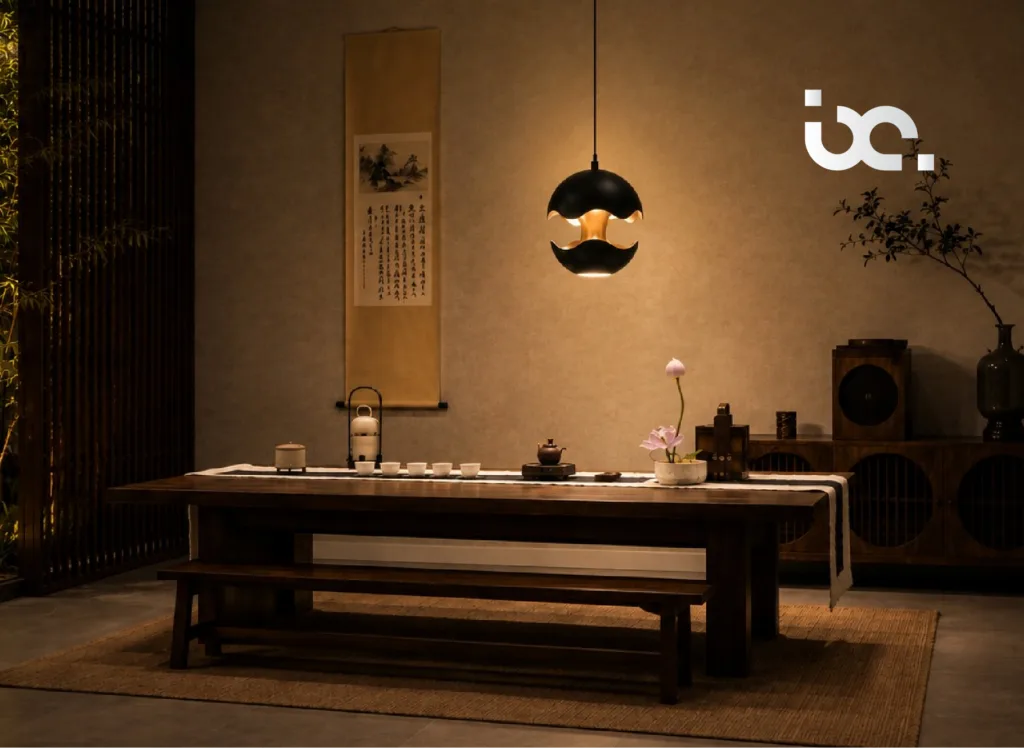
A double-height entrance deserves particular attention because it establishes the tone for the entire residence. Grand foyer lighting can create a memorable first impression while providing practical illumination for movement and arrival.
A sculptural pendant or chandelier can become the focal point, while concealed architectural lighting can softly illuminate surrounding walls. Wall lighting can also help prevent the foyer from feeling like an empty vertical shaft.
Warm illumination across textured surfaces, artwork, or architectural panels can make the entrance feel more welcoming. The aim is grandeur with warmth, not grandeur for its own sake.
A staircase within a double-height space is both functional infrastructure and architectural sculpture. Good staircase lighting should make movement safe while highlighting the geometry of the stairs. Options may include:
Combining discreet functional lighting with decorative illumination can create a sophisticated effect. A staircase should remain visually legible without becoming brightly overlit.
One common mistake in tall spaces is focusing exclusively on the ceiling. Walls matter just as much. Illuminating vertical surfaces can make the room feel more connected and balanced. Wall washing, grazing, and carefully positioned accent fixtures can reveal textures and architectural details. This is particularly effective when the walls feature:
The light becomes a tool for revealing material rather than merely illuminating the room.
In luxury architecture, lighting should respond to the quality of the materials. Marble, wood, metal, glass, and textured surfaces each react differently to illumination.
A glossy stone may require controlled lighting to prevent harsh reflections. Textured stone can benefit from grazing light that reveals its depth. Wood often responds beautifully to warm illumination. This makes material consideration essential when planning double height lighting.
A double-height room can easily feel impressive but impersonal. Warm, layered illumination can help soften this effect. The ideal colour temperature depends on the interior, materials, daylight, and intended mood. Residential spaces often benefit from warmer tones, particularly in living and entertaining areas.
However, consistency matters. Different fixtures should feel as though they belong to the same lighting composition rather than creating unrelated pockets of colour.
A spectacular fixture suspended several metres above the floor may look magnificent until someone has to clean it. Maintenance should therefore be considered during the design stage. Think about:
A beautiful lighting plan that is impossible to maintain is not quite as luxurious as it first appears.
Lighting controls allow double-height spaces to perform differently throughout the day. Separate circuits or scenes can be created for:
This flexibility prevents the room from being permanently tied to one level of brightness. A sophisticated system can make the same architecture feel intimate at night and bright and energetic during gatherings.
Several issues can reduce the impact of an otherwise beautiful double-height interior. Avoid:
Good design is often as much about restraint as it is about drama.
Double-height architecture offers extraordinary possibilities, but its scale needs thoughtful illumination. The most successful lighting schemes do not simply make a tall room brighter. They create relationships between floor, walls, ceiling, architecture, materials, and people.
Through carefully selected pendant lighting, discreet staircase lighting, considered grand foyer lighting, and layered architectural illumination, a soaring interior can become warm, elegant, and visually composed. For luxury architecture, this balance is particularly important. The lighting should enhance the scale without making the room feel overwhelming, reveal materials without exaggerating them, and provide drama without sacrificing comfort.
Ultimately, good spatial design allows architecture and light to speak the same language. And when they do, even a room with an exceptionally high ceiling can feel remarkably intimate.
Double height lighting refers to lighting designed specifically for spaces with significantly higher ceilings, using a combination of ambient, architectural, accent, and decorative illumination.
A layered approach generally works best. Pendant fixtures, architectural lighting, wall illumination, accent lights, and lower-level ambient lighting can work together.
Consider the ceiling height, room proportions, viewing distance, furniture scale, fixture dimensions, and suspension length before selecting a pendant.
Staircase lighting can improve safety while highlighting the geometry and architectural character of the staircase through step lights, concealed strips, sconces, or pendants.
Grand foyer lighting can combine a decorative central fixture with soft wall illumination, architectural lighting, and warm-toned ambient light.
Experience radiant guidance tailored to your unique vision.