No products in the cart.
 By
payal
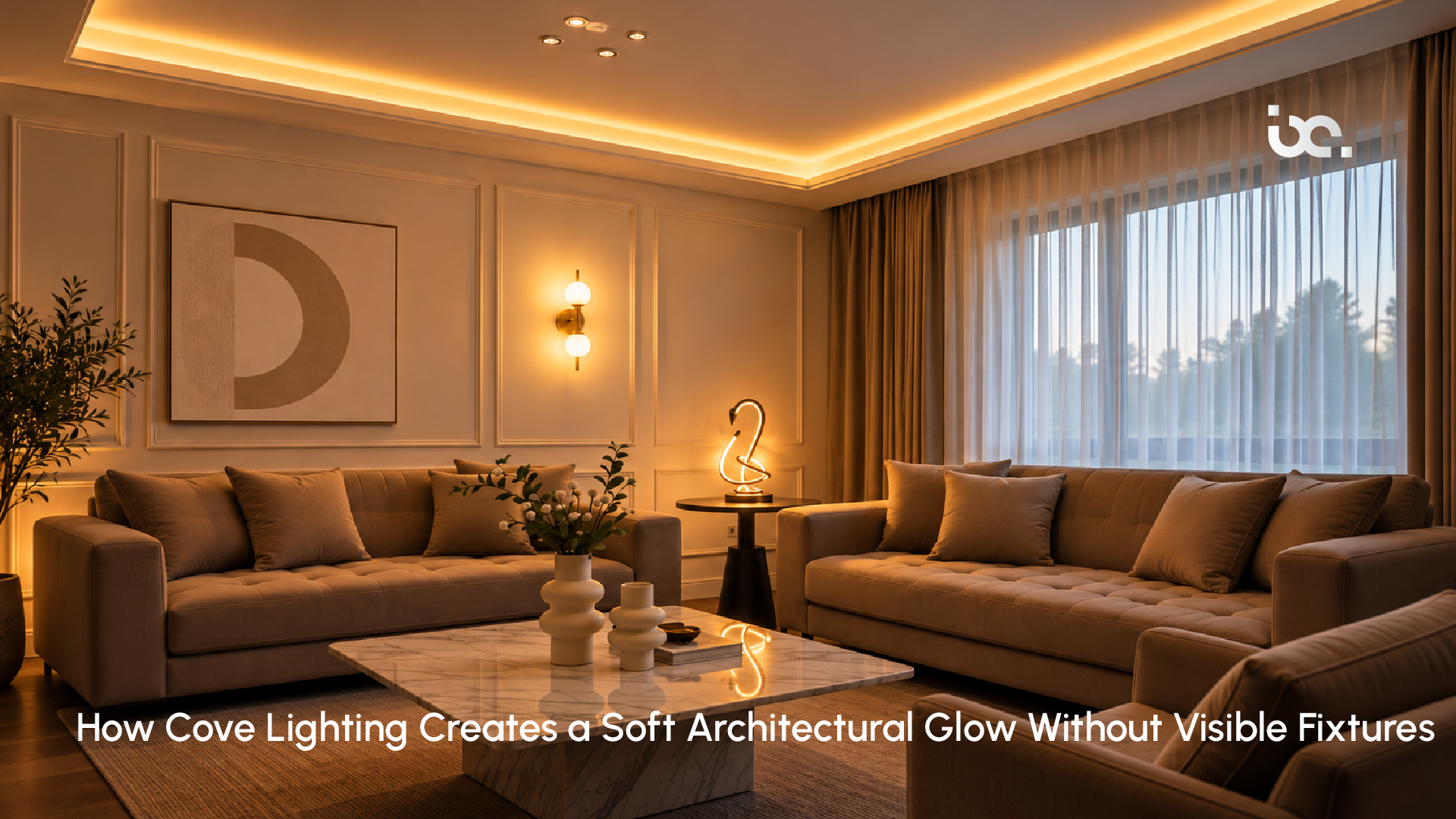
The most sophisticated lighting schemes are often the ones that are barely noticed. Instead of drawing attention to a visible fixture, they allow architecture, materials, proportions, and textures to take centre stage. Light appears to emerge naturally from the ceiling or walls, creating an atmosphere that feels calm, polished, and effortlessly refined.
This is the appeal of cove lighting design. By concealing the light source within a recessed architectural detail, cove lighting can create a soft wash of illumination without exposing the fixture itself. The result is an architectural glow that adds depth and dimension while maintaining a remarkably clean visual language.
From private residences and luxury hotels to restaurants, galleries, and contemporary commercial spaces, cove lighting has become an important tool for designers seeking elegance without visual clutter.
Cove lighting is a form of indirect lighting in which light sources are positioned within a recessed ledge, cornice, ceiling recess, wall cavity, or architectural detail. The light is directed towards a surface, usually a ceiling or wall, rather than directly into the room.
Instead of seeing the lamp, occupants see the reflected illumination.
This distinction is central to the beauty of cove lighting. The fixture becomes visually discreet while the light itself becomes part of the architecture.
Depending on the design, cove lighting can be integrated into:
When carefully designed, the source disappears into the architecture, leaving behind a gentle and continuous glow.
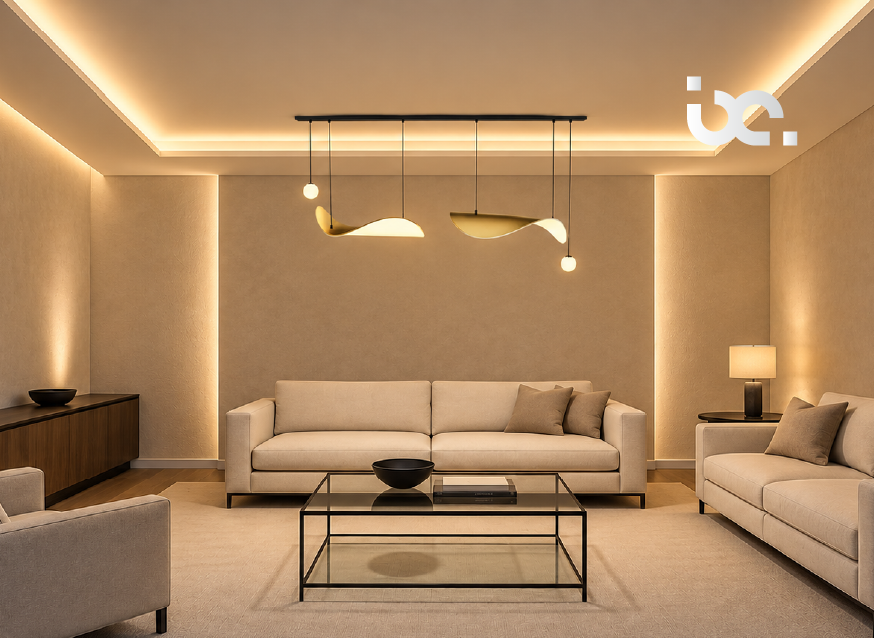
The character of indirect lighting comes from its softness. Because the light is reflected from another surface before reaching the room, it can feel less harsh than exposed point sources.
This makes it particularly effective in spaces where atmosphere matters as much as visibility.
A ceiling illuminated with a concealed light source can appear lighter and more expansive. A wall washed with a subtle glow can reveal texture without creating excessive contrast. In a bedroom or lounge, the same technique can create an intimate environment that feels naturally relaxed.
The quality of the reflected surface matters greatly. Smooth, light-coloured ceilings tend to distribute light broadly, while textured or darker surfaces can produce a more dramatic effect.
The designer is therefore not simply placing a light. They are shaping how light interacts with the architecture.
The phrase architectural glow describes one of the defining qualities of well-executed cove lighting design. Rather than appearing as an independent decorative element, the illumination seems to originate from the building itself.
This can transform the perception of a room.
A ceiling edge can appear to float. A wall can seem subtly illuminated from within. A recessed detail can gain greater depth. Architectural boundaries become softer, allowing the room to feel more layered without introducing additional visual objects.
This effect is particularly valuable in luxurious interiors where restraint is often more powerful than excess.
The finest schemes do not announce where the light comes from. They simply create an atmosphere that feels considered.
Ceiling lighting often has a significant influence on how a room is perceived because the ceiling forms one of its largest uninterrupted surfaces. Conventional fixtures can provide functional illumination, but they may also introduce visual points of focus.
Cove lighting offers a quieter alternative.
When positioned around a ceiling perimeter, concealed sources can wash the ceiling with light and create a sense of height. In a tray ceiling, illumination can emphasise the change in level and highlight the geometry of the architectural feature.
Designers can also combine cove lighting with recessed downlights, pendants, or decorative fixtures. This layered approach allows each lighting element to perform a distinct role.
For example:
The result is a more nuanced lighting environment than relying on one source alone.
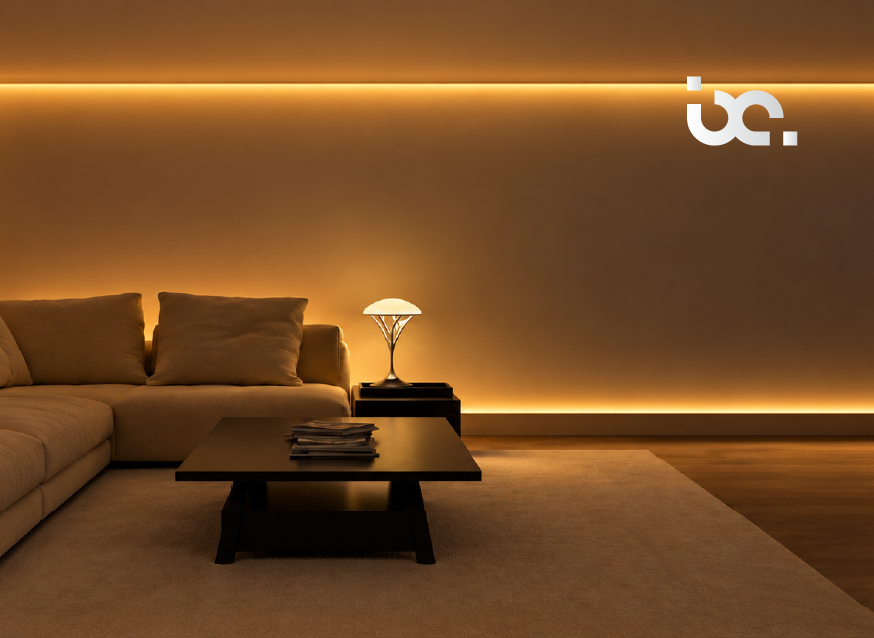
Concealed lighting is particularly effective when the design objective is visual calm. By hiding the physical source, designers can reduce the number of visible elements competing for attention.
This can be especially useful in minimalist and luxury interiors where materials and architecture are carefully curated.
A concealed light source can sit behind a ceiling edge, within a recess, or inside a custom architectural detail. Its exact position influences the intensity, spread, and character of the resulting glow.
Careful detailing is essential. If the light source is positioned incorrectly, it may create unwanted hotspots, shadows, or visible bright lines. The goal is usually a smooth and controlled distribution rather than an obvious strip of illumination.
Good concealed lighting therefore depends as much on detailing and installation as it does on the light source itself.
Soft light does not happen simply because a fixture is hidden. The relationship between the source, the reflective surface, the distance, and the viewing angle all influence the result.
A well-planned cove should consider:
These details can determine whether the final effect feels sophisticated or overly bright.
In luxury interiors, subtlety is often the objective. The illumination should support the space rather than dominate it.
Colour temperature has a significant influence on the mood created by cove lighting. Warmer tones can create an intimate and welcoming atmosphere, making them particularly appropriate for bedrooms, lounges, dining rooms, and hospitality spaces.
More neutral tones may be suitable where architectural clarity and functional visibility are important.
The choice should also respond to the materials within the room. Warm illumination can enhance timber, stone, brass, and rich textiles, while cooler light may alter the appearance of certain finishes.
Consistency matters as well. If cove lighting has one colour temperature while nearby fixtures use another without a deliberate reason, the space can feel visually disconnected.
A carefully coordinated palette allows the lighting to become part of the interior rather than an isolated technical feature.
The purpose of cove lighting is often to establish the ambient layer of a lighting scheme. Ambient lighting provides general illumination, allowing people to move comfortably through a space without creating the intensity associated with task or accent lighting.
This makes cove lighting particularly effective in ambient interiors designed around relaxation and visual comfort.
In a living room, a soft ceiling wash can provide enough background illumination for conversation while decorative lamps create smaller pools of light. In a hotel corridor, concealed illumination can guide movement while emphasising architectural rhythm.
The flexibility of this approach means that the same room can feel different at different times of day. Dimming allows the intensity to be adjusted according to the atmosphere required.
Bedrooms benefit particularly well from restrained illumination. A bright central fixture can feel unnecessarily strong in a space intended for rest.
Cove lighting can create a softer alternative by illuminating the ceiling or selected architectural surfaces.
It can be incorporated around a perimeter, above a headboard, within a recessed ceiling, or alongside architectural joinery. When paired with bedside lamps and subtle accent lighting, it can produce a layered environment without relying on a dominant overhead source.
The effect can be quietly luxurious: the architecture remains visible, while the light creates an understated sense of warmth.
Light can reveal qualities in materials that may otherwise remain unnoticed. Stone, textured plaster, timber, fabric, and decorative finishes can all respond differently to illumination.
Cove lighting can be used to reveal these characteristics without placing a fixture directly in front of them.
A carefully controlled wash can bring out subtle variations in a stone surface. A ceiling glow can emphasise the grain of timber detailing. A softly illuminated wall can create depth behind artwork or furniture.
This is why cove lighting should be considered alongside material selection from the beginning of a project.
When architecture and lighting are designed together, the two can reinforce one another.
Although cove lighting appears simple, achieving a refined result requires careful planning. Poorly positioned fixtures can create uneven brightness or visible hotspots.
Some common issues include:
The best results come when lighting is integrated into the architectural design at an early stage rather than added once construction is almost complete.
Luxury is often associated with visible craftsmanship and beautiful materials, but it can also be expressed through restraint. Cove lighting embodies this idea by allowing the experience of light to take precedence over the fixture itself.
There is something inherently sophisticated about a space that appears illuminated without revealing exactly how.
This subtlety creates visual calm. It allows architectural details to breathe and prevents lighting hardware from competing with carefully selected interiors.
When executed well, cove lighting does not simply make a room brighter. It changes how the room feels.
Cove lighting design offers a refined way to introduce illumination without allowing visible fixtures to dominate an interior. Through indirect lighting, carefully positioned ceiling lighting, and discreet concealed lighting, it creates a soft architectural glow that can transform the character of a space.
Its strength lies in subtlety. Rather than competing with architecture, it reveals it. Rather than creating harsh points of brightness, it builds layers of illumination that make interiors feel warmer, deeper, and more considered.
Whether used in a luxury residence, hotel, restaurant, or contemporary commercial setting, cove lighting can become an almost invisible design element with a highly visible impact.
When proportion, material, colour temperature, and technical detailing are carefully coordinated, the result is an elegant lighting experience that feels naturally embedded within the architecture.
Cove lighting design involves positioning a light source within a recessed architectural feature so that the light is reflected onto a ceiling or wall. The fixture remains concealed while the reflected illumination creates a soft glow.
Cove lighting can work across many types of interiors, including living rooms, bedrooms, dining spaces, hotels, corridors, and commercial environments. The design should be adapted to the room’s architecture and lighting requirements.
It depends on the design, fixture output, room size, and intended use. Cove lighting is often used as ambient illumination and combined with task and accent lighting for a complete layered scheme.
Direct lighting sends illumination towards the intended area without first reflecting it from another surface. Indirect lighting directs light onto a ceiling or wall first, producing a softer and more diffused effect.
Yes, many cove lighting systems can be designed with dimming capabilities. Dimming allows the brightness to be adjusted according to the time of day, activity, and desired atmosphere.



Experience radiant guidance tailored to your unique vision.