No products in the cart.


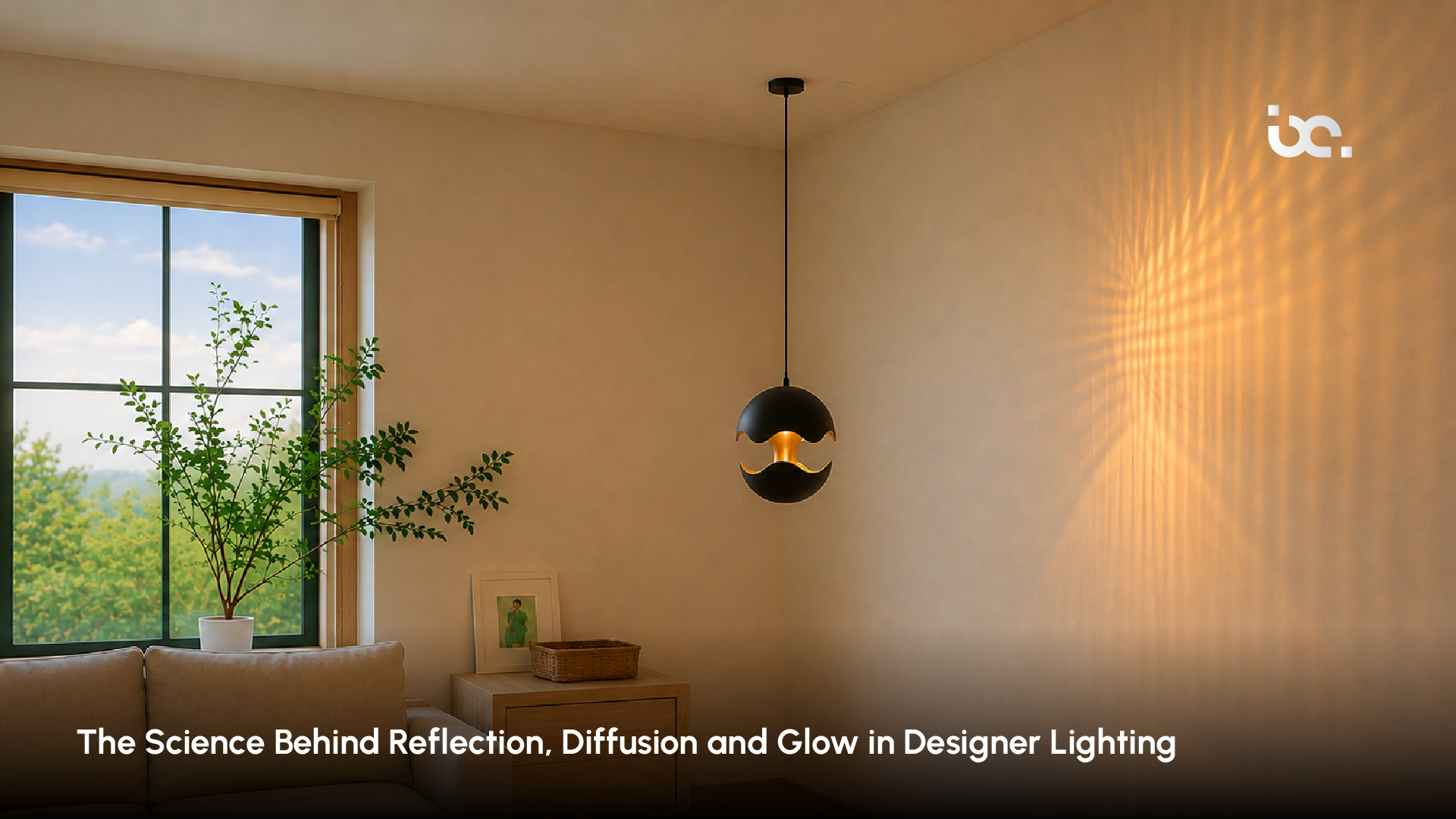
Great lighting is rarely about brightness alone. The most captivating interiors are shaped by how light behaves when it meets glass, metal, stone, fabric, polished surfaces, and architectural forms.
Behind every beautifully illuminated room lies a careful balance of reflection, lighting diffusion, absorption, and transmission.
Understanding these principles allows designers to create spaces that feel naturally luminous rather than simply well lit. From the soft glow of a pendant above a dining table to the precise sparkle of a sculptural chandelier, the science of light quietly determines how luxurious a space feels.
Light travels in straight lines until it encounters a surface or material. What happens next depends on the nature, texture, colour, and finish of that material. Light may bounce away, scatter in several directions, pass through the material, or be absorbed.
These interactions form the foundation of lighting optics and explain why two fixtures with similar brightness can produce completely different visual experiences.
A polished marble surface, for example, may reflect light in a controlled direction, while a textured plaster wall scatters it gently. Transparent glass can transmit light while producing subtle reflections of its own. Designers use these differences deliberately to build depth and atmosphere.
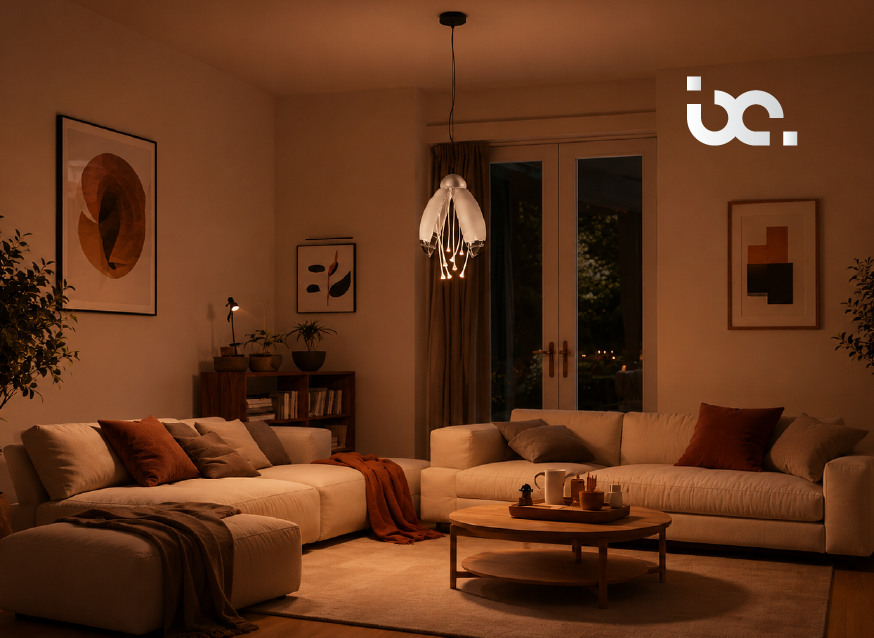
Reflection occurs when light strikes a surface and travels back into the surrounding environment. The character of that reflection depends largely on whether the surface is smooth or uneven.
Smooth surfaces such as polished metal, mirrors, and glossy stone can create defined reflections. Rougher surfaces scatter reflected light, producing a softer appearance.
Reflective lighting can be particularly effective in sophisticated interiors. A carefully positioned light source reflected across a polished wall or metallic surface can create visual depth without requiring additional fixtures.
However, reflection needs precision. Poorly positioned reflective surfaces may produce glare, which can quickly diminish the comfort of an otherwise luxurious environment.
Lighting diffusion is the process of spreading light so that it becomes softer and more evenly distributed. Instead of allowing a concentrated beam to travel directly into the room, a diffuser scatters the light and reduces harsh contrasts.
Diffusion can be achieved through frosted glass, acrylic, fabric shades, textured materials, or specially engineered optical components.
The result is soft illumination that feels calm and inviting. This is particularly valuable in bedrooms, lounges, hospitality-inspired living spaces, and dining areas where comfort is just as important as visual impact.
A well-designed diffuser does more than hide the light source. It controls how light leaves the fixture, helping designers achieve a specific atmosphere while maintaining visual comfort.
Glass has long been associated with sophisticated lighting because it can manipulate light in remarkably elegant ways. Depending on its finish, thickness, colour, and shape, glass can transmit, refract, reflect, or diffuse illumination.
In glass lighting design, transparent glass can reveal the source of illumination, creating a crisp and contemporary effect. Frosted glass, on the other hand, conceals the source and spreads light more evenly.
Textured or ribbed glass introduces another dimension. As light passes through its irregular surface, it is redirected into subtle patterns that can add movement to an otherwise static environment.
This is why a carefully crafted glass pendant can feel almost jewel-like when illuminated. The material itself becomes part of the lighting experience.
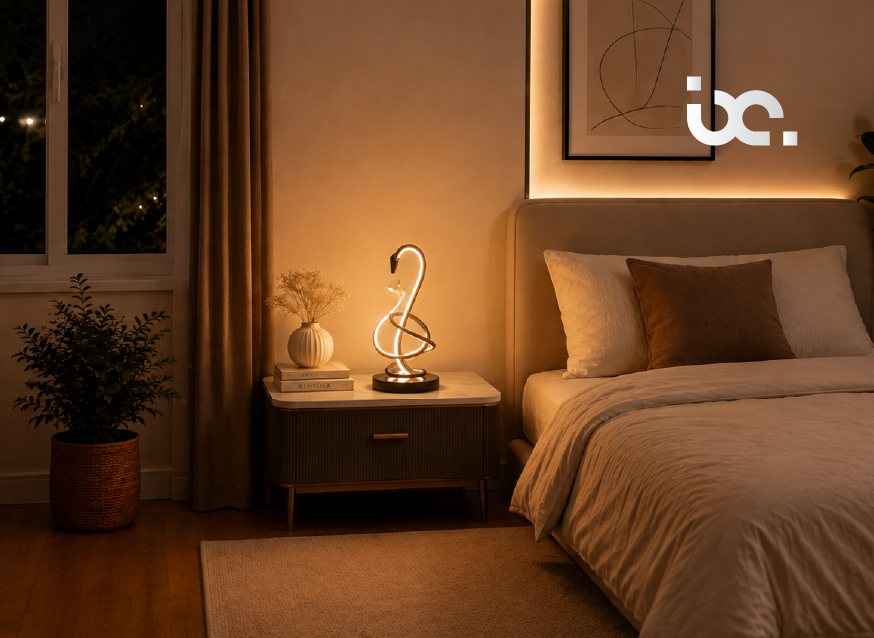
Glow is one of the most appealing qualities in premium lighting because it suggests warmth without demanding attention. It often occurs when light is diffused through a material or reflected across a surface rather than exposed directly.
A glowing wall, illuminated ceiling, or softly lit pendant can make a room feel larger and more tranquil. Concealed LED strips are frequently used for this purpose, allowing ceilings, shelves, joinery, and architectural recesses to appear as though they are gently emitting light.
The secret lies in controlling the source. When the eye sees the effect rather than the fixture itself, the result tends to feel more refined.
Material selection plays a major role in determining how light behaves. Designers often consider the following characteristics:
These properties explain why the same fixture can appear dramatically different in different surroundings. A warm-toned stone may produce a rich, intimate reflection, while a pale surface can increase perceived brightness.
Lighting optics becomes especially important when designers want to control where illumination falls. Beam angle determines how widely light spreads from a fixture.
Narrow beams can create focused accents, making them suitable for artwork, sculptures, architectural details, and selected landscape elements. Wider beams distribute light more generously and are useful for general illumination.
A sophisticated lighting scheme often combines both. Concentrated light can establish focal points, while broader illumination creates the comfortable foundation around them.
This contrast between focus and softness is what prevents a space from appearing flat.
A room where every surface receives equal illumination may appear bright, but it can also feel visually lifeless. Contrast gives light its character.
Designers can create depth by allowing some surfaces to remain darker while selectively illuminating others. A softly lit artwork against a quieter wall, for example, immediately becomes more prominent.
Reflective lighting can also help extend visual depth by bouncing illumination into adjacent areas. When used thoughtfully, this technique creates a layered environment without filling every corner with fixtures.
The sophistication of premium lighting lies in control rather than excess. Modern LED technology provides designers with greater flexibility in intensity, colour temperature, beam distribution, and dimming.
But technology alone does not guarantee elegance. The fixture must respond to the architecture and the people using the space.
Dimmers, concealed sources, adjustable optics, and layered circuits allow a room to transition throughout the day. Bright, functional illumination can support daytime activities, while a lower, warmer setting can transform the same room into an intimate evening environment.
The finest designer lighting brings scientific precision and artistic sensitivity together. Reflection creates sparkle and depth. Diffusion softens intensity. Glass manipulates transmission and refraction. Carefully engineered optics control direction. Materials determine how all of these effects are perceived.
Together, these elements create an environment that feels effortless even though considerable thought may exist behind every beam.
For homeowners and designers seeking a luxurious atmosphere, the objective should not be to make every surface brighter. Instead, it is to understand where light should travel, where it should soften, and where it should disappear.
When reflection, diffusion, and glow are balanced correctly, lighting becomes almost architectural. It shapes perception, enhances materials, and gives interiors an unmistakable sense of calm sophistication.
Lighting diffusion is the process of scattering light so it spreads more evenly and produces a softer, more comfortable appearance. Frosted glass, fabric, acrylic, and textured materials are commonly used to diffuse illumination.
Reflective lighting can bounce illumination across polished surfaces, creating depth and extending the perceived reach of light. When positioned carefully, it can make an interior feel more spacious without introducing excessive fixtures.
Glass can transmit, reflect, refract, and diffuse light depending on its form and finish. This versatility allows designers to create everything from crisp illumination to delicate, glowing effects.
Experience radiant guidance tailored to your unique vision.