No products in the cart.

 By
payal
A narrow room can be beautifully proportioned and still feel slightly confined. The architecture may be elegant, the furniture carefully selected, and the finishes impeccably chosen, yet poor lighting can make the entire space appear darker, tighter, and less inviting.
The solution is not necessarily to make the room brighter. It is to make the light work with the architecture.
Thoughtful lighting for small spaces can influence how the eye reads width, height, distance, and proportion. By directing illumination towards walls, ceilings, architectural details, and selected focal points, designers can create a greater sense of openness without changing the physical dimensions of the room.
For compact interiors, this is where lighting becomes more than a practical necessity. It becomes an elegant design tool.
Our perception of a room is influenced by contrast, shadows, brightness, and the surfaces that receive light. A poorly illuminated narrow room can have dark corners and heavy shadows, making its boundaries feel more pronounced.
Balanced illumination can soften those boundaries.
When walls are gently illuminated, the eye perceives more of the surrounding surface. When the ceiling receives indirect light, the room can feel taller. When lighting draws attention towards the far end of a space, it can create visual depth and encourage the eye to travel through the room.
This is why successful narrow room lighting is less about adding more fixtures and more about placing light intelligently.
One central ceiling fixture rarely provides the sophistication or spatial balance required in a narrow room. It may illuminate the centre while leaving the corners and walls comparatively dark.
Layered lighting creates a more nuanced effect by combining different sources of illumination.
A considered scheme may include:
Each layer contributes something different. Together, they prevent the room from appearing flat and create a more comfortable visual rhythm.
One of the most effective techniques for lighting a narrow room is to illuminate its walls.
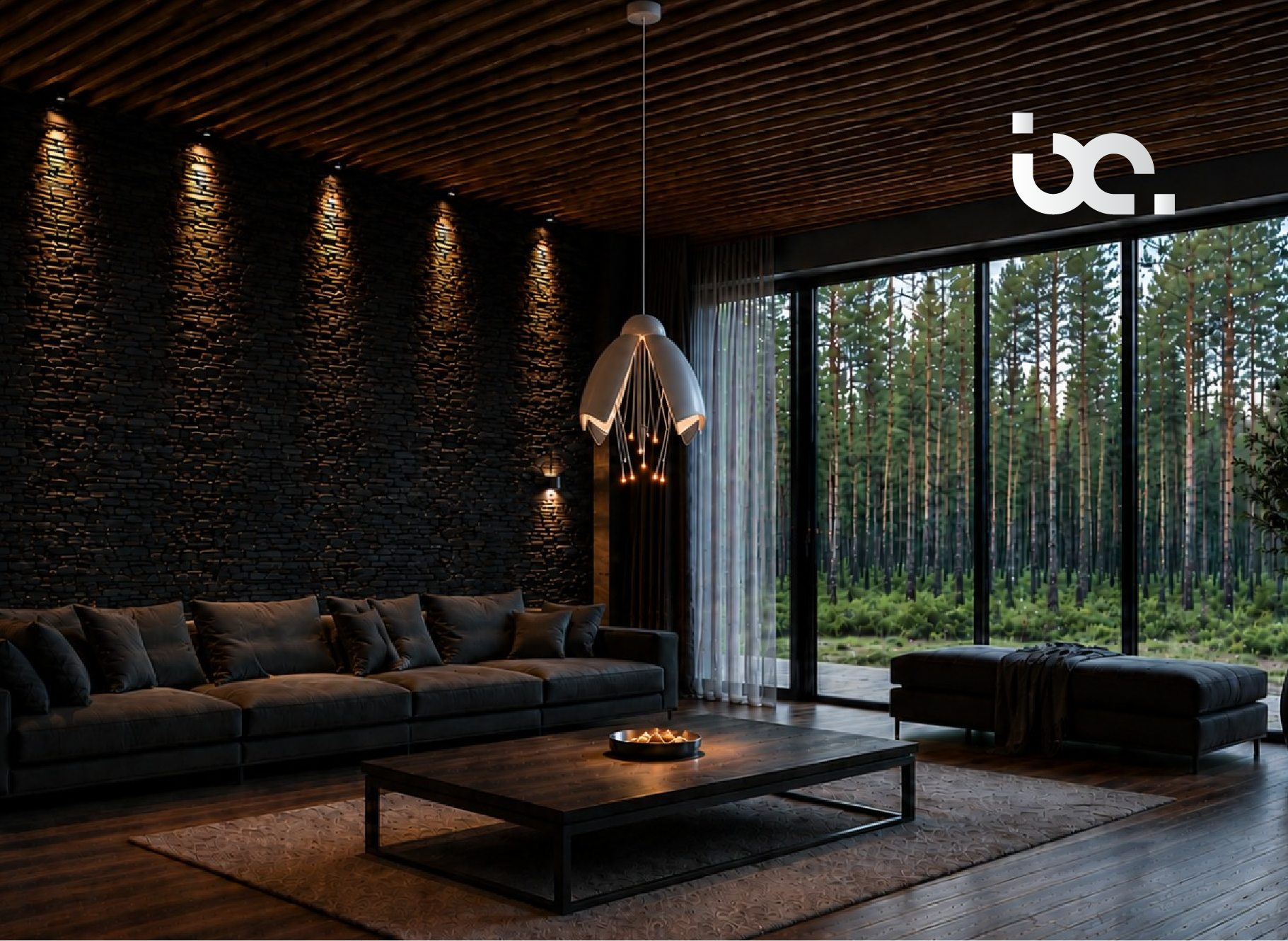
Wall washing draws attention to the vertical surfaces and reduces the feeling of dark, enclosed boundaries. The result can make the room appear broader because more of its width becomes visually noticeable.
Recessed fixtures, adjustable spotlights, concealed lighting, and wall-mounted fixtures can all be used depending on the architecture.
The quality of the light matters as much as its placement. A soft, even wash generally feels more refined than harsh pools of brightness.
For a luxurious interior, the objective is not to make the walls shout for attention. They should simply become more visible.
A narrow room can sometimes feel both tight and low. In such cases, ceiling illumination can introduce another layer of visual openness.
Indirect light directed towards the ceiling creates a gentle glow that draws the eye upward. Cove lighting, concealed LED systems, and carefully positioned uplights can achieve this effect without placing a prominent fixture in the centre of the room.
This is particularly effective when the ceiling has architectural details worth highlighting.
Instead of allowing the ceiling to disappear into shadow, illumination can make it feel like an active part of the room’s design.
When a room is long and narrow, its proportions can sometimes feel like a corridor. Lighting can help counteract this by creating points of interest along the length of the space.
This is where visual depth becomes important.
Rather than illuminating everything equally, designers can use light to create a gentle progression from one area to another.
For example:
These details encourage the eye to move through the space rather than stopping at the nearest wall.
In compact interiors, fixture selection requires restraint.
An oversized pendant can dominate a narrow room, while multiple bulky fixtures may interrupt the visual flow. This does not mean small rooms must have boring lighting. It simply means scale should be considered carefully.
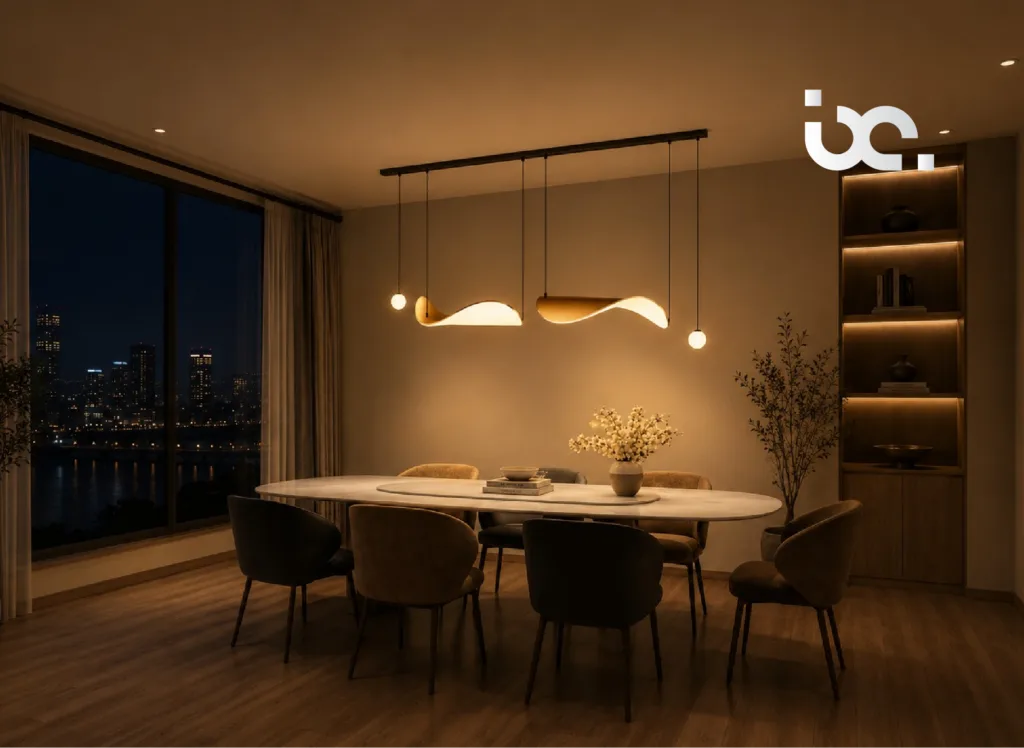
Slim linear pendants, compact wall lights, recessed fixtures, and discreet architectural lighting can provide illumination without consuming too much visual space.
A sculptural fixture can still work beautifully in a small room if it has an appropriately balanced silhouette.
Luxury is not measured by physical size. Sometimes, the most elegant fixture is the one that knows when to step back.
Mirrors are a familiar solution for creating the impression of additional space, but their relationship with lighting deserves attention.
A mirror placed opposite or adjacent to a carefully illuminated surface can reflect both light and visual information, making the room appear brighter and more expansive.
Wall sconces positioned on either side of a mirror can provide balanced illumination while creating an elegant focal point.
Backlit mirrors can also introduce a subtle halo effect, adding depth without requiring a large decorative fixture.
The key is to avoid creating excessive glare. Reflected light should feel soft and controlled rather than visually aggressive.
The colour temperature of lighting can significantly influence how a compact room feels.
Very cool light can sometimes make an interior feel clinical, while extremely warm light may reduce visual clarity if used throughout the space.
For sophisticated residential interiors, a warm to neutral palette can create a welcoming atmosphere while preserving the character of architectural finishes.
The ideal choice depends on:
Consistency is particularly important. Different light sources with noticeably different colour temperatures can make a small room feel visually fragmented.
Lighting can reveal materials in ways that contribute to a sense of depth.
Glossy surfaces can reflect light and create subtle brightness, while textured walls can produce shadows and highlights that add dimension.
This makes surface illumination a valuable interior lighting idea for compact spaces.
A textured stone wall, ribbed panel, timber surface, or decorative plaster finish can become more visually interesting when illuminated from an appropriate angle.
Grazing light, for instance, can emphasise texture and create a layered effect across a wall.
However, restraint remains important. Highlighting every surface can eliminate hierarchy and make the room feel busy rather than spacious.
Lighting does not always need to come from above.
Low-level lighting can help define the edges of furniture, cabinetry, steps, or architectural elements while maintaining an uncluttered floor.
Under-cabinet lighting, concealed furniture illumination, and subtle floor-level fixtures can create a floating effect. When furniture appears visually lighter, more of the floor remains visible, contributing to a sense of openness.
This approach works particularly well in contemporary and minimalist interiors where clean lines are central to the aesthetic.
A sophisticated lighting design should adapt to different moments of the day.
Dimmers allow occupants to adjust intensity according to natural daylight, activity, and mood. Bright illumination may be useful while working or cleaning, while softer levels can create a more intimate atmosphere in the evening.
In a narrow room, dimming can also prevent the space from becoming visually overexposed.
The objective is not maximum brightness. It is a comfortable balance.
Even a beautifully designed compact room can feel smaller when certain lighting mistakes are made.
Avoid:
Good space-enhancing lighting is selective. It creates hierarchy, directs attention, and allows some areas to remain softer.
Layered lighting is often the most effective approach. Combining ambient, wall, accent, and indirect illumination can make a compact room feel brighter, more balanced, and visually spacious.
Illuminating the walls and reducing dark corners can make the room’s boundaries feel less restrictive. Even distribution across vertical surfaces helps the eye perceive more of the available space.
Yes. Indirect lighting directed towards the ceiling can draw the eye upward and create the impression of greater height.
They can be, but scale is important. A well-proportioned statement fixture can work beautifully, while an oversized design may overwhelm the room.
The choice depends on the interior, materials, natural light, and desired atmosphere. Warm to neutral lighting is often suitable for sophisticated residential environments, provided it complements the surrounding finishes.



Experience radiant guidance tailored to your unique vision.