No products in the cart.

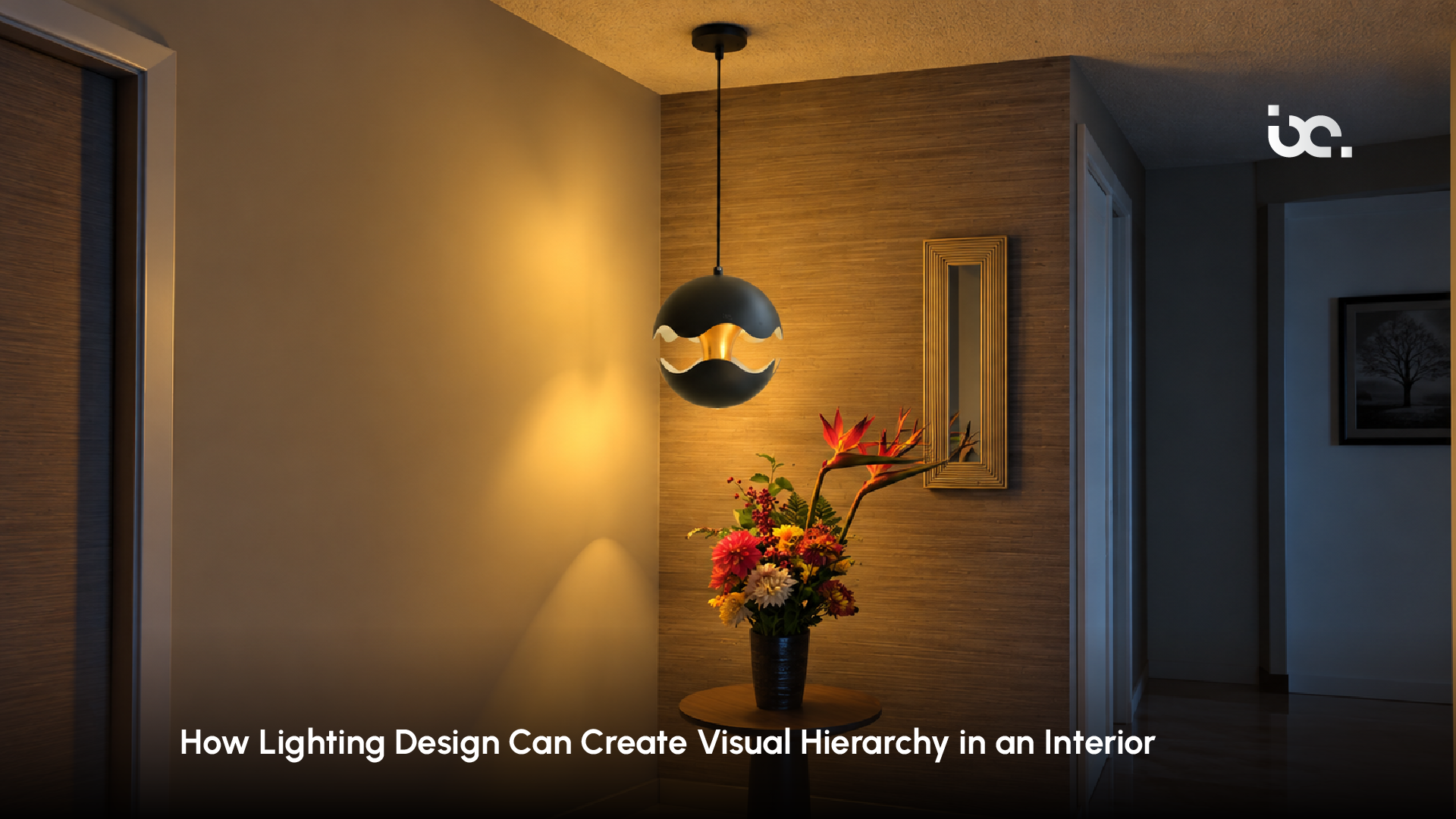
A beautifully designed interior is rarely experienced as a collection of objects viewed with equal attention. The eye naturally moves from one element to another, pausing at a sculptural piece, an artwork, an architectural detail or an inviting seating area. This movement is not accidental. It is influenced by scale, colour, texture, composition and, perhaps most significantly, light.
This is where lighting visual hierarchy becomes an important design principle. Thoughtfully positioned illumination can establish what deserves attention, what should remain understated and how the eye travels through a room. Rather than simply making an interior brighter, lighting can give the space rhythm, depth and a sense of intention.
In sophisticated interiors, this approach allows lighting to become part of the architecture. A carefully illuminated wall can appear more prominent, while a softly lit background can create visual calm. The result is an environment where every element has a role and the overall composition feels naturally balanced.
Lighting visual hierarchy refers to the deliberate use of light intensity, direction, colour, contrast and placement to establish different levels of visual importance within an interior.
Not everything in a room needs to compete for attention. In fact, when every surface is equally bright, an interior can lose its depth. The eye has no clear place to settle.
A considered hierarchy may establish:
The hierarchy can be subtle. In a dining room, for example, a sculptural pendant may become the primary visual element, while concealed ceiling lighting provides a gentle background glow and discreet accent lighting highlights artwork nearby.
The room feels layered because the lighting gives each element a different visual weight.
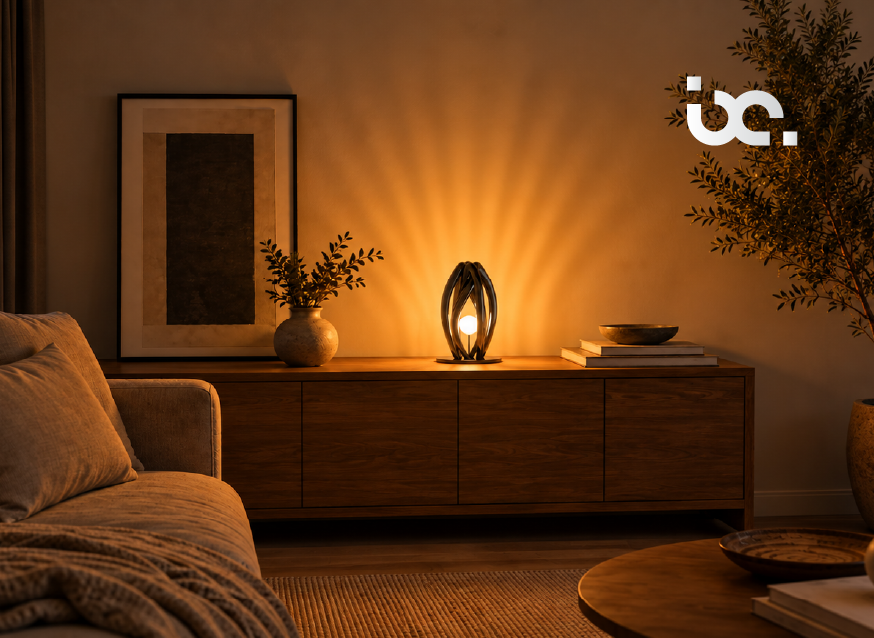
Interior composition depends on relationships. Furniture must relate to architecture, artwork must relate to walls and accessories must relate to the larger arrangement. Lighting can connect these elements by controlling how strongly each one appears.
Consider a living room with a large artwork, a statement sofa and a sculptural side table. If the ceiling lighting illuminates everything equally, the eye may not recognise which element is intended to lead the composition.
Instead, the lighting can establish a sequence.
The artwork may receive focused illumination. The sofa can be softly washed with ambient light, while the side table receives a restrained pool of illumination.
This creates an order of attention without requiring additional decoration.
Good lighting therefore supports interior composition rather than functioning separately from it.
Every well-resolved interior benefits from a point of visual interest. It could be an artwork, fireplace, dining table, staircase, architectural feature or statement fixture.
Focal point lighting can make that element more prominent without making the rest of the room disappear.
The technique depends on contrast. A focused beam against a comparatively quieter background naturally attracts attention. However, excessive contrast can feel theatrical or uncomfortable, particularly in residential spaces.
The goal is refinement rather than spectacle.
When selecting a focal point, consider:
Answering these questions before choosing fixtures creates a more intentional lighting scheme.
One of the most effective ways to establish lighting visual hierarchy is through layered illumination.
Instead of relying on one central source, lighting is distributed across different levels and purposes. These layers can include ambient, task and accent illumination.
Ambient light provides general visibility. Task lighting supports activities such as reading, cooking or working. Accent lighting adds emphasis to selected architectural or decorative elements.
The three do not need to be equally intense.
A luxury living room, for example, might use soft architectural lighting as its foundation, focused illumination for artwork and a decorative pendant as a visual centrepiece.
This variation in intensity creates depth. It also allows the room to change character depending on the time of day and activity taking place.
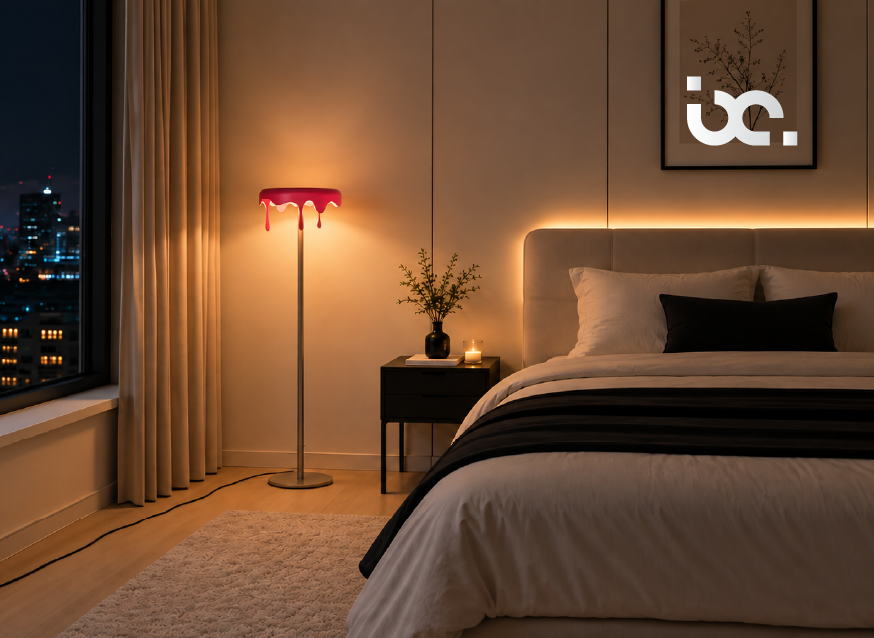
Contrast is essential to hierarchy, but sophisticated interiors rarely rely on harsh differences.
A dramatic pool of light surrounded by darkness may be appropriate in a gallery or hospitality setting, but a residence often benefits from softer transitions.
Contrast can be created through:
The most elegant schemes often use several small contrasts rather than one overwhelming effect.
A textured stone wall, for example, may be illuminated with a grazing light that creates delicate shadows. The wall becomes visually important without requiring intense brightness.
Architecture itself can become the subject of a lighting scheme.
Columns, arches, ceiling details, niches, staircases and textured walls can all benefit from carefully positioned accent lighting. The objective is to reveal qualities that might otherwise remain unnoticed.
A concealed linear light can emphasise a ceiling recess. A narrow beam can bring out the texture of stone. A wall-mounted fixture can establish rhythm along a corridor.
Accent lighting works particularly well when it follows the architectural language rather than competing with it.
The most successful applications often appear almost effortless. The viewer notices the architecture first and only later realises how precisely the light is shaping the experience.
Lighting visual hierarchy is not created by illumination alone. Shadow is equally important.
Without shadow, surfaces can appear flat and objects can lose their dimensionality. Controlled darkness gives illuminated elements room to breathe.
In luxury interiors, shadow can introduce a sense of intimacy and sophistication. A softly lit corridor can feel more atmospheric than one illuminated uniformly from floor to ceiling. A pendant can cast delicate shadows across a textured wall, adding movement to an otherwise static surface.
Shadow should not be treated as a problem that lighting needs to eliminate. When carefully controlled, it becomes part of the composition.
A well-designed interior can tell a visual story as someone moves through it. Lighting can help establish that sequence.
Imagine entering a residence through a softly illuminated foyer. The lighting gradually becomes brighter towards a central living area, where an artwork or sculptural fixture becomes the visual destination. From there, subtle illumination leads towards a dining space.
The lighting has created a progression.
This is spatial storytelling: using light to influence how a person experiences movement, transition and discovery within an environment.
Different spaces can therefore have different visual priorities while still feeling connected.
Open-plan interiors present a particular challenge because several functions exist within one continuous volume.
A living area, dining space and kitchen may share the same ceiling and flooring, yet each needs its own identity.
Lighting can create this distinction without introducing physical barriers.
For example:
This creates visual zones within a larger space.
The advantage is that the room remains visually connected while each area has a clear purpose.
Colour temperature can also influence hierarchy.
Warmer light generally creates an intimate and welcoming atmosphere, while cooler light can feel more crisp and energetic. The choice should respond to the materials, function and mood of the space.
Consistency is important. If every fixture has a noticeably different colour temperature without a clear reason, the interior can feel fragmented.
However, subtle variations can help establish hierarchy. A warm decorative fixture above a dining table, for example, can distinguish that area from softer architectural illumination around it.
The effect should remain coherent rather than obvious.
Sometimes the light fixture itself is the focal point.
A sculptural chandelier or artistic pendant can serve as a piece of visual architecture. Its shape, scale and material contribute to the room even when the light is switched off.
In such cases, the lighting design needs to support the fixture rather than compete with it.
Background illumination can remain understated, allowing the statement fixture to hold visual priority. This is particularly effective in entrance halls, dining rooms and double-height spaces where a carefully proportioned piece can establish the character of the entire interior.
One of the most common mistakes in lighting design is giving too many elements equal emphasis.
If artwork, shelving, furniture, architectural details and decorative fixtures all receive strong accent lighting, the room can feel visually crowded.
A more refined approach is to decide what matters most.
Ask:
These decisions create hierarchy before fixtures are even selected.
Luxury does not necessarily require dramatic lighting. In many sophisticated interiors, refinement comes from subtle transitions.
A wall may receive a gentle wash rather than a bright spotlight. A sculpture may be highlighted with a narrow beam. A corridor may remain softly illuminated while leading towards a brighter architectural destination.
These decisions create an atmosphere without announcing themselves.
The beauty of lighting visual hierarchy lies precisely in this restraint. The viewer experiences the room as harmonious without necessarily analysing why the composition feels so balanced.
Modern lighting controls make it easier to adjust hierarchy according to time, activity and mood.
Dimming systems and scene controls can allow the same room to move between different lighting compositions. A dining room may use brighter illumination during preparation and softer focal lighting during an evening gathering.
Similarly, artwork can receive controlled accent lighting while ambient illumination is reduced.
Technology is most effective when it remains in service of the design. The objective is not to demonstrate the sophistication of the control system, but to give the interior greater flexibility.
Lighting has the ability to determine not only how an interior looks, but how it is experienced. Through lighting visual hierarchy, designers can establish focal points, create depth, guide movement and give architectural and decorative elements the attention they deserve.
Focal point lighting can draw the eye towards a meaningful feature, while layered illumination provides the foundation for atmosphere and function. Accent lighting can reveal architectural character, and carefully controlled shadow can add depth and intimacy.
Ultimately, elegant lighting is less about illuminating everything equally and more about understanding what deserves to be seen. When light is considered as part of the interior composition from the beginning, it can create a sense of balance, movement and spatial storytelling that feels both effortless and enduring.
Lighting visual hierarchy is the use of brightness, contrast, direction, colour and placement to establish different levels of visual importance within an interior.
Focal point lighting uses controlled emphasis to draw attention towards a particular feature, such as artwork, a dining table, sculpture, fireplace or architectural detail.
Layered illumination combines different types of lighting, including ambient, task and accent lighting, to create depth, functionality and atmosphere within a room.
Accent lighting highlights selected architectural or decorative features. It can bring attention to artwork, textured walls, niches, sculptures and other elements that contribute to the interior’s character.
Yes. Carefully positioned light can emphasise walls, ceilings and architectural depth. Indirect illumination and balanced distribution can make a space feel more open and visually connected.
Experience radiant guidance tailored to your unique vision.