No products in the cart.


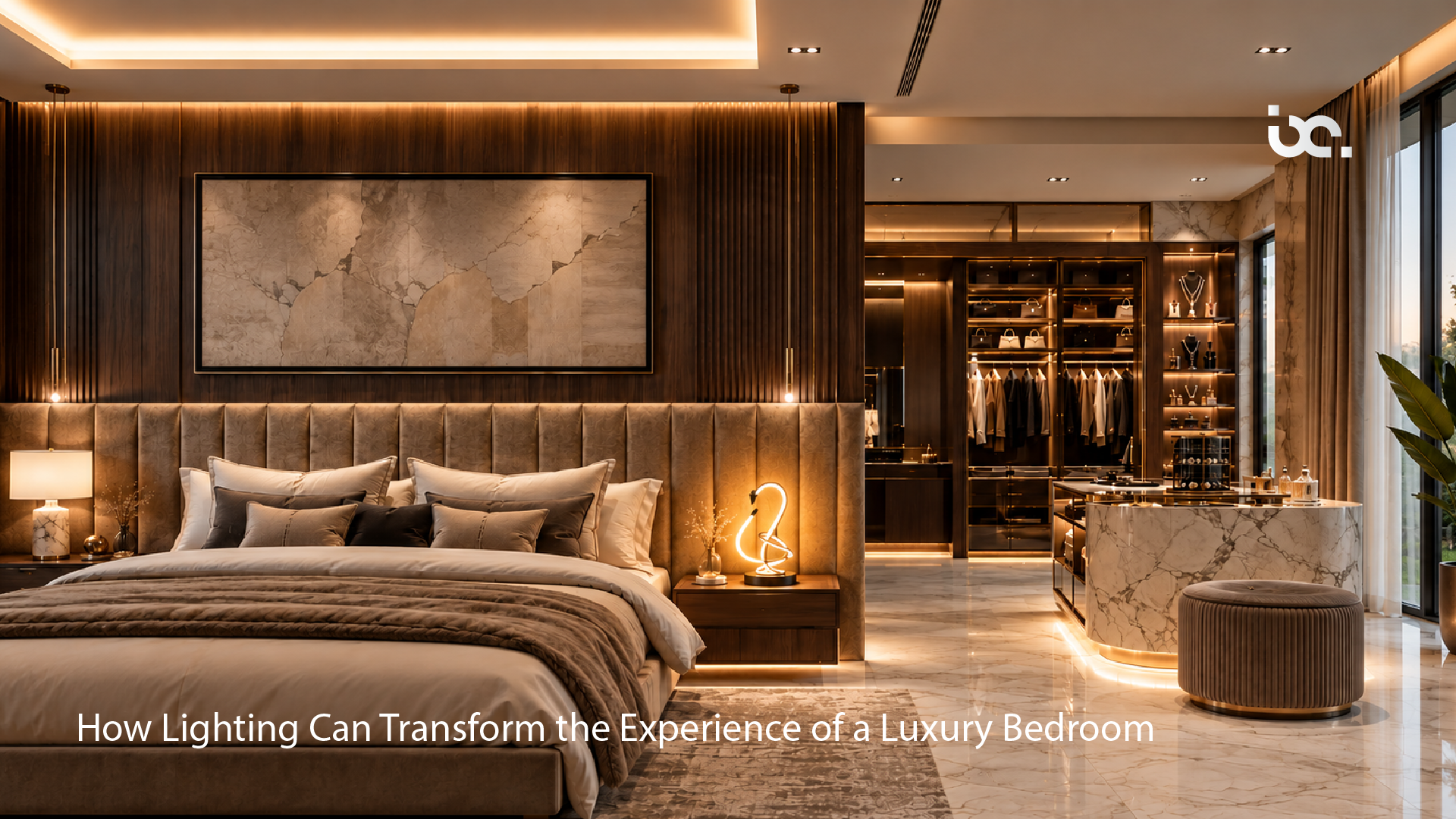
A luxury bedroom is more than a beautifully furnished room. It is a private retreat designed around comfort, tranquillity and personal expression. From the softness of the bedding to the texture of the curtains and the warmth of natural materials, every detail contributes to the atmosphere. Yet one element has the power to transform how all these details are experienced: lighting.
The right luxury bedroom lighting can make a room feel warm and inviting in the evening, bright and refreshing in the morning, and effortlessly sophisticated throughout the day. It can highlight architectural details, complement carefully selected furnishings and create a sense of intimacy without overwhelming the space.
Rather than relying on a single decorative fixture, a thoughtfully designed lighting scheme considers the room as a whole. The position of each light, the quality of its illumination and its relationship with surrounding materials all influence the final experience.
When planned with care, lighting becomes an essential part of luxury bedroom design, bringing together visual elegance and everyday comfort.
The defining quality of a luxurious bedroom is often how it makes a person feel. A well-designed space should encourage relaxation, offer a sense of privacy and remain comfortable throughout different parts of the day.
Lighting plays a central role in establishing this atmosphere. Bright, uniform illumination may be practical for certain activities, but it can make a bedroom feel less intimate when used throughout the evening. Softer lighting, carefully positioned around the room, creates a more welcoming environment.
Warm white light is often suitable for bedrooms because it can complement natural wood, upholstered furniture, textured fabrics and neutral colour palettes. The precise colour temperature should reflect personal preference and the materials used in the interior.
Dimmable fixtures offer additional flexibility. A room can be illuminated more fully while dressing or organising belongings, then adjusted to create a softer atmosphere before bedtime.
The aim is not to make every corner dark or dramatic. It is to establish a comfortable balance between visibility and visual softness.
A well-considered bedroom ambience should feel natural rather than theatrical, allowing the room to transition easily from practical daytime use to peaceful evening relaxation.
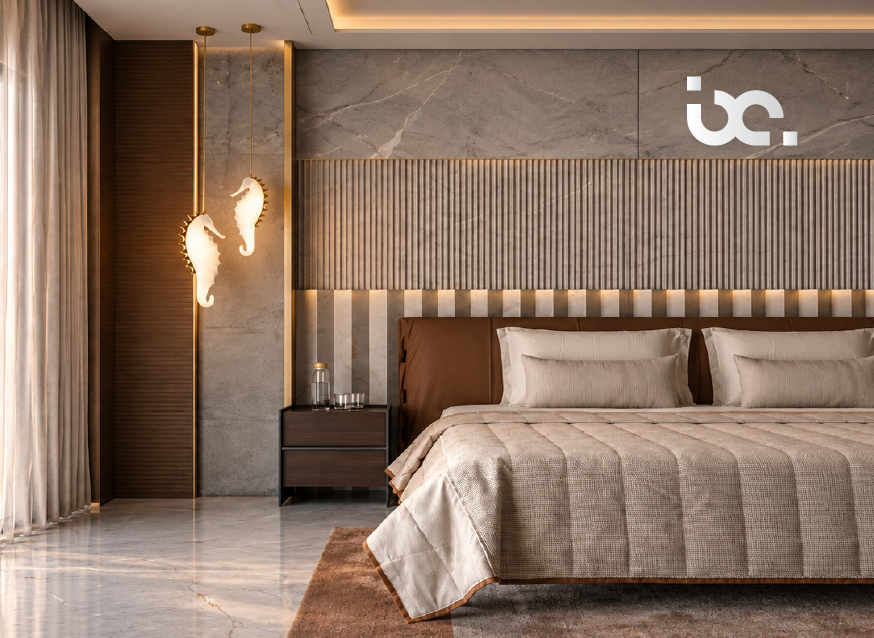
One of the most effective approaches to luxury bedroom lighting is to combine several types of illumination. This creates depth, improves functionality and avoids the flat appearance that can result from relying entirely on a central ceiling light.
Layered bedroom lighting typically includes three essential elements.
Ambient lighting provides the room’s general illumination. It may come from a ceiling fixture, recessed downlights, concealed cove lighting or a combination of these sources.
In a luxury bedroom, ambient lighting should distribute light comfortably without creating harsh glare. Recessed fixtures can maintain a clean ceiling line, while a decorative pendant or chandelier may introduce a more expressive focal point.
Task lighting supports specific activities, such as reading, dressing or working at a bedside table. Its position and brightness should suit the task without disturbing someone resting nearby.
Adjustable wall lights and bedside lamps are useful options because they direct illumination where it is needed.
Accent lighting draws attention to selected details. It can highlight artwork, textured wall panels, architectural niches or decorative objects.
When used carefully, accent lighting introduces dimension and makes the room feel more thoughtfully composed.
The advantage of layering is flexibility. Each source can serve a distinct purpose, while dimmers and separate controls allow the atmosphere to change according to the occasion.
Bedside lighting is one of the most personal elements of bedroom design. It is used during quiet moments, from reading a few pages before sleep to reaching for a glass of water during the night.
The right fixture should provide sufficient illumination without producing uncomfortable glare. Its appearance should also complement the bed, bedside tables and surrounding finishes.
Table lamps remain a classic option, particularly in bedrooms with generous bedside surfaces. Their shades soften the light, while their bases introduce texture, colour or sculptural interest.
Wall-mounted lights are useful when bedside table space is limited. Adjustable designs offer greater control over the direction of illumination and can create a neat, considered appearance.
Pendant lights suspended beside the bed can introduce a more architectural quality. They work particularly well when their height and proportions are planned carefully in relation to the headboard and bedside furniture.
When selecting bedside lighting, consider:
Good bedside lighting should feel effortless to use. Its visual appeal matters, but its everyday comfort is equally important.
A carefully selected chandelier or pendant can become the defining feature of a bedroom. It introduces visual interest above the bed or within the central area of the room, drawing the eye upwards and reinforcing the proportions of the architecture.
In a spacious bedroom with high ceilings, a sculptural chandelier can create a sense of grandeur. In a more restrained interior, a simple pendant with an elegant silhouette may provide all the decorative emphasis required.
The key is proportion. A fixture that is too large can dominate the room, while one that is too small may appear disconnected from the furniture beneath it.
Material selection also matters. Glass can introduce lightness and reflection, while metal finishes can create contrast or complement other hardware. Fabric shades often produce a softer visual effect, making them suitable for interiors focused on comfort.
A statement fixture should not be expected to perform every lighting function in the room. It may provide general illumination or serve primarily as a decorative feature, supported by bedside lamps and discreet accent sources.
This distinction allows luxury bedroom design to feel balanced rather than overly dependent on one dramatic object.
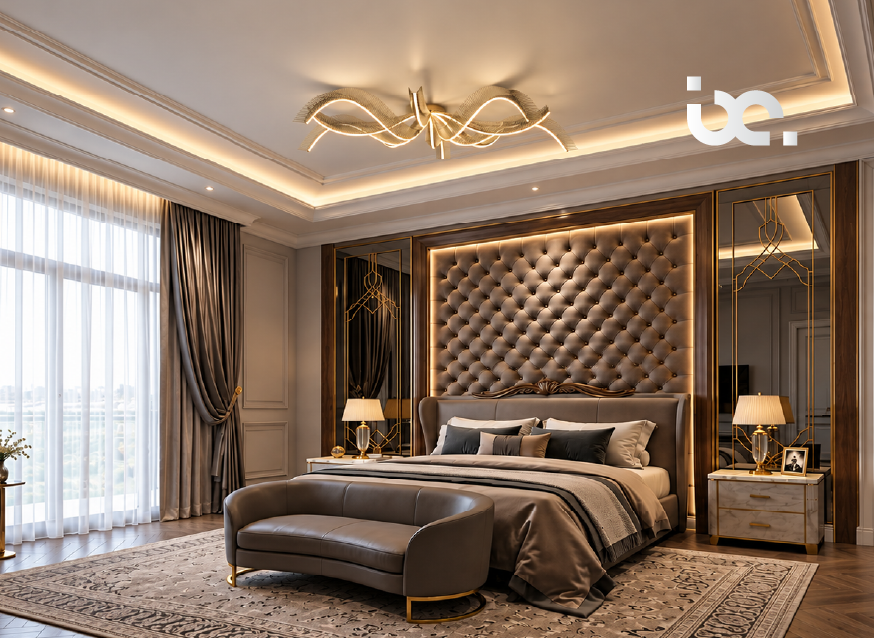
Luxury interiors often rely on a carefully chosen combination of materials. Natural stone, timber, brushed metal, linen, velvet and textured wall finishes each respond differently to illumination.
Lighting can reveal these differences and make the material palette feel richer. A grazing light positioned near a textured wall, for example, can emphasise its surface and create subtle shadows. Soft illumination across upholstered panels can bring out the fabric’s depth without making the room feel busy.
Mirrors and reflective finishes require particular attention. While they can distribute light and make a room feel more open, poorly positioned fixtures may produce distracting reflections or visible glare.
The direction of the light is just as important as its brightness. A fixture placed too close to a surface may create pronounced shadows, while a more carefully positioned source can reveal texture with greater subtlety.
For a refined result, consider how each material looks under both natural daylight and artificial illumination. A finish that appears warm during the day may look different under evening lighting.
This attention to detail helps create a bedroom that feels cohesive at every hour.
Not every lighting feature needs to be visible. In many contemporary bedrooms, some of the most effective illumination comes from concealed sources that create a gentle glow without drawing attention to the fixture itself.
Cove lighting can soften the transition between walls and ceilings. LED strips installed within suitable architectural details can introduce a floating effect beneath a bed frame, behind a headboard or along a recessed shelf.
These techniques are particularly effective in minimalist interiors because they preserve clean lines while adding depth.
However, concealed lighting requires careful planning. Poorly positioned strips may create visible bright spots, uneven illumination or distracting reflections. The light source, diffuser, colour temperature and installation detail should be selected together.
It is also important to consider access for maintenance and the availability of compatible replacement components.
When integrated successfully, concealed lighting supports relaxing interiors without adding unnecessary visual clutter. Its purpose is to enhance the architecture and provide gentle illumination rather than make every surface glow.
A bedroom’s lighting scheme should accommodate the different activities that take place throughout the day. Reading, dressing, organising belongings and preparing for sleep all have different illumination requirements.
Lighting controls make this flexibility possible. Separate switches for ambient, bedside and accent lighting allow the room to be adjusted without illuminating every area at once.
Dimmers are especially useful in the evening, when a lower light level may create a more comfortable atmosphere. Bedside switches should be easy to reach, while smart controls may offer additional convenience for people who prefer preset lighting scenes.
Colour temperature deserves equal consideration. Warm white lighting often complements a relaxing bedroom, while neutral white light may be useful around a dressing mirror or wardrobe where clearer visibility is required.
Rather than selecting the same light source for every application, consider what each area needs to accomplish.
A practical arrangement might include:
The best system is one that supports daily routines without making the technology itself the focus of the room.
Even beautiful fixtures can disappoint when they are poorly positioned or selected without considering the overall space.
One common mistake is relying entirely on a central ceiling light. This can leave bedside areas inconveniently dark while creating excessive brightness in the middle of the room.
Another is choosing decorative fixtures without considering glare, maintenance or the practical requirements of the people using the bedroom.
To achieve a more balanced result, avoid the following:
A lighting plan should be developed alongside the furniture layout and electrical requirements, preferably before construction or renovation work is completed.
This makes it easier to position switches, provide suitable wiring and avoid expensive adjustments later.
The experience of a luxury bedroom depends on more than its furnishings and finishes. Light influences how the room feels, how its materials appear and how comfortably it supports everyday routines.
Thoughtfully planned luxury bedroom lighting brings these elements together through a combination of ambient illumination, practical bedside fixtures, decorative statement pieces and subtle accent lighting.
Each source contributes something different, creating a space that feels inviting without compromising functionality.
From highlighting architectural details to establishing a softer evening atmosphere, lighting can transform an ordinary bedroom into a more personal and considered retreat.
Ultimately, successful bedroom lighting is not about installing the greatest number of fixtures. It is about understanding the room, choosing suitable sources and creating an arrangement that responds naturally to the people who use it. When light is treated as an essential part of the design, the bedroom becomes a place of genuine comfort and enduring elegance.
A combination of ambient, task and accent lighting generally provides the greatest flexibility. The specific fixtures should suit the room’s dimensions, interior style and everyday requirements.
Warm white light is often preferred for relaxing bedroom environments. Neutral white lighting may be useful for dressing areas or mirrors where clearer visibility is needed.
Well-positioned bedside lighting provides convenient illumination for reading and other activities without requiring the main ceiling light to be switched on. Adjustable fixtures and separate controls offer additional flexibility.
Layered lighting is not essential in every room, but it helps create a more adaptable and visually balanced environment. Combining different sources allows the lighting to change according to the time of day and the activity.
Yes. Carefully integrated cove lighting, headboard illumination and other concealed sources can highlight architectural details and introduce depth without adding visible clutter.
Experience radiant guidance tailored to your unique vision.