No products in the cart.

In a refined interior, lighting is rarely an afterthought. It is the element that reveals texture, defines proportion, highlights architectural details, and quietly establishes the atmosphere of a space.
A beautifully designed room can lose much of its impact when the lighting feels generic. Conversely, a carefully considered lighting installation can make even the simplest architectural composition feel remarkably sophisticated.
This is where the value of a luxury lighting studio becomes apparent. For architects working on residences, hospitality spaces, private offices, and premium interiors, lighting needs to do more than illuminate. It needs to belong to the architecture.
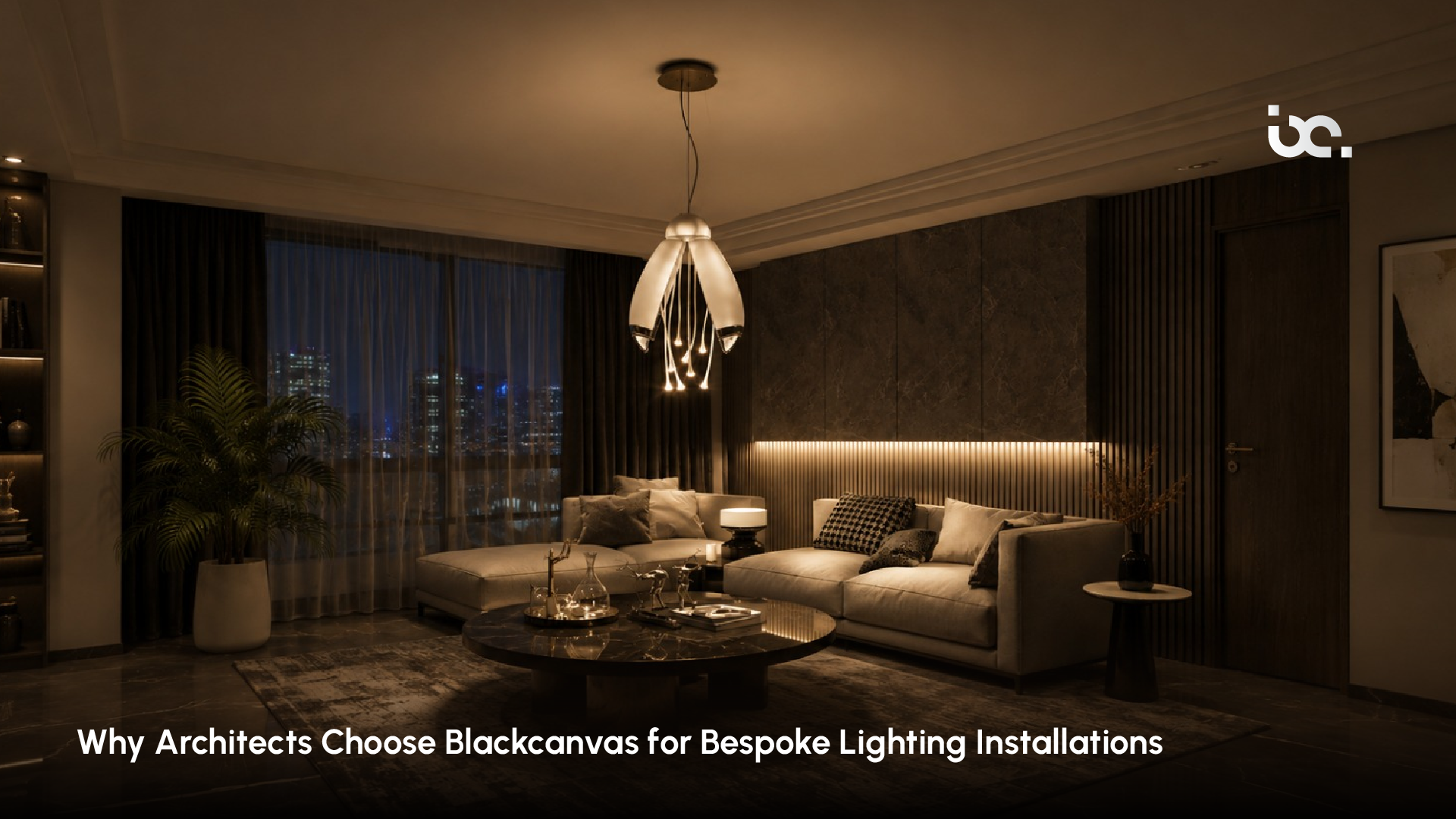
Blackcanvas approaches lighting as a design discipline in its own right, working closely with architects to develop distinctive solutions for individual spaces. Through architect collaboration, designer lighting, and bespoke installations, the studio creates pieces that are conceived around the character and requirements of each project.
Every architectural project has its own language. Materials, proportions, ceiling heights, furniture, circulation, and natural light all influence how a space feels.
A lighting fixture that looks exceptional in one setting may feel completely out of place in another. This is why standard solutions do not always provide the level of refinement expected in premium interiors.
Blackcanvas considers the relationship between the fixture and its surroundings. Instead of asking only how much light a space requires, the design process can consider:
The result is lighting that feels integrated rather than simply installed.
Successful bespoke lighting begins with conversation. Architects understand the structure and spatial intention of a project, while lighting designers bring a specialised understanding of illumination, materials, scale, and visual effect.
When these perspectives meet early in the process, lighting can become part of the architecture rather than something added after the main design decisions have been made.
Architect collaboration allows the lighting team to understand the project’s broader vision. It also gives architects an opportunity to communicate details that may otherwise be difficult to translate into an off-the-shelf fixture.
This collaborative process can influence everything from the overall silhouette of a fixture to its dimensions, finish, mounting method, and light distribution.
Designer lighting does not need to announce itself loudly. In sophisticated spaces, elegance often comes from restraint.
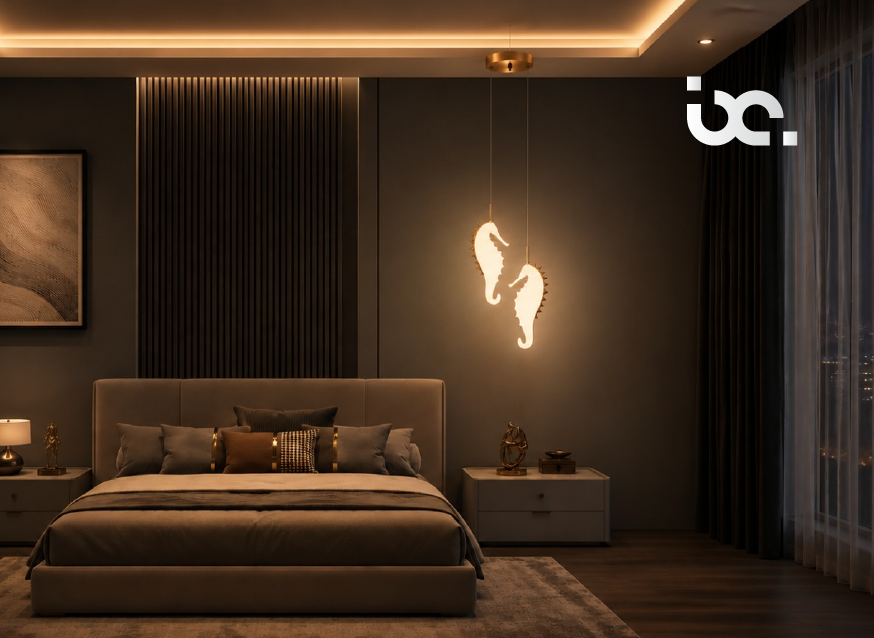
A sculptural pendant, an architectural wall light, or a carefully positioned linear installation can become a defining element without overwhelming the room.
Blackcanvas focuses on creating lighting that balances visual character with architectural harmony. The objective is not simply to produce an impressive object but to create a piece that feels right within its environment.
For architects, this offers greater freedom. Instead of selecting from predetermined shapes and sizes, they can explore lighting concepts that respond specifically to the project.
That flexibility can be particularly valuable in spaces with unusual dimensions, dramatic ceilings, curved surfaces, or distinctive material palettes.
The defining quality of bespoke installations is that they are created for a particular environment.
A custom lighting piece can respond to dimensions that would be difficult to accommodate with standard products. It can also reflect a project’s aesthetic language through carefully selected materials, finishes, proportions, and forms.
Bespoke lighting may be developed for:
These installations often become visual anchors within a space. During the day, their form contributes to the interior composition. After dark, their illumination changes the atmosphere and reveals architectural details in a different way.
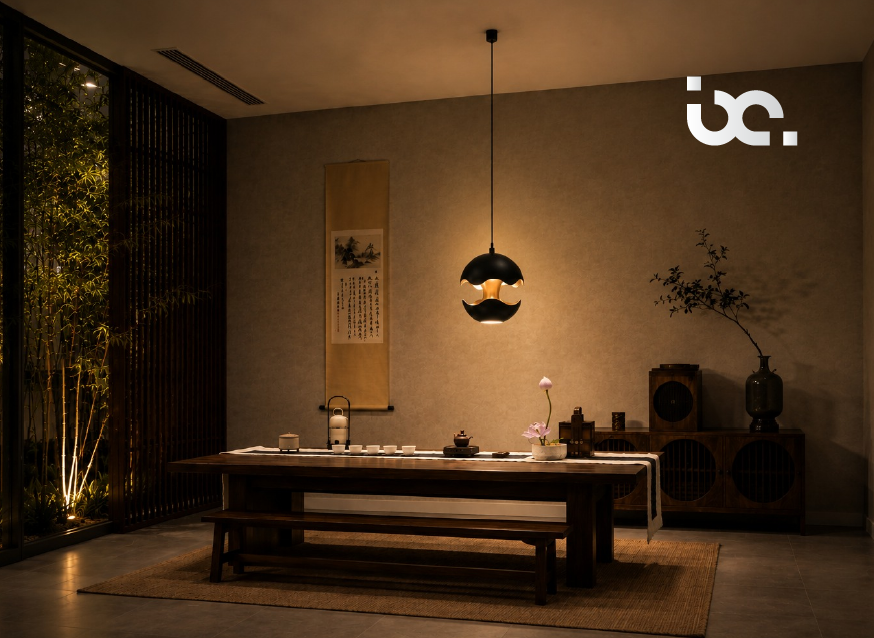
One of the misconceptions surrounding bespoke lighting is that customisation is purely aesthetic. In reality, custom lighting can solve practical design challenges as well.
A project may require a particular beam direction, a specific installation length, controlled glare, unusual mounting, or illumination across an irregular architectural surface.
Custom lighting allows these requirements to become part of the design brief rather than obstacles.
This is especially relevant in premium interiors, where functionality is expected to coexist seamlessly with visual sophistication.
A well-designed fixture can provide the required illumination while remaining proportionate, elegant, and visually coherent.
Luxury is often communicated through materials and craftsmanship rather than excessive decoration. Lighting provides another opportunity to introduce material character into an interior.
Metal finishes, glass, stone, fabric, wood, and other materials can influence how a fixture interacts with its surroundings. The finish may complement architectural hardware, echo furniture details, or create a deliberate contrast.
For architects, these choices can strengthen the overall material palette of a project.
A warm metal finish might complement timber and natural stone. A restrained glass form may suit a minimalist interior. A sculptural metal installation could create a striking counterpoint against a softer architectural background.
The possibilities are extensive, but the guiding principle remains the same: every material should have a reason for being there.
Good lighting changes how people experience architecture.
It can make a ceiling feel higher, draw attention towards a particular artwork, create intimacy around a dining table, or establish a sense of drama in an entrance.
This is why lighting design should consider how people move through a space.
Architects may use different lighting approaches to create visual hierarchy:
Combining these layers creates a richer experience than relying on one source of illumination throughout a room.
The journey from an initial lighting idea to a finished installation requires attention to detail.
A professional luxury lighting studio needs to consider both creative and technical requirements. Early conversations establish the design direction, while subsequent stages refine dimensions, materials, finishes, lighting performance, and installation details.
A considered process may involve:
This level of involvement can provide architects with greater confidence throughout the project.
Premium interiors demand a certain degree of coherence. Furniture, finishes, artwork, architecture, and lighting all need to contribute to the same visual story.
A standard fixture may perform its function perfectly but still feel disconnected from the larger composition.
Bespoke lighting provides another possibility: the fixture itself can be designed as part of the interior language.
This can be especially effective in residences where clients want a home that feels personal rather than catalogue-driven. It is equally valuable in hospitality and commercial environments, where distinctive lighting can contribute to a memorable identity.
Blackcanvas brings together design sensitivity, craftsmanship, and collaborative thinking to create lighting solutions for sophisticated architectural environments.
Its approach recognises that every project has different requirements. Rather than treating bespoke work as simply a larger version of a standard product, the studio considers the architecture, atmosphere, materials, and practical needs from the outset.
For architects, this means having a lighting partner capable of engaging with the project at a deeper design level.
The final fixture becomes more than a source of illumination. It becomes part of the architecture’s visual vocabulary.
A bespoke lighting installation is a lighting solution specifically designed and produced for a particular space or project. Its dimensions, materials, form, finish, and lighting characteristics can be tailored to the architectural requirements.
Early collaboration allows lighting to be considered alongside architectural and interior decisions. This can create better coordination between the fixture, space, materials, and overall design concept.
No. Custom lighting can be appropriate for residences, hospitality projects, offices, retail spaces, restaurants, galleries, and other environments where standard solutions do not fully meet the design requirements.
Absolutely. A custom fixture can serve as a visual feature while providing carefully considered illumination. Its design can address practical requirements such as light distribution, scale, glare control, and positioning.
A luxury lighting studio typically combines design expertise, material knowledge, craftsmanship, technical understanding, and close project collaboration to create lighting that is tailored to the environment rather than selected solely from standard options.
Experience radiant guidance tailored to your unique vision.