No products in the cart.

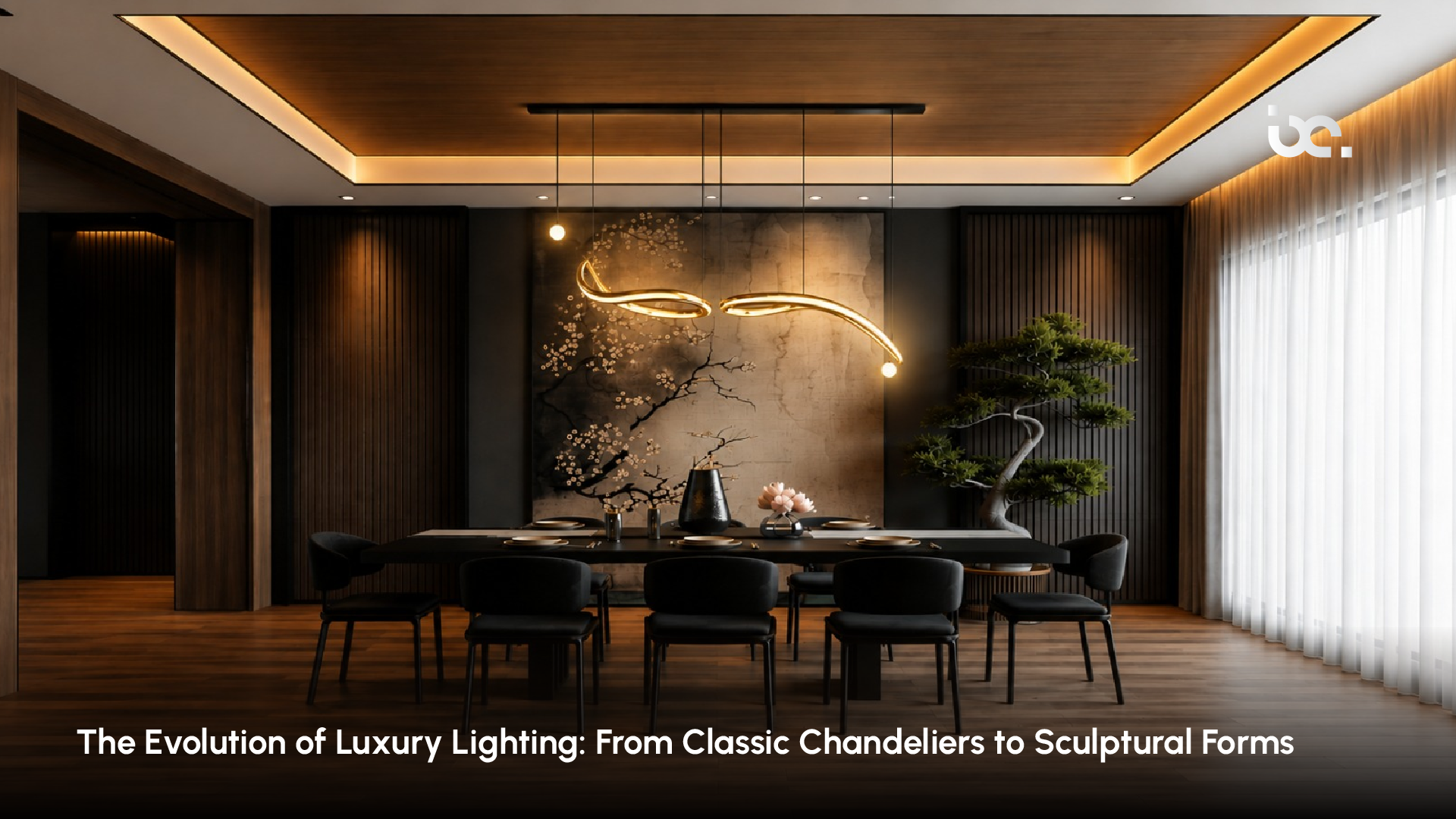
Luxury lighting has never been merely about making a room brighter. At its finest, it shapes atmosphere, defines proportions, highlights architecture, and gives an interior a distinct visual identity.
For centuries, lighting has occupied an important place in refined interiors. The grand chandelier once represented the ultimate expression of elegance, suspended above dining rooms, ballrooms, and imposing entrance halls. Today, the vocabulary of luxury has expanded.
Designers are increasingly exploring sculptural silhouettes, unexpected materials, artistic compositions, and architectural forms that blur the distinction between lighting and art. This evolution reflects changing ideas about what luxury means.
The latest luxury lighting trends are less concerned with conventional grandeur and more interested in craftsmanship, individuality, proportion, and artistic expression.
A lighting fixture can now be the quiet centrepiece of a room or a dramatic installation that commands attention from across the space.
Traditional chandeliers were designed to communicate opulence. Crystal drops, elaborate metalwork, multiple arms, and symmetrical forms created a sense of ceremony. Their beauty came largely from ornamentation.
Contemporary lighting approaches luxury differently. Rather than adding decoration to a fixture, designers often treat the fixture itself as a piece of sculpture. This shift can be seen in:
The result is lighting that feels less like an accessory and more like part of the architecture.
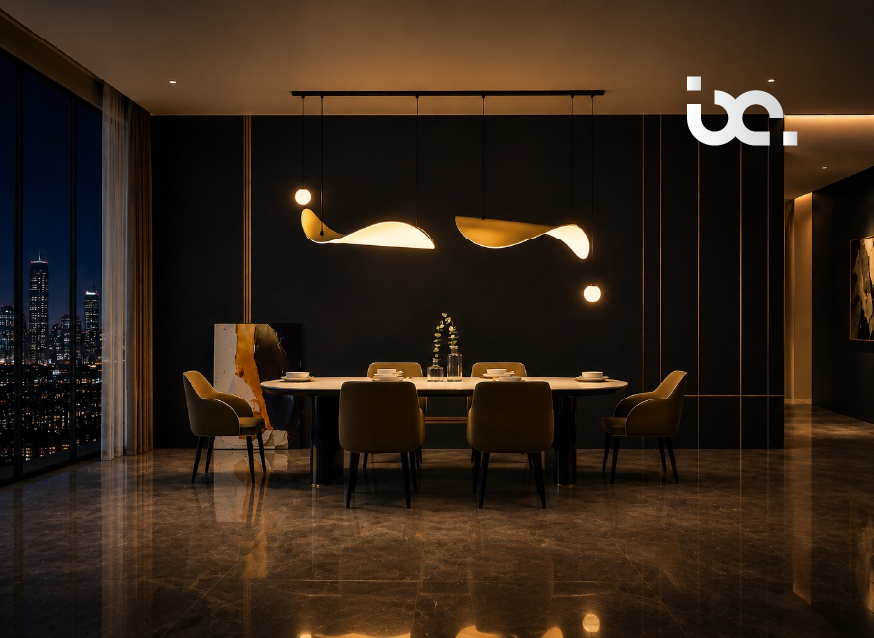
The chandelier has certainly not disappeared. It has evolved. Modern chandeliers reinterpret the familiar idea of a central decorative fixture through cleaner lines, unusual arrangements, and contemporary materials.
Instead of rows of identical crystal elements, a modern chandelier may feature floating glass spheres, slender metal arms, sculptural branches, or carefully arranged geometric forms. The purpose remains similar: to create a focal point. The expression, however, is entirely different.
In a contemporary dining room, a long sculptural chandelier can visually anchor the table. In a double-height foyer, a cascading installation can connect multiple architectural levels. The chandelier has moved from being a symbol of traditional grandeur to becoming a flexible design statement.
Lighting has evolved alongside architecture. Traditional interiors often relied on defined rooms, heavier furnishings, decorative mouldings, and visually formal arrangements. Contemporary interiors tend to favour openness, cleaner architectural lines, natural materials, and greater visual continuity.
Lighting needed to evolve accordingly. The designer lighting evolution has therefore produced fixtures that can complement rather than compete with contemporary architecture.
A minimalist interior may call for an understated pendant with exceptional detailing. A dramatic residence may require a large artistic installation that occupies the vertical volume of the room. In both cases, the lighting responds to the architecture rather than following a universal formula.
Artistic lighting represents one of the most fascinating developments in contemporary interiors. The fixture is no longer judged solely by the quality of illumination it provides. Its silhouette, craftsmanship, materiality, and emotional presence also matter. A sculptural light can function almost like an artwork.
It may be admired during the day for its physical form and appreciated differently at night when illumination reveals its character. This dual identity gives lighting an unusual role within an interior. A carefully designed fixture can:
The light itself becomes only one part of the experience.
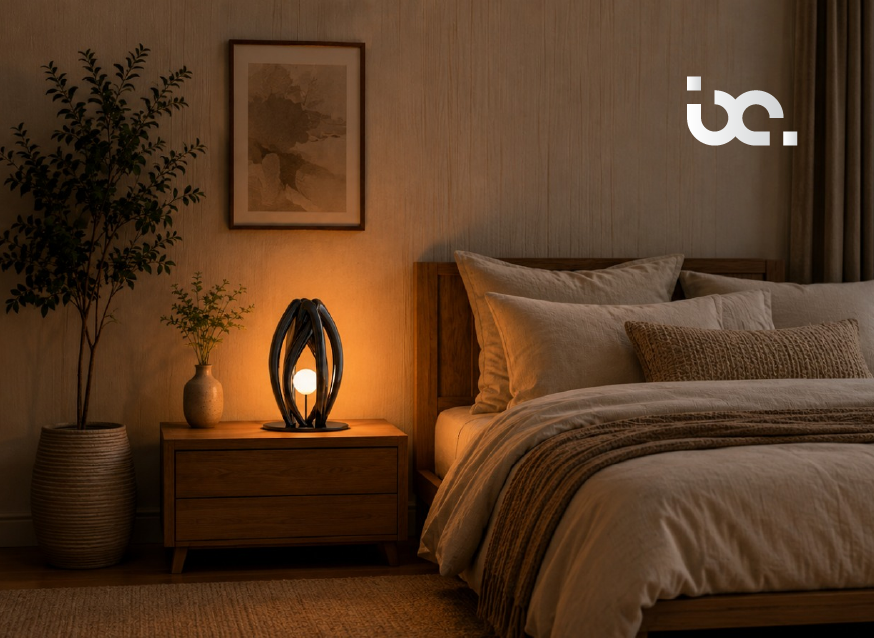
The evolution of luxury lighting is also a story about materials. Crystal remains timeless, but contemporary designers increasingly experiment with brass, bronze, stone, wood, glass, ceramics, fabric, and specialised metal finishes.
Material selection influences not only appearance but also the way illumination behaves. Glass can diffuse or refract light. Metal can reflect it with precision. Stone can create depth and texture. Wood introduces warmth and an organic character.
In premium interiors, these details become particularly significant because lighting interacts constantly with surrounding materials. A warm brass fixture can complement natural timber beautifully, while a sculptural glass installation can bring lightness to a space dominated by stone.
One of the strongest developments in contemporary lighting is the increasing confidence with scale. Oversized fixtures can transform large rooms, particularly spaces with generous ceiling heights. But large does not automatically mean luxurious. Scale has to be proportionate to the architecture. A fixture should be considered in relation to:
A dramatic piece should feel intentional rather than simply enormous. The most successful installations often create a sense that their dimensions were designed specifically for the space.
As interiors become more individual, standardised lighting solutions are not always sufficient. Bespoke lighting allows designers and homeowners to develop fixtures around a particular space. This can involve customised:
Bespoke design is particularly valuable in premium interiors where every architectural element has been carefully considered. A custom fixture can echo the curve of a staircase, complement a material palette, or occupy a specific architectural void. That level of integration creates a more cohesive result.
Modern lighting is increasingly being considered during the architectural and interior design stages rather than added at the end. This approach allows designers to think about light as part of spatial composition.
For example, a staircase can become an illuminated architectural feature. A dining area can be defined by a sculptural pendant. A foyer can use a dramatic installation to establish the mood of the entire residence. This is where lighting becomes particularly powerful. It does not merely illuminate architecture. It helps shape how architecture is perceived.
Luxury interiors need to perform differently throughout the day. A room may feel bright and open in the afternoon and intimate and atmospheric after sunset. Layered lighting allows this transformation. A refined scheme may combine:
This flexibility makes a room feel more sophisticated because the lighting can respond to different activities and moods. The fixture provides the visual identity, while the surrounding lighting creates the atmosphere.
Contemporary décor has made room for a quieter form of luxury. Instead of relying exclusively on elaborate ornamentation, premium interiors increasingly celebrate restraint, craftsmanship, texture, and individuality.
A simple sculptural pendant made from exceptional materials may communicate more sophistication than an overly elaborate fixture. This is not minimalism for the sake of minimalism. It is selectivity.
Every element has a reason to exist, and the lighting becomes part of that philosophy.
When selecting a luxury lighting piece, the first question should not be, “What is currently fashionable?” Instead, consider:
Trends can provide inspiration, but proportion and context ultimately determine whether a fixture feels timeless.
The history of luxury lighting is ultimately a history of changing ideas about beauty. The grand chandelier once represented the height of sophistication. Today, its descendants can be found in sculptural installations, artistic pendants, architectural light forms, and bespoke pieces created specifically for individual spaces.
The modern approach is not about abandoning tradition. It is about reinterpreting it. The elegance of a classic chandelier can still inspire a contemporary installation. The craftsmanship of traditional lighting can live within a minimalist silhouette. Crystal, brass, glass, stone, and other materials can be transformed into forms that feel distinctly modern while retaining a sense of permanence.
The most compelling luxury lighting trends therefore do not chase novelty simply for its own sake. They focus on creating pieces with presence.
In the finest interiors, lighting becomes something to experience rather than simply switch on. It creates shadows, defines proportions, reveals materials, and changes the mood of a room as naturally as evening changes the character of a city. And perhaps that is the most beautiful evolution of all: luxury lighting is no longer content to illuminate the room. It has learned how to become part of its story.
Luxury lighting has moved from heavily ornamental fixtures towards sculptural, contemporary, and often bespoke designs that emphasise materials, proportion, craftsmanship, and architectural integration.
Yes. Modern chandeliers can be highly luxurious when they combine strong design, quality materials, thoughtful proportions, and exceptional craftsmanship.
Artistic lighting refers to fixtures designed with a strong emphasis on visual and sculptural expression. Such pieces can function as both lighting and decorative art.
Scale determines how a fixture relates to the surrounding architecture and furniture. An appropriately proportioned fixture can create drama without overwhelming the interior.
Glass, brass, bronze, stone, wood, ceramics, crystal, and specialised metal finishes are commonly explored in contemporary lighting design.
Experience radiant guidance tailored to your unique vision.