No products in the cart.

Minimalism is often described through what it removes: unnecessary furniture, excessive ornamentation, visual noise, and competing colours. Yet a truly sophisticated minimalist interior is not empty. It is carefully composed, with every element selected for a reason.
Lighting plays a particularly important role in this balance. The right fixture can bring warmth to a restrained palette, highlight architectural proportions, define functional zones, and introduce a subtle sense of luxury without overwhelming the room.
The essence of minimalist lighting design lies in knowing when a light should make a statement and when it should quietly disappear into the architecture.
For luxury homes, this approach creates interiors that feel calm, spacious, and effortlessly refined.
Minimalist interiors depend heavily on proportion, geometry, natural materials, and carefully considered negative space. Lighting should enhance these characteristics rather than compete with them.
Instead of filling ceilings with visible fixtures, designers can use concealed sources, recessed lights, linear illumination, and carefully positioned wall lights. These techniques allow the architecture to remain the visual focus while providing comfortable illumination.
A sculptural staircase, textured stone wall, high ceiling, or dramatic window can become even more striking when illuminated subtly. The objective is not to announce the lighting itself but to reveal the qualities already present in the space.
This relationship between light and architecture is central to sophisticated minimalist design.
In a restrained interior, every visible object carries greater visual importance. This makes fixture selection particularly significant.
Modern lighting offers an extensive range of refined forms, from slender pendants and architectural track systems to sculptural floor lamps and discreet recessed fixtures. The best choice depends on the scale and character of the room.
Before selecting a fixture, consider:
A beautiful light should belong to the room even when it is not functioning.
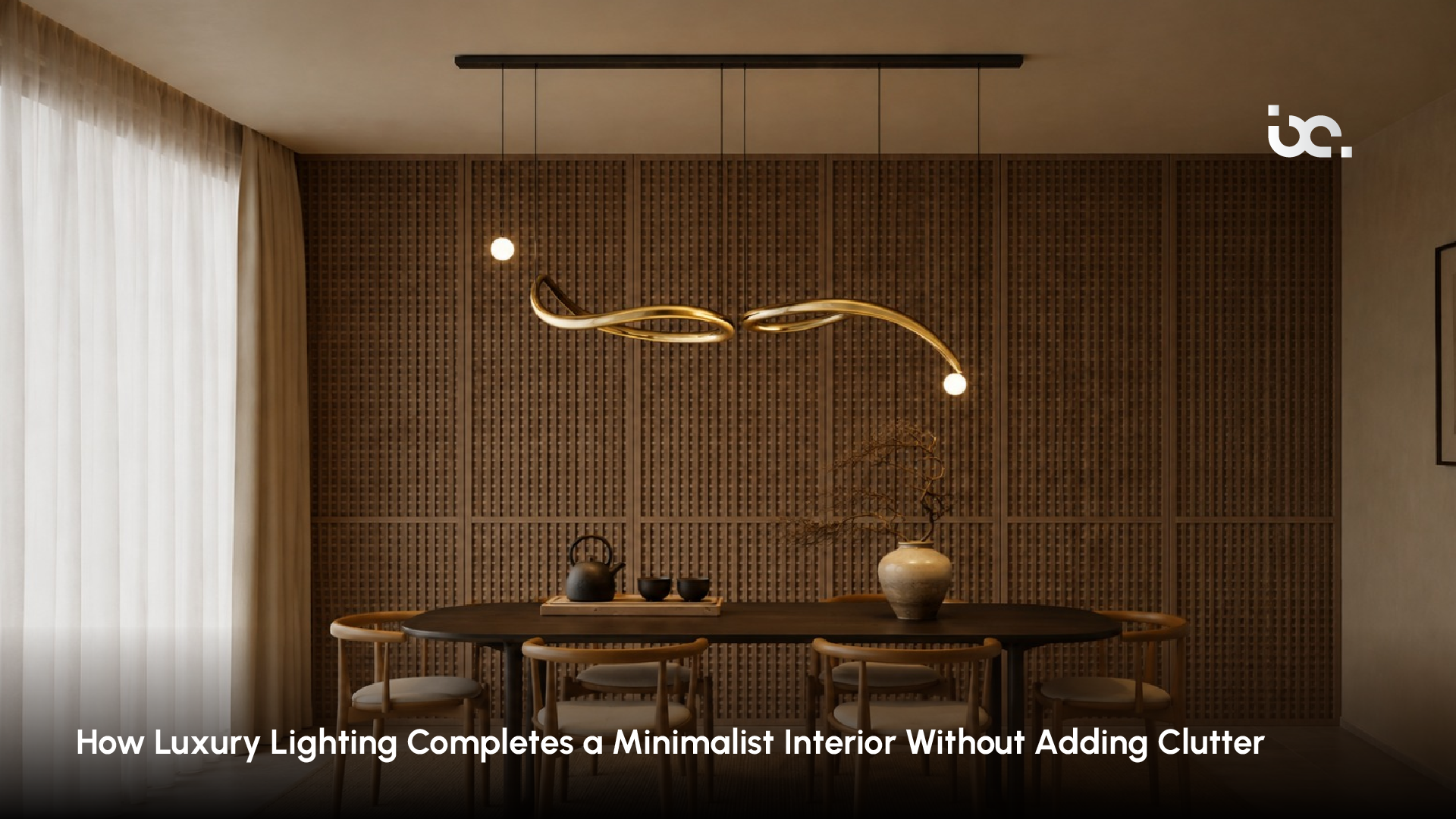
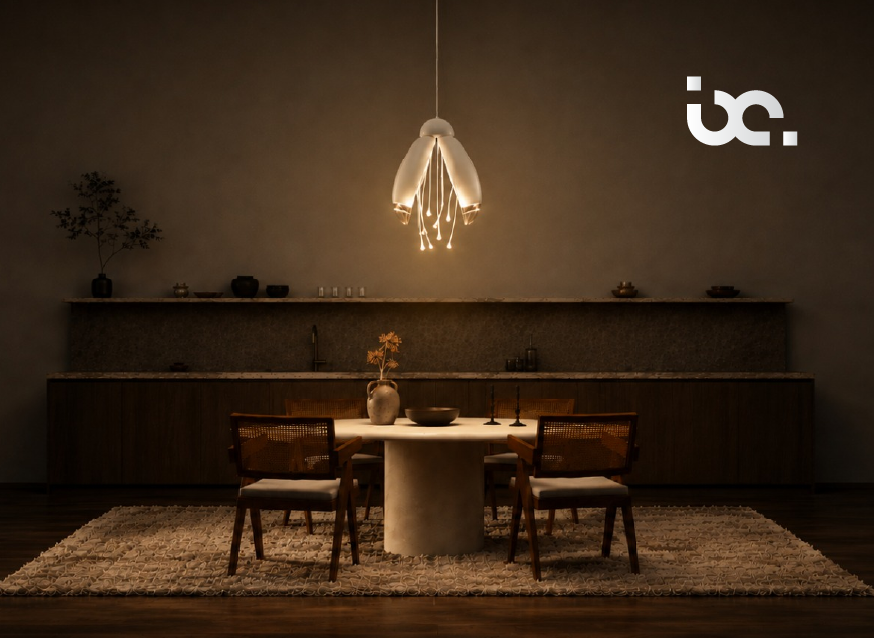
Minimalism does not mean avoiding statement fixtures. In fact, a single exceptional piece can give a restrained interior its defining character.
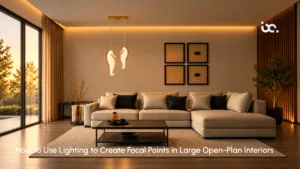
A sculptural pendant above a dining table or an elegant chandelier within a double-height living room can become a focal point without making the space feel crowded. The secret is restraint elsewhere.
When introducing statement fixtures, allow them enough visual breathing room. Avoid placing several competing decorative pieces within the same sightline. One distinctive fixture surrounded by calm surfaces often feels considerably more luxurious than a collection of decorative objects.
Some of the most elegant lighting is the lighting that cannot immediately be seen.
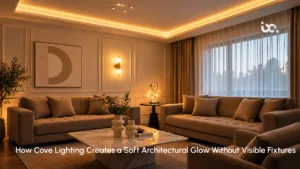
Concealed LED strips can be integrated into ceiling recesses, cabinetry, shelves, staircases, and architectural details. When the source remains hidden, the illuminated surface becomes the focus.
This technique works particularly well in clean interiors because it maintains visual continuity. A ceiling can appear to float, a wall can acquire a gentle wash of light, or a shelving unit can appear softly illuminated without introducing another prominent object.
The result is subtle but powerful.
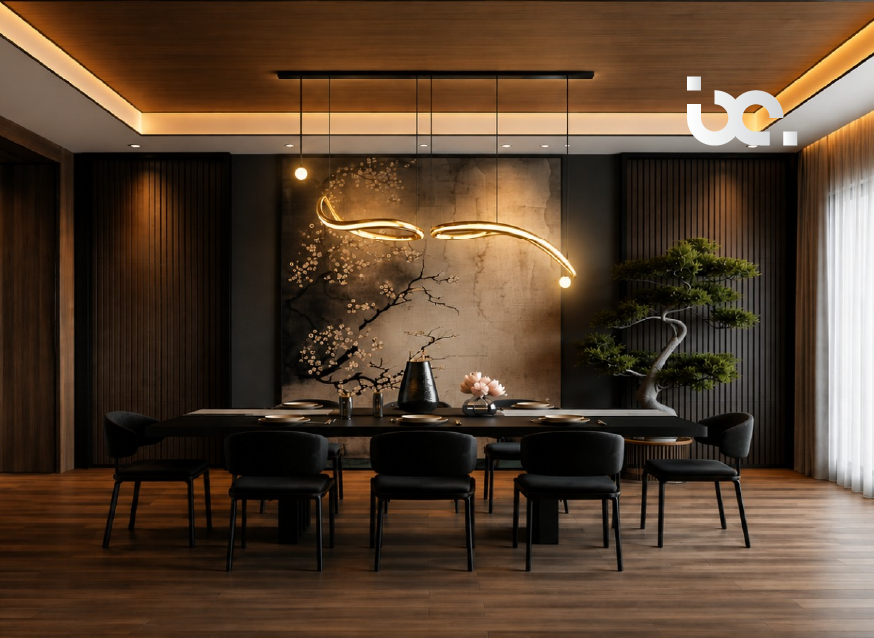
A minimalist room still requires different types of illumination. Relying on a single ceiling fixture can create flatness and harsh shadows, while adding numerous visible fixtures can compromise the clean aesthetic.
Layered lighting offers a more elegant solution.
A sophisticated scheme may combine:
Each layer should have a clear purpose. When several functions are combined intelligently, fewer fixtures may be required, allowing the room to remain visually uncluttered.
Light has an emotional quality, and colour temperature can dramatically alter the perception of a minimalist space.
Warm white illumination generally works beautifully with natural wood, stone, textured fabrics, and muted neutral palettes. It creates a welcoming atmosphere while preserving the understated character associated with luxury.
Cooler light may be suitable for certain contemporary applications, particularly where crisp visibility is important, but excessive cool illumination can make residential interiors feel clinical.
Consistency is also essential. Closely connected areas should maintain a coherent lighting language so the transition between spaces feels natural.
Minimalist interiors often rely on a limited number of materials, which means texture becomes especially important. Lighting can reveal these details beautifully.
A grazing light across a textured stone wall can bring out subtle variations in its surface. A carefully directed beam can reveal the grain of timber. Soft illumination across fabric can make a neutral room feel warmer and more dimensional.
This is where minimalist lighting design becomes more than functional illumination. It becomes a way of presenting materials.
Rather than decorating the room with additional objects, designers can use light to make existing materials more expressive.
Negative space is one of the defining characteristics of minimalist design. Empty areas are not unfinished; they are intentional pauses that give important elements room to breathe.
Lighting should respect these pauses.
A ceiling crowded with downlights can immediately disrupt the visual calm of a minimalist room. Instead, fixtures can be positioned according to architectural grids, functional requirements, and key focal points.
In some spaces, fewer fixtures with better beam control can provide more effective illumination than a larger number of poorly positioned lights.
Luxury often appears in what has been deliberately left out.
The minimalist philosophy can extend beyond the interior. Balconies, terraces, courtyards, and gardens should feel connected to the home’s overall design language.
Modern lighting can be integrated into outdoor architecture through discreet step lights, concealed wall illumination, linear sources, and carefully positioned landscape fixtures.
Rather than illuminating every corner, designers can highlight selected trees, pathways, textured walls, water features, or seating areas. The surrounding darkness becomes part of the composition, giving the illuminated elements greater presence.
This approach creates a seamless transition between indoor and outdoor living.
Technology can make minimalist lighting even more refined when it remains discreet.
Dimmers and intelligent control systems allow homeowners to adjust brightness according to the time of day, activity, or desired mood. Preset scenes can create different atmospheres for entertaining, dining, relaxing, or watching a film.
The advantage is not simply convenience. Flexible control reduces the need for additional decorative fixtures because one carefully planned lighting system can serve multiple purposes.
The technology remains behind the scenes while the interior retains its simplicity.
Even an expensive lighting scheme can lose its elegance when planning is overlooked. Some common mistakes include:
The best results come when lighting is considered alongside the layout, materials, furniture, and architectural details from the beginning.
Luxury lighting does not have to be dramatic to be memorable. In a minimalist interior, sophistication often comes from precision: the exact position of a spotlight, the softness of a wall wash, the proportion of a pendant, or the gentle glow beneath a cabinet.
The most successful lighting schemes do not fill a room with brightness. They create hierarchy. They guide the eye, reveal materials, establish atmosphere, and allow carefully selected objects to stand apart.
For luxury homes, this balance is particularly valuable. A restrained interior can feel deeply personal and inviting when light is used with sensitivity.
Ultimately, minimalist lighting design is about creating more visual impact with less physical presence. When every fixture has a purpose and every beam is carefully considered, lighting becomes part of the architecture itself.
The result is an interior that feels spacious without feeling bare, luxurious without appearing excessive, and contemporary without becoming cold. In the world of refined interiors, that quiet confidence is perhaps the most enduring expression of luxury.
Minimalist lighting design focuses on simplicity, functionality, clean forms, and purposeful illumination. It uses carefully positioned fixtures and concealed sources to create atmosphere without adding unnecessary visual elements.
Yes. A single sculptural pendant or chandelier can provide a striking focal point. The key is to balance it with simpler surroundings and sufficient negative space.
Warm colour temperatures, concealed illumination, wall washing, and layered lighting can introduce softness and depth. Lighting natural materials such as wood and stone can also make a minimalist room feel more welcoming.
Not necessarily. Decorative lighting can add personality when selected carefully. The goal is to avoid visual competition rather than eliminate decorative elements altogether.
Concealed lighting keeps the source visually discreet while allowing architectural surfaces and materials to become the focus. It creates illumination without adding physical or visual clutter.
Experience radiant guidance tailored to your unique vision.