No products in the cart.


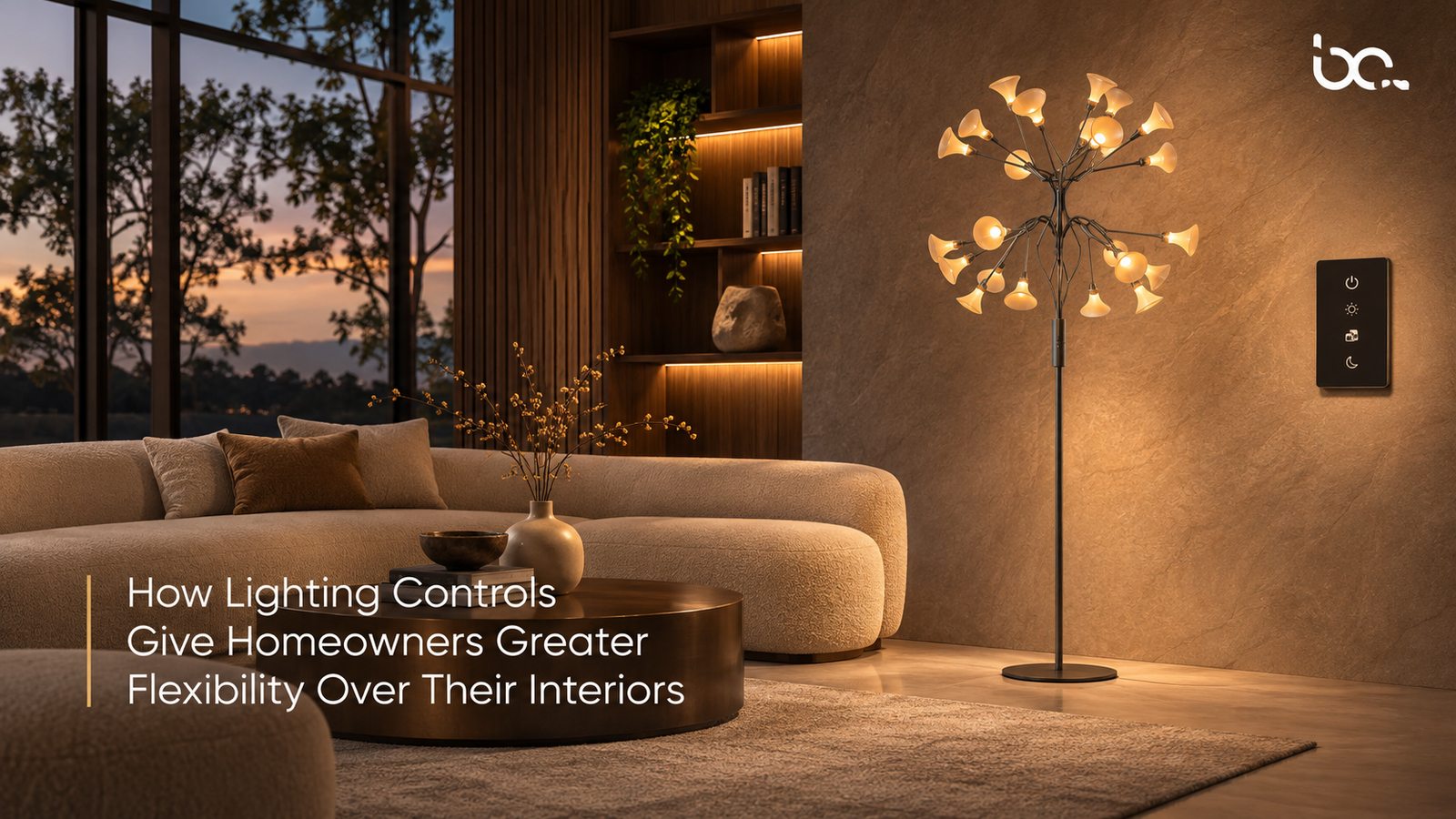
A thoughtfully designed interior is never defined by furniture, finishes or architectural details alone. Light plays an equally important role in shaping how a space feels, functions and evolves throughout the day.
A beautifully illuminated room can appear warm and inviting in the evening, bright and energising in the morning, or quietly atmospheric when the occasion calls for something more intimate.
Lighting control systems make this flexibility possible. Rather than relying on a single lighting arrangement, homeowners can adjust brightness, colour temperature, individual fixtures and entire lighting scenes to suit different activities and moods. The result is an interior that responds naturally to changing needs without compromising its visual elegance.
From contemporary apartments to expansive luxury residences, lighting controls offer a more considered approach to everyday living. They bring convenience, precision and personalisation into the home, allowing illumination to become an integral part of the interior experience.
Lighting control systems are designed to regulate how lighting operates within a home. Depending on their configuration, they may allow homeowners to adjust brightness, switch fixtures on or off, change colour temperature, schedule lighting or control multiple rooms from a central interface.
Traditional lighting generally depends on individual switches. While practical, this approach can limit the atmosphere a room can achieve. Lighting controls introduce greater freedom by allowing different combinations of fixtures to work together.
A system may include:
The sophistication of the system can vary considerably. Some homeowners prefer simple dimmers in selected rooms, while others choose a comprehensive solution that connects lighting throughout the residence.
The most successful approach is one that complements the architecture, lifestyle and design priorities of the home.
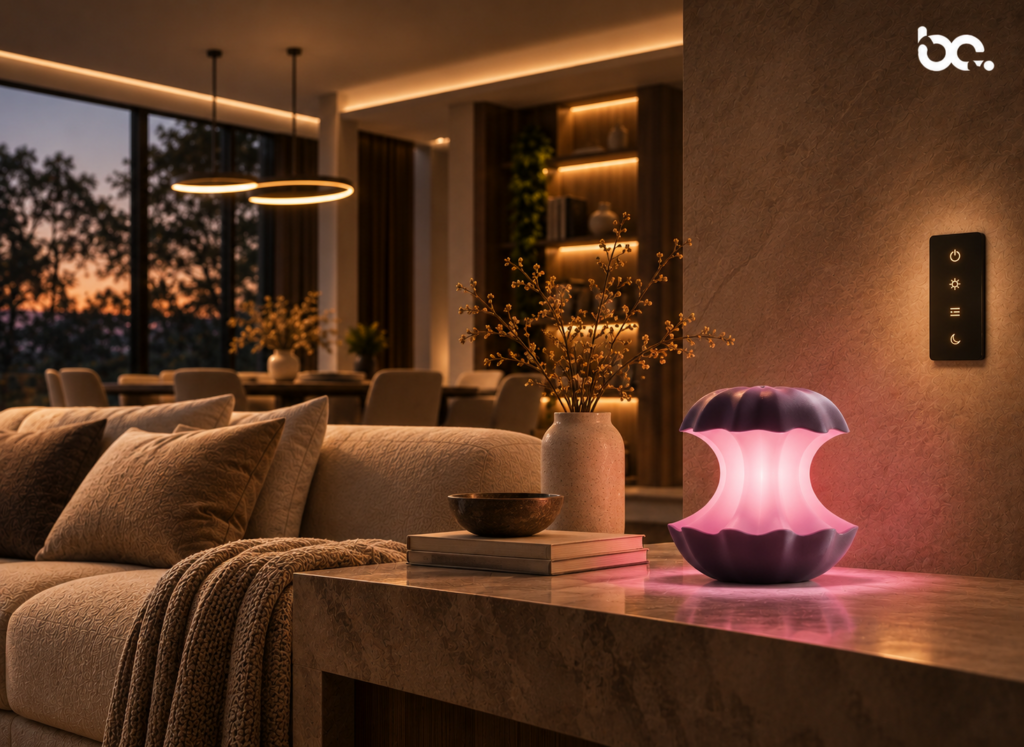
One of the most valuable advantages of lighting controls is the ability to change a room’s atmosphere without altering its physical design.
Dimmable lighting allows illumination to move between different levels of brightness. This makes a space more adaptable, particularly when it serves multiple purposes.
A living room, for example, may require bright illumination when entertaining guests, softer light during a quiet evening and focused lighting when reading. Instead of relying on separate arrangements for each activity, homeowners can adjust the existing lighting to suit the moment.
Luxury interiors often combine several lighting layers to create depth and visual interest:
Lighting controls allow these layers to be balanced independently. A homeowner may reduce the ambient lighting while allowing an artwork’s accent lighting to remain prominent. Alternatively, task lighting can be increased while the rest of the room remains softly illuminated.
This subtle control helps interiors feel composed rather than uniformly bright.
Smart lighting controls bring convenience into the everyday experience of a home. They allow homeowners to operate lighting through wall-mounted keypads, mobile devices, voice assistants or integrated home automation platforms, depending on the system.
The appeal is not simply technological. Smart controls make lighting easier to manage while maintaining the design intent of the interior.
Imagine arriving home after sunset. Instead of switching on multiple fixtures individually, a single command can activate a welcoming lighting scene. Entryway lighting may illuminate gently, while the living room and selected architectural details create a warm transition into the home.
Other useful applications include:
The interface should remain intuitive. A system that requires complicated instructions or frequent troubleshooting can undermine the convenience it is intended to provide.
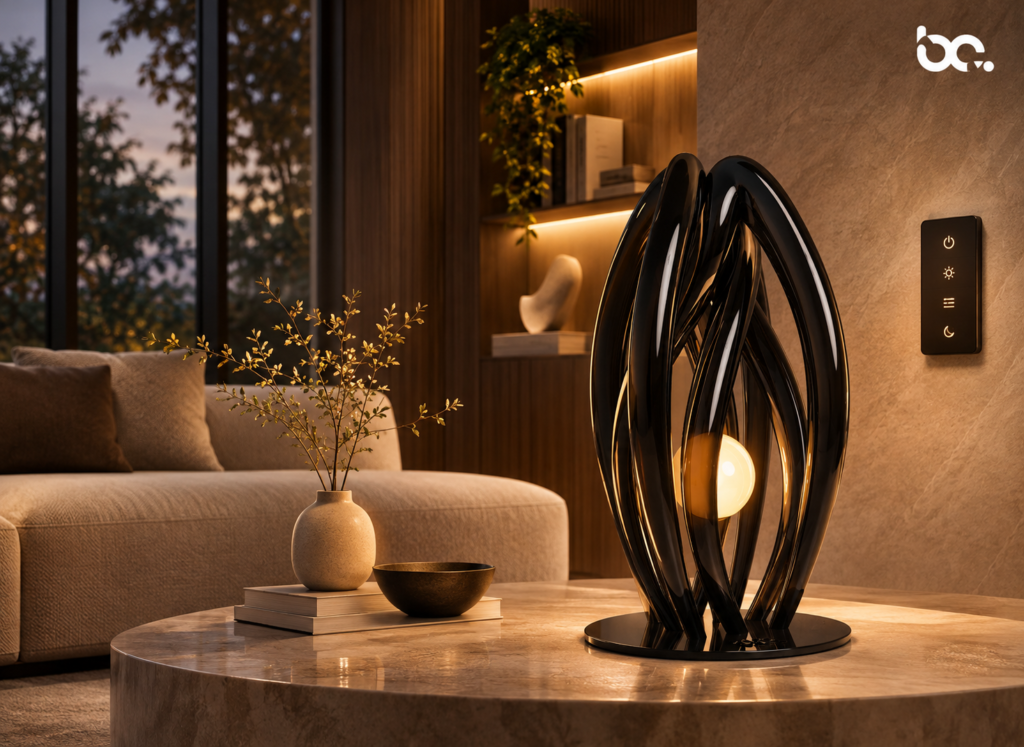
Lighting automation introduces a further level of flexibility by allowing lighting to respond to time, occupancy or other programmed conditions.
Instead of manually adjusting every fixture, homeowners can establish schedules and preferences that suit their daily routines.
For instance, lighting may gradually become brighter in the morning, remain functional throughout the day and transition to softer illumination during the evening. Hallway lights can respond to occupancy, while outdoor lighting can be programmed to operate around sunset.
Automation can be particularly useful in larger homes, where manually managing lighting across multiple rooms may become inconvenient.
Morning routines: Lighting can be scheduled to provide suitable illumination as the household begins the day.
Evening transitions: Selected fixtures can gradually shift towards a softer setting as the day ends.
Movement through the home: Compatible sensors can activate lighting in hallways, staircases or utility areas when needed.
Travel and security: Some systems can simulate occupancy by operating selected lights while residents are away.
Automation should be designed with care. The objective is to support natural routines rather than make the home feel overly programmed. Manual controls remain important because homeowners should always be able to adjust lighting according to their preferences.
A room’s appearance changes significantly depending on the direction, intensity and colour of its lighting. Adjustable illumination gives homeowners greater control over these visual qualities.
A neutral-toned living room may appear crisp and contemporary under brighter, cooler illumination. The same room can feel more intimate under warmer, softer light. Similarly, carefully directed lighting can bring out the texture of natural stone, timber, fabrics and decorative finishes.
Where compatible fixtures and systems are used, homeowners may also adjust colour temperature. This allows a transition between cooler white light and warmer tones.
Such adjustments can influence:
Colour temperature and brightness should be considered together. A beautifully designed lighting scheme is not simply about making a room brighter or darker; it is about choosing illumination that supports the intended experience.
Open-plan interiors present a distinctive lighting challenge. A single space may contain a kitchen, dining area and living room, each with different functional requirements.
Without careful planning, lighting can become inconsistent or overly uniform. Lighting control systems help establish visual separation while preserving the openness of the architecture.
For example, a kitchen may require brighter task lighting during food preparation. During dinner, the kitchen’s general illumination can be reduced while pendant lighting above the dining table becomes more prominent. The adjoining living area can maintain a softer atmosphere.
These transitions can be achieved through individual controls or pre-programmed scenes.
The benefits include:
Lighting becomes a subtle way of organising the interior without introducing physical partitions.
Lighting is often used to emphasise the features that make a residence distinctive. Cove lighting, recessed fixtures, wall washers, picture lights and concealed LED strips can all contribute to the architectural character of a room.
Lighting controls allow these elements to be adjusted according to their importance at a particular moment.
A textured wall may become a focal point when accent lighting is activated. A sculptural pendant can take centre stage during an evening gathering. In a quieter setting, architectural lighting may be reduced to create a more understated atmosphere.
This flexibility is especially valuable in interiors where lighting has been integrated into the architecture itself.
Rather than treating every fixture as an independent source of illumination, controls help create a coordinated composition. The relationship between light and shadow becomes part of the design.
Lighting controls can contribute to more efficient energy use by reducing unnecessary illumination. Dimmers allow homeowners to use only the brightness required for a particular activity, while occupancy sensors can switch off compatible lights when a space is unoccupied.
Scheduling can also prevent lights from operating longer than necessary.
However, energy savings depend on several factors, including fixture type, usage patterns, control settings and the efficiency of the lighting installation. Not every control system automatically produces significant savings.
Comfort should remain equally important. Excessive brightness, glare or poorly positioned fixtures can make a sophisticated interior feel uncomfortable.
A well-designed system considers:
When these elements are considered together, lighting controls can support both visual comfort and more responsible energy use.
The best lighting control solution depends on the scale of the project and the homeowner’s expectations.
A smaller residence may benefit from a combination of dimmers and a few smart controls. A larger property with extensive architectural lighting may require a more integrated system.
Before selecting a solution, homeowners should consider:
Think about how each room is used. A home office, bedroom and entertainment area will have different lighting requirements.
Not all fixtures, LED drivers and dimmers work together seamlessly. Compatibility should be confirmed before installation to avoid flickering, limited dimming range or inconsistent performance.
Controls should be simple to understand. Clearly labelled keypads and intuitive interfaces make daily operation more comfortable.
A system that allows future expansion may be valuable if additional rooms, fixtures or home automation features are planned.
Lighting controls should ideally be considered during the design or renovation stage. Coordination between lighting designers, electricians, interior designers and automation specialists can help ensure that the final installation works as intended.
Lighting control systems offer homeowners a more flexible and refined way to experience their interiors. Through dimmable lighting, smart lighting controls and carefully planned lighting automation, a home can adapt to different activities, moods and times of day.
Their value extends beyond convenience. Adjustable illumination can enhance architectural details, create distinct atmospheres, improve the usability of open-plan spaces and support more considered energy consumption.
The most elegant lighting schemes are not necessarily the most complicated. They are the ones that respond effortlessly to the people who live within them. With thoughtful planning and appropriate technology, lighting becomes an adaptable design element that brings greater comfort, character and sophistication to everyday life.
Lighting control systems allow homeowners to manage brightness, switching, lighting scenes and, in some cases, colour temperature or automated schedules.
Yes. Certain dimmers and smart lighting products can be installed in existing homes. The available options depend on the wiring, fixtures, compatibility and the level of control required.
Smart lighting generally allows lighting to be controlled through connected devices or interfaces. Lighting automation involves programmed actions based on schedules, occupancy or other conditions. A system may offer both features.
They can reduce unnecessary energy consumption by dimming lights, switching off unused fixtures and scheduling operations. Actual savings depend on the installation and how the system is used.
Yes. Adjusting brightness, colour temperature and lighting layers can significantly influence the mood, appearance and perceived comfort of a space.