No products in the cart.

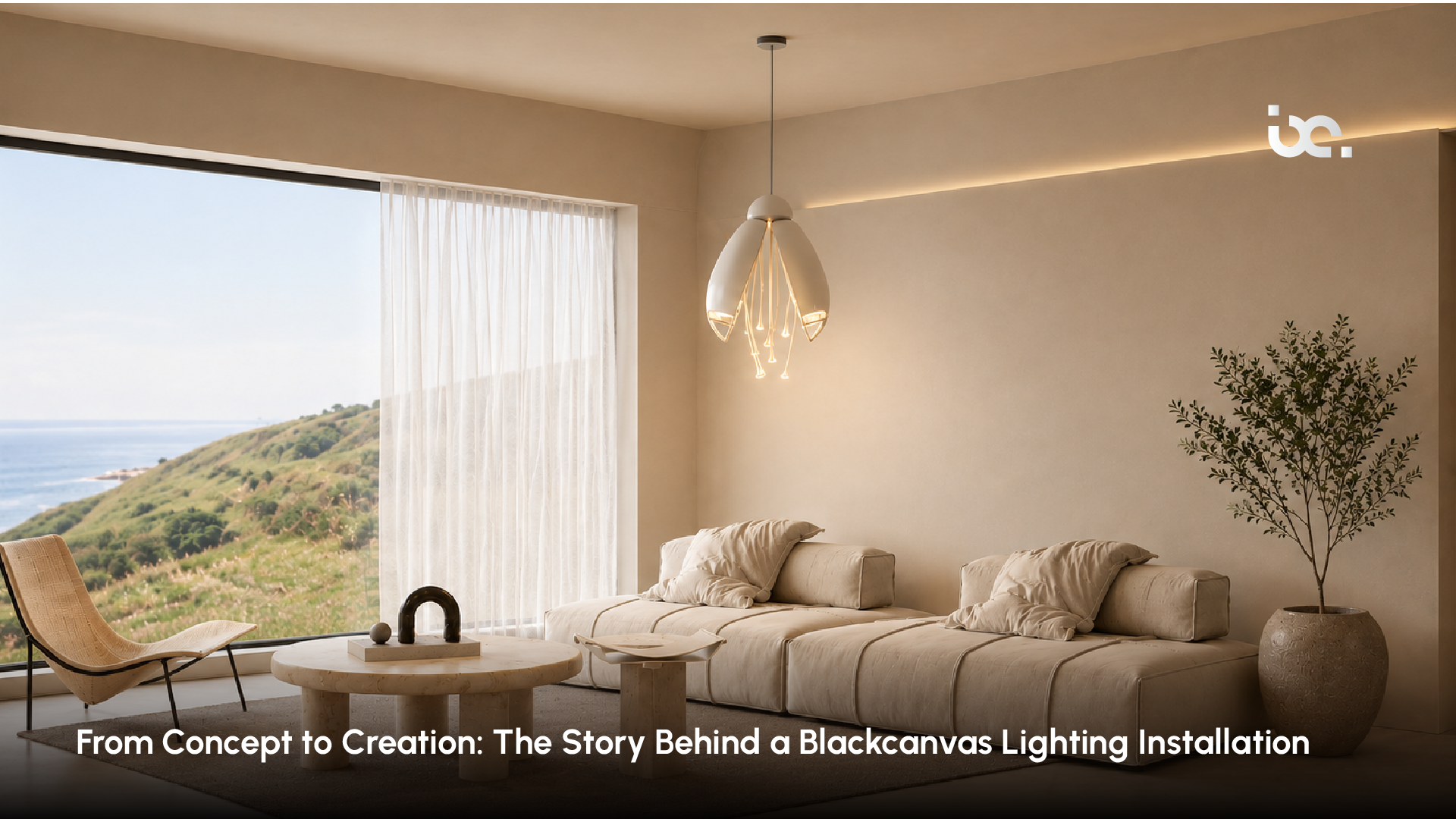
Exceptional lighting rarely begins with a fixture. It begins with an idea.
A feeling, a sketch, an architectural detail, a material, or even a particular quality of light can become the starting point for something entirely original. In a refined interior, lighting is not simply responsible for making a room visible.
It can define proportion, create atmosphere, reveal craftsmanship, and give a space its own identity.
This philosophy lies at the heart of a bespoke lighting installation.
At Blackcanvas Studio, the journey from an initial concept to a finished lighting piece involves creativity, collaboration, technical precision, and meticulous craftsmanship. Every stage matters because the final installation needs to feel as though it was created for that particular space and no other.
Here is how that journey unfolds.
Before a design takes shape, the space itself needs to be understood.
A custom lighting project cannot exist independently from its surroundings. Ceiling heights, architectural lines, furniture, materials, natural daylight, circulation, and the intended mood of the interior all influence the lighting concept.
This first stage is about observation and conversation.
Designers and architects may discuss:
A residential project might call for warmth and intimacy, while a hospitality interior may require a more dramatic visual statement.
The lighting should respond accordingly.
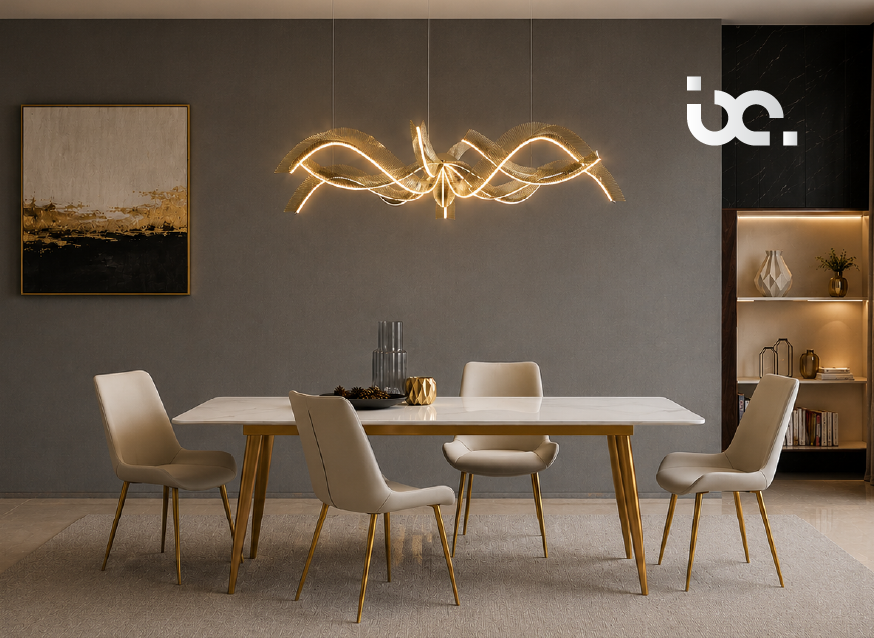
Once the character of the space is understood, the creative process begins.
A concept may emerge from something surprisingly simple: the curve of an architectural wall, the rhythm of a staircase, the texture of stone, or the way daylight enters a room.
The challenge is to translate that inspiration into a physical form without losing its original intention.
Luxury lighting design often depends on restraint. The most sophisticated concept is not necessarily the most elaborate one. It may be a beautifully proportioned silhouette, an unexpected material combination, or a carefully controlled relationship between light and shadow.
At this stage, designers explore questions such as:
These decisions establish the foundation for the final piece.
A designer lighting installation begins to become tangible when the concept is translated into drawings, proportions, and physical details.
The design needs to work aesthetically, but it must also work in the real world.
Dimensions are carefully considered according to the space. The fixture must maintain the intended visual balance while accommodating components, electrical requirements, mounting systems, and maintenance needs.
This is where creativity meets technical thinking.
A beautiful concept that cannot be fabricated or installed effectively is not a finished design. Successful bespoke lighting brings both sides together.
The design therefore evolves through refinement. Curves become more precise, proportions are adjusted, materials are evaluated, and details are reconsidered until the piece feels resolved.
Material selection can dramatically influence the character of a lighting installation.
Metal can provide structure and a refined architectural quality. Glass can introduce transparency, reflection, or softness. Wood can add warmth, while specialised finishes can create subtle variations in tone and texture.
For a luxury project, material selection is rarely arbitrary.
It may be influenced by:
The objective is to create harmony without making everything look identical.
A custom fixture may complement the interior through a shared finish, or it may deliberately introduce contrast to create a point of visual interest.
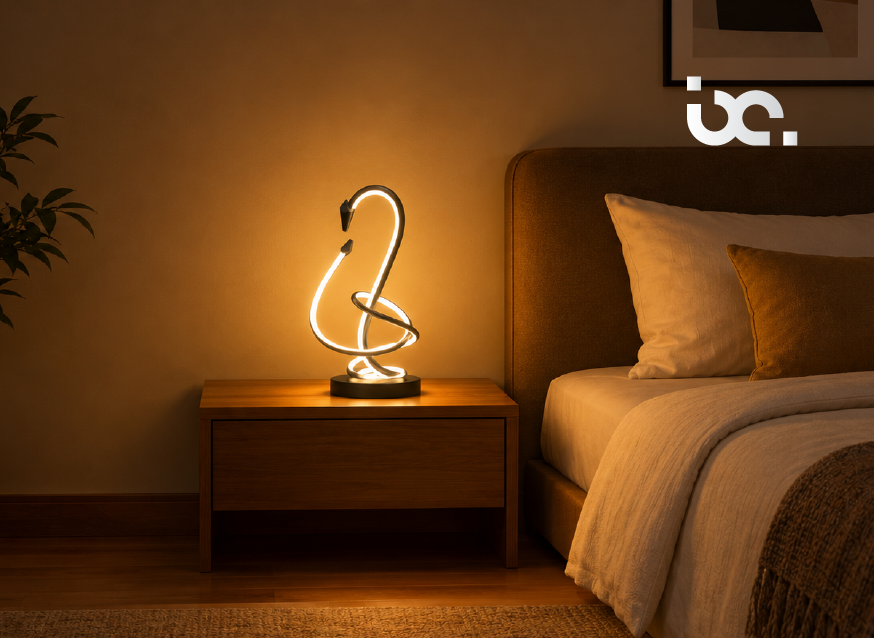
The beauty of handcrafted fixtures lies partly in the details that are difficult to reproduce through purely standardised production.
Skilled craftsmanship allows a design to retain its individuality while receiving careful attention at each stage of fabrication.
Depending on the design, craftsmanship may involve:
Every component needs to work as part of the whole.
This is particularly important for large or sculptural installations, where even small inconsistencies can become noticeable.
Handcrafted does not mean technically casual. In a sophisticated lighting project, craftsmanship and precision should exist together.
One of the most important distinctions in bespoke lighting is that the fixture itself is only part of the design.
The quality of illumination matters just as much.
A designer may determine how the light should spread, where shadows should fall, how bright the source should appear, and whether the illumination should feel direct, diffused, reflected, or concealed.
A fixture can be visually stunning, yet if its light is harsh or poorly controlled, it may compromise the interior.
The design therefore considers both the object and the atmosphere it creates.
The ultimate goal is to ensure that the fixture looks beautiful in daylight and becomes transformative once illuminated.
A bespoke lighting installation often involves several creative and technical perspectives.
Architects understand the structure and spatial intention. Interior designers consider furniture, materials, and atmosphere. Lighting designers focus on illumination, visual hierarchy, and technical performance. Fabricators translate the design into a physical object.
Collaboration helps these perspectives meet.
Throughout the process, a concept may be refined based on practical discoveries or architectural requirements. A mounting point may influence the shape. A ceiling condition may affect the dimensions. A material may behave differently than expected.
These adjustments are not necessarily compromises.
Often, they are what make the final design stronger.
Before a significant installation is completed, elements of the design may need to be tested or reviewed.
This can help assess:
Seeing a design physically can reveal details that are difficult to understand from drawings alone.
Perhaps the fixture needs to be slightly lighter visually. Perhaps the light needs to be softened. Perhaps a particular finish appears different under artificial illumination.
Refinement is part of the creative process.
The final result should not simply match the first sketch. It should represent the strongest version of the original idea.
Once the design is approved, fabrication begins.
This stage requires careful coordination between the design specifications and the practical realities of production.
For complex installations, individual components may need to be fabricated, finished, assembled, tested, and prepared for transportation.
Attention to detail becomes especially important at this stage because the final installation will be experienced from multiple viewpoints.
Edges, joints, finishes, proportions, and connections all contribute to the overall impression.
In luxury lighting design, excellence is often found in the details that most people never consciously notice.
A lighting installation is not complete when the fixture leaves the studio.
The installation itself is an important part of the process.
Large or intricate fixtures may require careful positioning, structural coordination, electrical integration, and on-site adjustment.
The final placement determines how the piece relates to the room.
Height matters. Alignment matters. Distance matters.
Even a beautifully crafted fixture can lose its impact if it is positioned incorrectly. This is why installation should be approached with the same attention as design and fabrication.
Once installed, the lighting is assessed in its actual environment. Adjustments can then be made to ensure the intended visual effect is achieved.
There is a particular satisfaction in seeing a bespoke piece illuminated for the first time.
What began as a conversation or sketch has become part of a real architectural environment.
The materials respond to light. Shadows appear. Reflections change. The room takes on a different rhythm.
This is the moment when the designer lighting installation becomes more than an object.
It becomes an experience.
A successful installation should feel connected to its surroundings without disappearing into them. It should have character without overpowering the architecture.
That balance is where bespoke design becomes truly valuable.
There is something inherently special about an object created specifically for a particular space.
Mass-produced lighting can offer convenience and consistency, but bespoke work provides another level of creative freedom.
A custom piece can respond to:
This individuality is particularly meaningful in luxury interiors, where the goal is often to create environments that feel personal rather than predictable.
Blackcanvas Studio approaches lighting as a combination of design, craftsmanship, technology, and architectural sensitivity.
The studio’s work is not simply about creating attractive fixtures. It is about understanding the relationship between light and space, then developing a solution that belongs naturally within that relationship.
From the first concept to the final installation, each stage contributes to the finished experience.
The result is lighting that has a sense of purpose.
It does not merely occupy a ceiling, wall, or room. It becomes part of the architecture and contributes to the identity of the interior.
A bespoke lighting installation is a lighting piece or system designed specifically for a particular space. Its dimensions, materials, form, finish, and illumination can be developed according to the project’s requirements.
The timeline depends on the complexity of the design, materials, fabrication requirements, approvals, and installation conditions. A simple custom piece may require less time than a large architectural installation.
Yes. Collaboration with architects and design professionals can help ensure that the lighting concept responds closely to the architecture, spatial proportions, materials, and technical requirements of the project.
Absolutely. Handcrafted fixtures can work beautifully in contemporary, minimalist, traditional, and eclectic interiors. Their form and finish can be tailored to complement the project’s aesthetic.
Bespoke lighting is developed around a specific space and design brief rather than selected from predetermined options. This allows greater flexibility in dimensions, materials, finishes, form, and illumination.
Experience radiant guidance tailored to your unique vision.