No products in the cart.


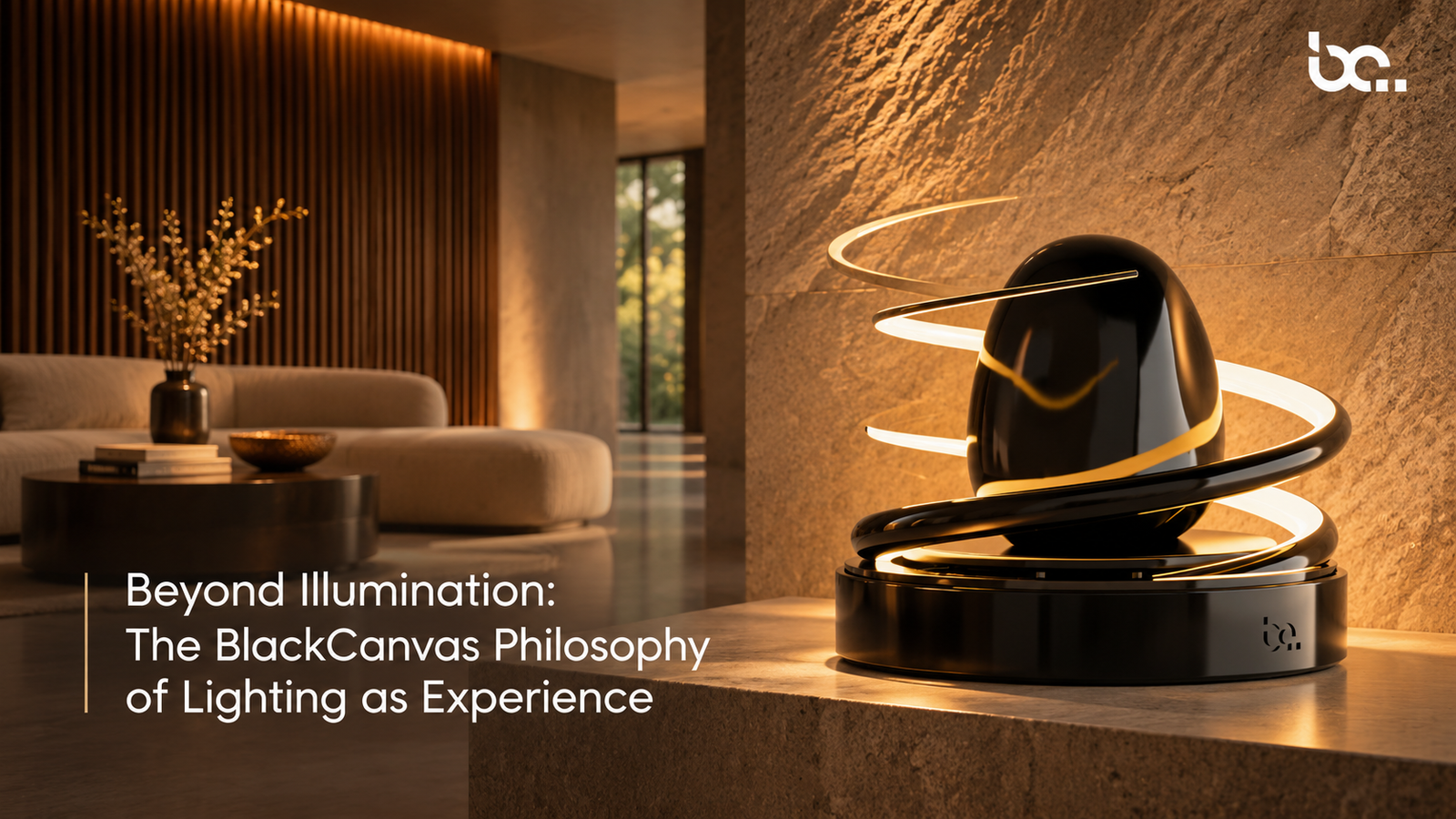
Lighting has the remarkable ability to change how a space looks, feels and is experienced. It can make a room feel intimate or expansive, bring attention to architectural details, and influence the atmosphere without changing a single piece of furniture. Yet, truly considered lighting goes beyond the practical purpose of making a space visible. It becomes part of the experience itself.
At Blackcanvas, this philosophy places experiential lighting design at the centre of how people connect with their surroundings. Rather than treating light as a finishing touch, it is approached as an essential element of interior architecture and artistic expression. Every glow, shadow, reflection and transition contributes to the character of a space.
This perspective transforms lighting from a technical requirement into something more personal. It creates environments that are not simply seen but felt, remembered and experienced.
A well-designed interior is shaped by more than its materials, colours and furnishings. Light determines how these elements come together and how they are perceived throughout the day. The same room can feel warm and welcoming in the evening, fresh and open in the morning, or dramatic when illuminated with carefully positioned accent lighting.
Experiential lighting design considers these changes from the beginning of a project. It looks beyond brightness and focuses on the relationship between illumination, architecture, movement and human emotion.
For example, a softly illuminated corridor can create a sense of anticipation before someone enters a larger room. A pendant light above a dining table can establish an intimate setting, while a sculptural installation in a reception area can become an immediate focal point.
The intention is not to fill every corner with light. It is to give each part of a space a purpose and an atmosphere.
This approach often involves balancing several elements:
When these elements work together, lighting becomes an integral part of the interior experience rather than an independent design feature.
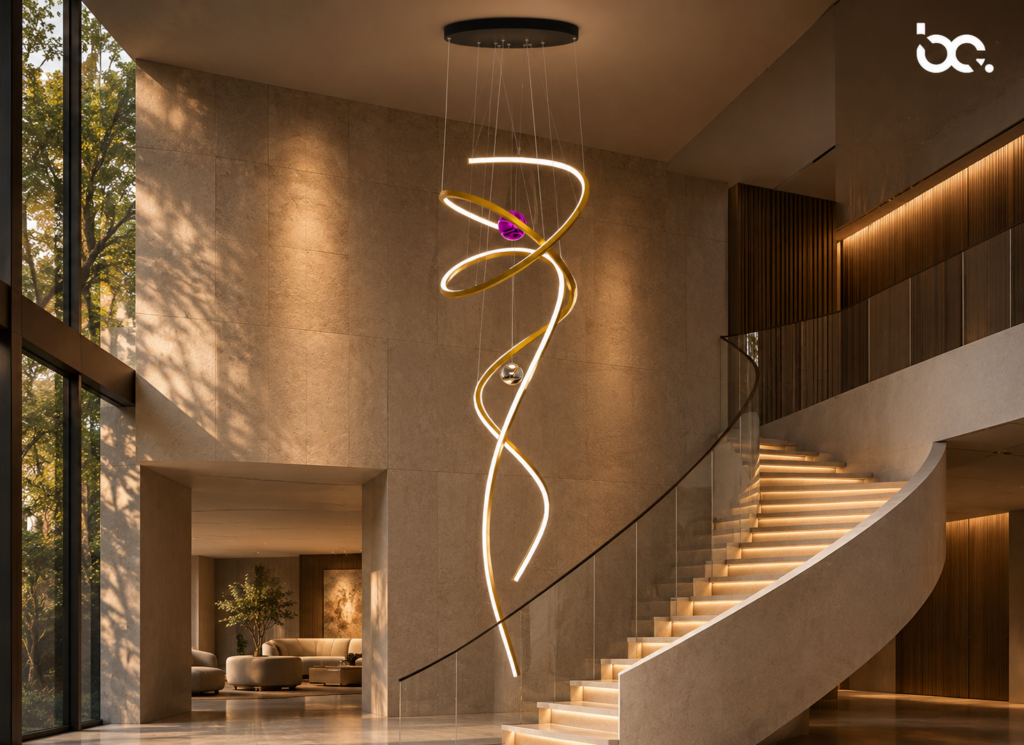
Lighting has evolved into an expressive design medium. Contemporary designers increasingly view luminaires not merely as fixtures but as objects with their own artistic presence.
The idea of lighting as art is particularly relevant in spaces where individuality and craftsmanship matter. A sculptural chandelier, an unconventional wall installation or a carefully composed arrangement of pendant lights can influence the entire visual identity of an interior.
However, artistic lighting does not necessarily need to be extravagant. Sometimes, the most compelling designs are those that make a quiet statement through proportion, material and form.
Consider a minimalist living space with restrained furniture and a neutral palette. A distinctive lighting installation can introduce movement and visual contrast without disturbing the simplicity of the room. Similarly, a custom-made fixture can complement architectural lines while adding an element that feels unique to the property.
Blackcanvas embraces this relationship between illumination and artistic expression. The objective is to create lighting that contributes to the overall design language of a space while retaining its functional purpose.
The result is a more thoughtful relationship between the object, the architecture and the people who experience it.
Interior design is often discussed in visual terms, but the experience of a space involves much more than appearance. People respond to their surroundings through atmosphere, comfort, familiarity and emotion. Light plays a subtle but important role in shaping these responses.
Sensory lighting considers how different qualities of illumination influence the feeling of an environment. The warmth of a light source, the softness of its distribution and the contrast between illuminated and darker areas can all affect the mood of a room.
A hospitality lounge, for instance, may benefit from warm, layered illumination that encourages guests to relax and spend time comfortably. A wellness environment may use softer lighting and gentle transitions to support a calmer atmosphere. In contrast, a gallery may require controlled illumination that directs attention towards individual artworks.
These decisions are not simply aesthetic. They influence how people use and experience space.
Important considerations in sensory lighting include:
Sensory lighting is most successful when it feels natural to the environment. It should support the experience without demanding constant attention.
Some interiors remain memorable long after a visit. It may be the welcoming atmosphere of a hotel lobby, the quiet elegance of a private residence or the intimate character of a restaurant. Often, lighting contributes significantly to that impression.
Emotional design focuses on creating environments that establish a meaningful connection with the people who occupy them. Instead of concentrating only on visual appeal, it considers how a space should make someone feel.
Experiential lighting design supports this approach by giving the atmosphere a deliberate role. A carefully illuminated entrance can create a sense of arrival. Soft lighting around a seating area can encourage conversation, while a dramatic installation can give a public space a distinctive identity.
The relationship between light and emotion is also closely connected to memory. People may not remember the exact placement of every fixture, but they often remember how a particular environment made them feel.
This is especially important in luxury interiors, where the expectation extends beyond expensive finishes or impressive furnishings. A genuinely refined space should offer comfort, character and a sense of belonging.
Lighting can help achieve this through thoughtful details:
The most successful designs do not impose a mood. They create the conditions for people to experience it naturally.
Every architectural space has its own proportions, materials and design requirements. Standard lighting solutions may fulfil basic technical needs, but they do not always capture the individuality of a particular project.
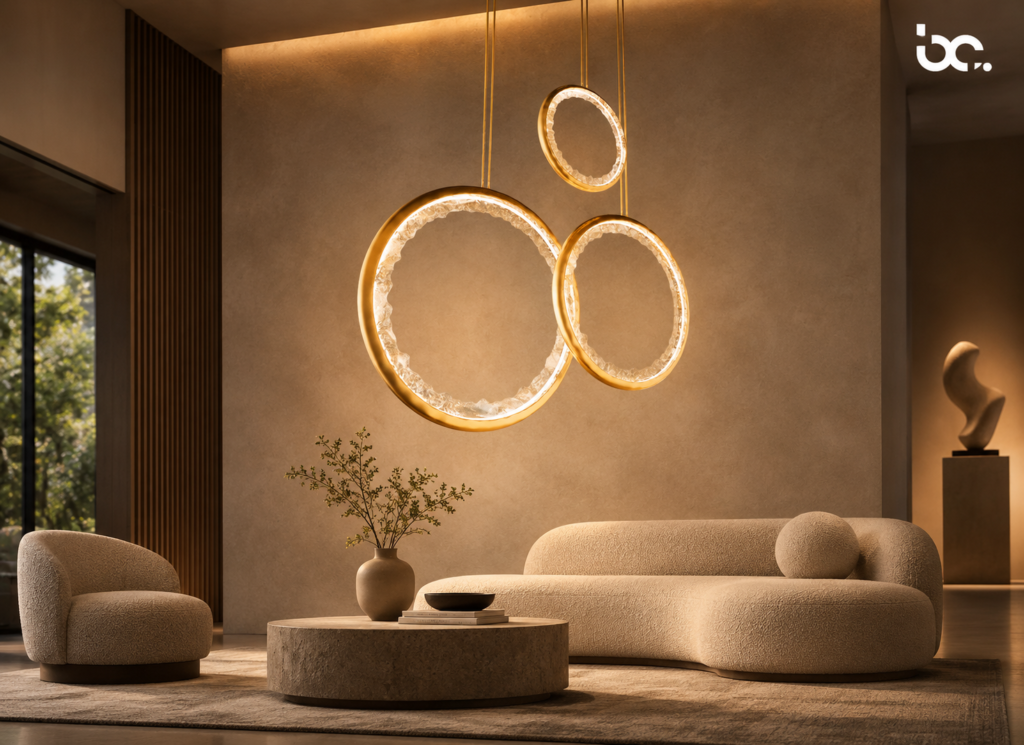
Bespoke lighting offers a more considered alternative. It allows the form, scale, materials and illumination of a fixture to respond to the character of the space rather than forcing the space to accommodate a standard product.
This is particularly valuable in luxury interiors, where details are expected to feel intentional and cohesive.
A custom lighting installation might be designed around a staircase, developed to complement a specific ceiling structure or created as a sculptural centrepiece for a reception area. Its proportions can be adjusted to the architecture, while its materials and finishes can be selected to complement the wider interior palette.
Bespoke lighting can also address practical challenges. Unusual ceiling heights, limited installation points, specific illumination requirements or distinctive architectural features may call for a solution developed specifically for the project.
The process generally involves several considerations:
For Blackcanvas, bespoke lighting represents an opportunity to bring creative vision and practical design together. It allows illumination to become a distinctive part of a project’s identity.
Luxury is often associated with rare materials, exceptional craftsmanship and carefully selected furnishings. However, the atmosphere of a space is equally important. Without thoughtful lighting, even an impressive interior can feel flat or disconnected.
In luxury interiors, illumination should complement the architecture rather than compete with it. It should reveal the character of natural stone, bring out the depth of textured surfaces and allow carefully selected materials to appear as intended.
For example, grazing light can emphasise the texture of a stone wall, while concealed lighting can create a soft architectural glow around ceiling details. A decorative pendant may add a focal point above a dining table, and integrated lighting can make shelving feel more layered and considered.
A successful scheme also recognises that different areas require different experiences. A bedroom may call for gentle, adjustable illumination, whereas a formal living room might combine ambient light with carefully positioned decorative fixtures.
The value lies in the overall composition. Every lighting element should have a reason for being there, whether it contributes to comfort, function, visual interest or architectural expression.
This restraint is often what gives an interior its sense of sophistication.
A space rarely serves only one purpose. A living room may be used for reading, entertaining, relaxing and spending time with family. A hotel lounge may shift from a bright daytime setting to a more intimate evening environment.
Lighting should be able to respond to these changing needs.
Modern lighting controls, dimming systems and programmable scenes make it possible to adjust illumination without altering the physical design. The same arrangement can create different atmospheres depending on the occasion.
For instance, a residential setting might use brighter, balanced illumination for everyday tasks and softer lighting for evening relaxation. In hospitality environments, lighting scenes can support different service periods while maintaining a consistent design identity.
This adaptability is an important part of experiential lighting design. It recognises that a meaningful interior experience is not fixed. It changes with the people, activities and moments that bring the space to life.
The Blackcanvas philosophy places importance on the relationship between creativity, craftsmanship and the experience of a space. Lighting is not considered an isolated decorative addition but a design element that can shape the character of an entire environment.
This means looking at the bigger picture: how a fixture relates to the architecture, how its illumination interacts with surrounding materials, and how the resulting atmosphere supports the purpose of the space.
It also means understanding that refinement often comes from balance. A statement installation should have room to express itself, while more subtle lighting should contribute quietly to the overall composition. Neither approach needs to dominate the other.
By bringing together lighting as art, sensory considerations and bespoke design, Blackcanvas explores possibilities that extend beyond conventional illumination.
The intention is to create lighting experiences that feel considered, distinctive and connected to the spaces they inhabit.
The true potential of lighting lies in its ability to influence more than what people see. It shapes atmosphere, reveals architectural character and creates emotional connections with the spaces people occupy.
Experiential lighting design brings these elements together through a thoughtful combination of function, artistic expression and sensory awareness. It recognises that light can be both practical and expressive, understated and memorable.
Through its philosophy of lighting as experience, Blackcanvas approaches illumination as an essential part of creating distinctive interiors. Whether through a sculptural statement piece, a bespoke installation or a carefully layered lighting scheme, the objective remains the same: to make every interaction with a space feel meaningful.
Because exceptional lighting does not simply illuminate a room. It gives the room its atmosphere, identity and presence.
Experiential lighting design is an approach that considers how illumination influences the atmosphere, appearance and emotional experience of a space. It combines functional, ambient, accent and decorative lighting to create environments that feel purposeful and engaging.
Conventional lighting often focuses primarily on visibility and practical requirements. Experiential lighting considers the wider relationship between light, architecture, materials and human experience. It aims to create a particular atmosphere while still meeting functional needs.
Lighting reveals material details, enhances architectural features and establishes the mood of an interior. In luxury spaces, it helps create a cohesive atmosphere where every design element feels intentional rather than simply decorative.
Sensory lighting refers to illumination designed with attention to how people perceive and respond to their surroundings. Factors such as brightness, colour temperature, contrast and light distribution contribute to visual comfort and the overall atmosphere.
Bespoke lighting allows fixtures to be developed around a project’s specific architectural dimensions, aesthetic direction and functional requirements. It offers greater creative flexibility and helps establish a distinctive identity within an interior.