No products in the cart.


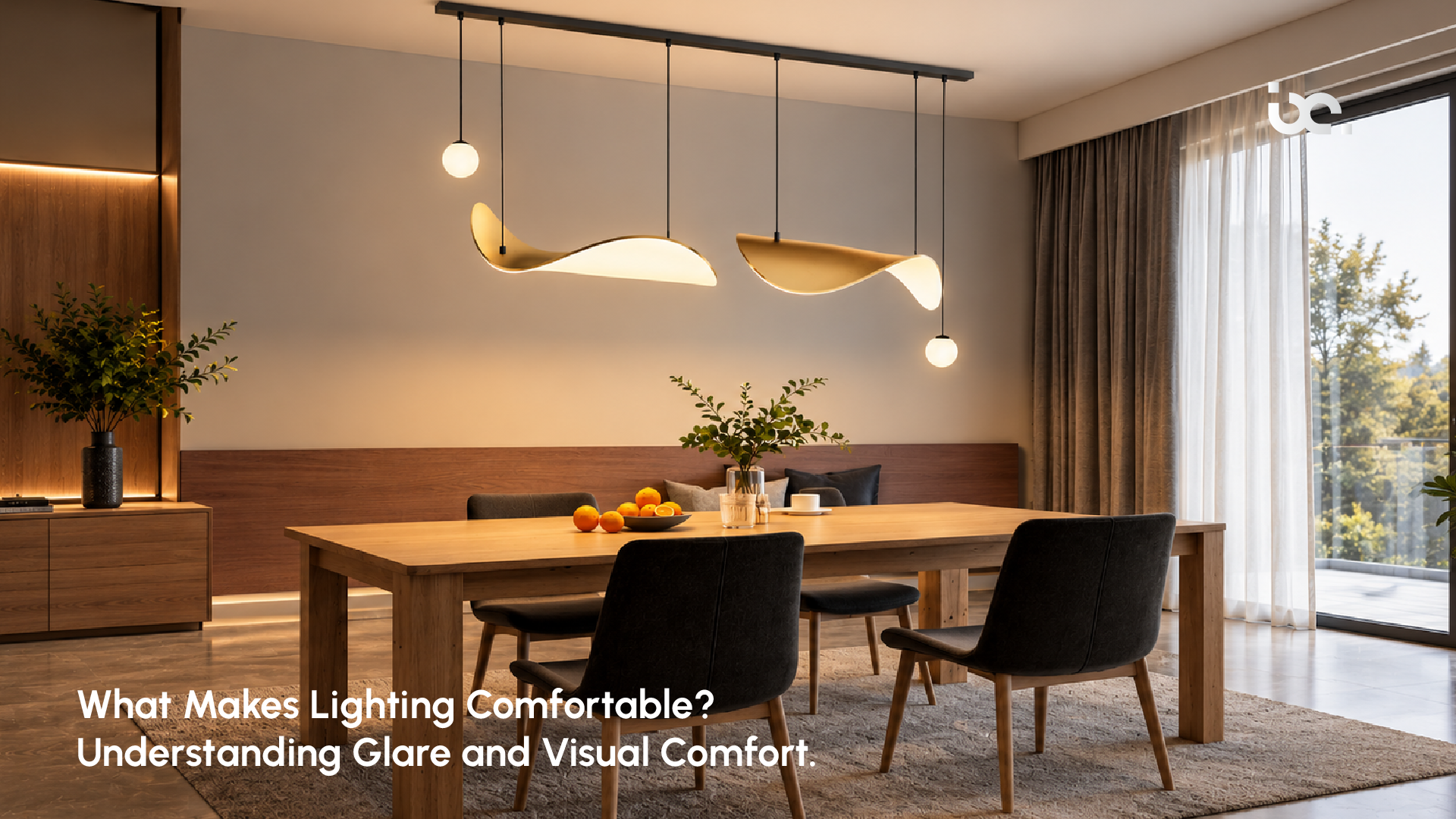
Beautiful lighting is not defined by brightness alone. In a thoughtfully designed interior, light should reveal the character of materials, enhance architectural details, and create an atmosphere that feels effortless to inhabit. Yet even the most elegant space can become uncomfortable when its lighting is poorly balanced.
A pendant that shines directly into the eyes, a reflective surface that creates distracting glare, or a workspace with harsh illumination can diminish the experience of an otherwise exceptional interior.
This is where lighting visual comfort becomes essential. It describes how comfortably people can see, read, work, and move through a space without unnecessary visual strain or distraction. Achieving it requires more than selecting attractive fixtures.
It involves understanding brightness, contrast, light distribution, colour, and the relationship between illumination and the activities performed within a room.
From intimate residential settings to sophisticated hospitality environments, comfortable lighting allows design and functionality to exist in harmony. Understanding the principles behind glare and visual comfort helps create interiors that are not only visually striking but also genuinely pleasant to experience.
Lighting visual comfort refers to the ease with which people perceive their surroundings under a given lighting arrangement. When illumination is comfortable, objects remain clearly visible, important details are easy to distinguish, and the eyes do not have to continually adjust to extreme differences in brightness.
Comfort is influenced by several interconnected factors, including the intensity of light, its direction, the distribution of brightness across a room, and the reflectivity of surrounding materials.
A beautifully illuminated living room, for example, may combine soft ambient lighting with carefully positioned reading lamps and subtle accent illumination. Each source serves a purpose without overwhelming the others. The result feels layered, balanced, and inviting.
By contrast, a room illuminated by a single intensely bright ceiling fixture may produce sharp shadows and excessive contrast. Although the space may appear bright, it might not feel comfortable.
The distinction is important: adequate illumination supports visibility, while thoughtful lighting visual comfort makes that visibility pleasant and practical.
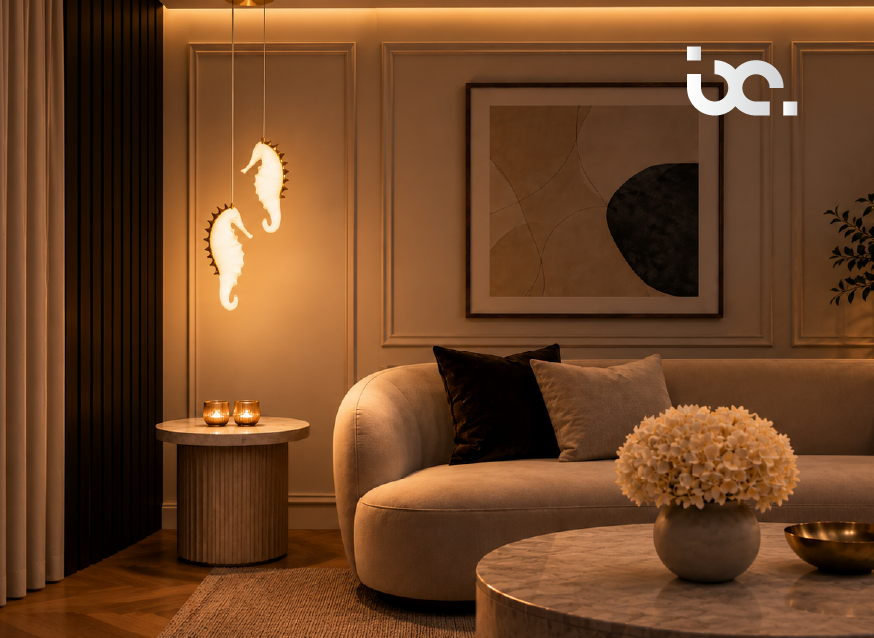
Glare occurs when excessive brightness or strong brightness contrasts interfere with comfortable vision. It can make objects difficult to see, cause discomfort, or distract attention from the task at hand.
Glare is generally discussed in two forms.
Discomfort glare creates an unpleasant visual sensation, even when a person can still see clearly. A bare bulb positioned within the field of view or a powerful downlight directly above a seating area may produce this effect.
The discomfort can become particularly noticeable during prolonged activities such as reading, working at a desk, or watching a screen.
Disability glare reduces the ability to see details because stray light within the eye interferes with visual perception. Bright headlights, intense reflections, or poorly positioned light sources can create this problem.
In interior environments, glare may also arise from glossy surfaces, polished stone, glass partitions, and computer screens.
Both forms deserve attention during lighting design. A fixture should not simply provide sufficient light; it should deliver that light in a way that supports clear, comfortable vision.
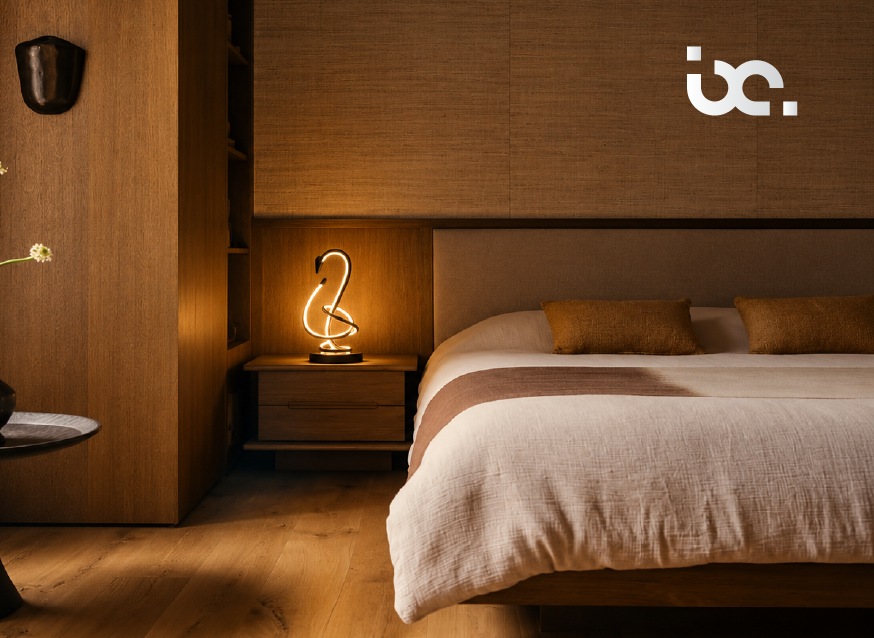
Successful glare control begins with understanding where light originates, how it travels, and where it is likely to reflect. Rather than relying on excessive brightness, designers can create a more refined lighting experience through careful positioning, shielding, and distribution.
Fixtures with diffusers, shades, or suitable optical designs can soften the appearance of a light source and reduce direct exposure to intense brightness.
Opal glass pendants, fabric-shaded table lamps, and well-designed recessed luminaires can provide illumination without making the light source unnecessarily prominent.
However, diffusion alone does not guarantee comfort. A diffuser can still appear excessively bright if the fixture is too powerful or positioned poorly. The overall design must consider both output and viewing angle.
The placement of a luminaire can be as important as its design.
In a reading area, a lamp should illuminate the page without shining directly into the reader’s eyes. At a desk, lighting should minimise shadows from the user’s hands while avoiding reflections on the monitor.
In living rooms, downlights should be positioned with attention to seating arrangements, artwork, and reflective surfaces.
Small adjustments to fixture placement can significantly improve the experience of a room without changing its visual character.
Highly reflective surfaces can create unexpected glare, particularly when bright luminaires are positioned opposite polished finishes or glass.
Designers can address this through considered fixture placement, suitable beam angles, and thoughtful material selection. Matte finishes may be appropriate in areas where reflections interfere with visibility, while glossy surfaces can be retained where their decorative qualities are desirable.
The objective is not to eliminate reflection entirely but to ensure that it contributes to the composition rather than becoming a distraction.
Comfortable lighting rarely depends on a single source. It is usually achieved through a combination of ambient, task, and accent illumination, each contributing to a balanced visual environment.
Ambient lighting establishes the general illumination of a room. It may come from ceiling fixtures, concealed coves, wall lights, or indirect lighting systems.
A well-designed ambient layer provides enough light for movement and everyday activities without creating harsh brightness across the entire space.
In elegant residential interiors, indirect illumination can be particularly effective. Light reflected from ceilings or walls often creates a softer impression than an exposed, intensely bright source, provided the surfaces and light levels are appropriately designed.
Task lighting supports activities that require greater visual precision, including reading, cooking, writing, and grooming.
Desk lamps, under-cabinet kitchen lights, and bedside reading lights are common examples. Their placement should provide adequate illumination at the working surface while minimising shadows and glare.
The required brightness depends on the activity, the user’s visual needs, and the surrounding lighting conditions.
Accent lighting draws attention to selected architectural features, artwork, textures, and decorative objects.
Wall washers, adjustable spotlights, and concealed linear fixtures can create depth and visual interest. However, excessive contrast between accent lighting and the surrounding environment may become uncomfortable.
The most successful approach creates distinction without allowing one illuminated feature to dominate the visual field.
Lighting ergonomics considers how illumination interacts with human vision, posture, activities, and comfort. It encourages designers to think beyond the appearance of a fixture and consider how people actually use a space.
For instance, a kitchen requires clear visibility across worktops, while a bedroom benefits from lighting that can transition from practical activities to a quieter evening atmosphere.
A home office needs enough illumination for sustained concentration, with particular attention to screen reflections and the relationship between the monitor and surrounding brightness.
Several principles help support effective lighting ergonomics:
These principles are especially valuable in spaces used for extended periods. Lighting that feels acceptable for a brief visit may become tiring when someone spends several hours working, reading, or studying under it.
Colour temperature influences how warm or cool a light source appears. It is measured in kelvin, with lower values generally appearing warmer and higher values appearing cooler.
Warm white lighting, often around 2700K to 3000K, is frequently used in bedrooms, lounges, and hospitality settings because it creates a relaxed, intimate atmosphere.
Neutral white lighting may be suitable for kitchens, bathrooms, and work areas where a balanced appearance is desirable. Cooler lighting can serve certain functional environments, although higher colour temperature does not automatically improve visibility or comfort.
The appropriate choice depends on the space, its finishes, the intended atmosphere, and the tasks being performed.
Colour rendering is another important consideration. A light source with good colour rendering helps materials, furnishings, artwork, and skin tones appear closer to their natural colours. This is particularly relevant in interiors where subtle differences between wood, stone, textiles, and paint finishes contribute to the overall design.
Visual comfort also depends on flicker, consistency, and the quality of the lighting equipment. Poorly performing products may create unwanted visual disturbances, even when their colour temperature appears appropriate.
Interior illumination is shaped not only by the fixtures but also by the surfaces receiving the light. Materials determine how illumination is absorbed, reflected, or diffused throughout a space.
Pale walls and ceilings can distribute reflected light effectively, helping a room feel open and balanced. Dark finishes absorb more light and may require carefully positioned supplementary sources.
Polished marble, lacquered cabinetry, metallic finishes, and glass can introduce attractive highlights, but they can also create distracting reflections when the lighting arrangement is poorly considered.
Textured plaster, brushed metals, natural timber, and matte stone often produce more subtle interactions with light. These materials can reveal depth and character without generating excessive reflected brightness.
A considered lighting scheme responds to these properties rather than treating every surface in the same way.
For designers, the relationship between materiality and illumination offers an opportunity to create interiors that feel sophisticated while remaining visually comfortable.
Lighting needs to change throughout the day and according to the activity taking place. Smart controls and dimming systems make it possible to adapt illumination without compromising the design intent.
A living room might require brighter ambient light during cleaning or social gatherings, followed by softer illumination in the evening. A study may benefit from adjustable task lighting, while a bedroom can use separate controls for general illumination and bedside reading.
Useful control options include:
These systems are most effective when they are intuitive to use. Complex controls that are difficult to operate can undermine the convenience they are intended to provide.
Even carefully furnished interiors can feel uncomfortable when lighting decisions are made without considering how the space will be used.
Common mistakes include:
Avoiding these problems early in the design process is generally easier than correcting them after installation.
Lighting visual comfort is an essential part of creating interiors that feel as beautiful as they look. It depends on thoughtful glare control, balanced illumination, suitable colour quality, and an understanding of how people interact with their surroundings.
Through layered lighting, carefully positioned fixtures, appropriate material choices, and flexible controls, designers can create environments that support clear vision without sacrificing atmosphere or architectural expression.
The most successful lighting schemes rarely draw attention to their technical complexity. Instead, they make a room feel naturally welcoming, allow materials to reveal their character, and support everyday activities with quiet precision.
When visual comfort becomes part of the design process from the beginning, lighting moves beyond decoration. It becomes an integral element of a well-considered interior.
Lighting visual comfort describes how easily and pleasantly people can see within an illuminated environment. It depends on factors such as brightness, contrast, glare, light distribution, and the quality of illumination.
Glare can be reduced by positioning fixtures carefully, using suitable diffusers and shades, controlling reflections, and balancing ambient, task, and accent lighting. Dimming and adjustable fixtures can provide additional flexibility.
Warm lighting can create a relaxing atmosphere, particularly in bedrooms and living rooms, but colour temperature alone does not determine eye comfort. Brightness, glare, flicker, contrast, and the intended activity are also important.
Ambient lighting provides general illumination throughout a space, while task lighting concentrates light where specific activities take place. Combining both helps improve visibility without making the entire room excessively bright.
Considering visual comfort from the beginning helps prevent glare, distracting reflections, and poorly illuminated work areas. It also allows lighting, materials, and architectural features to work together in a more balanced and refined way.