No products in the cart.


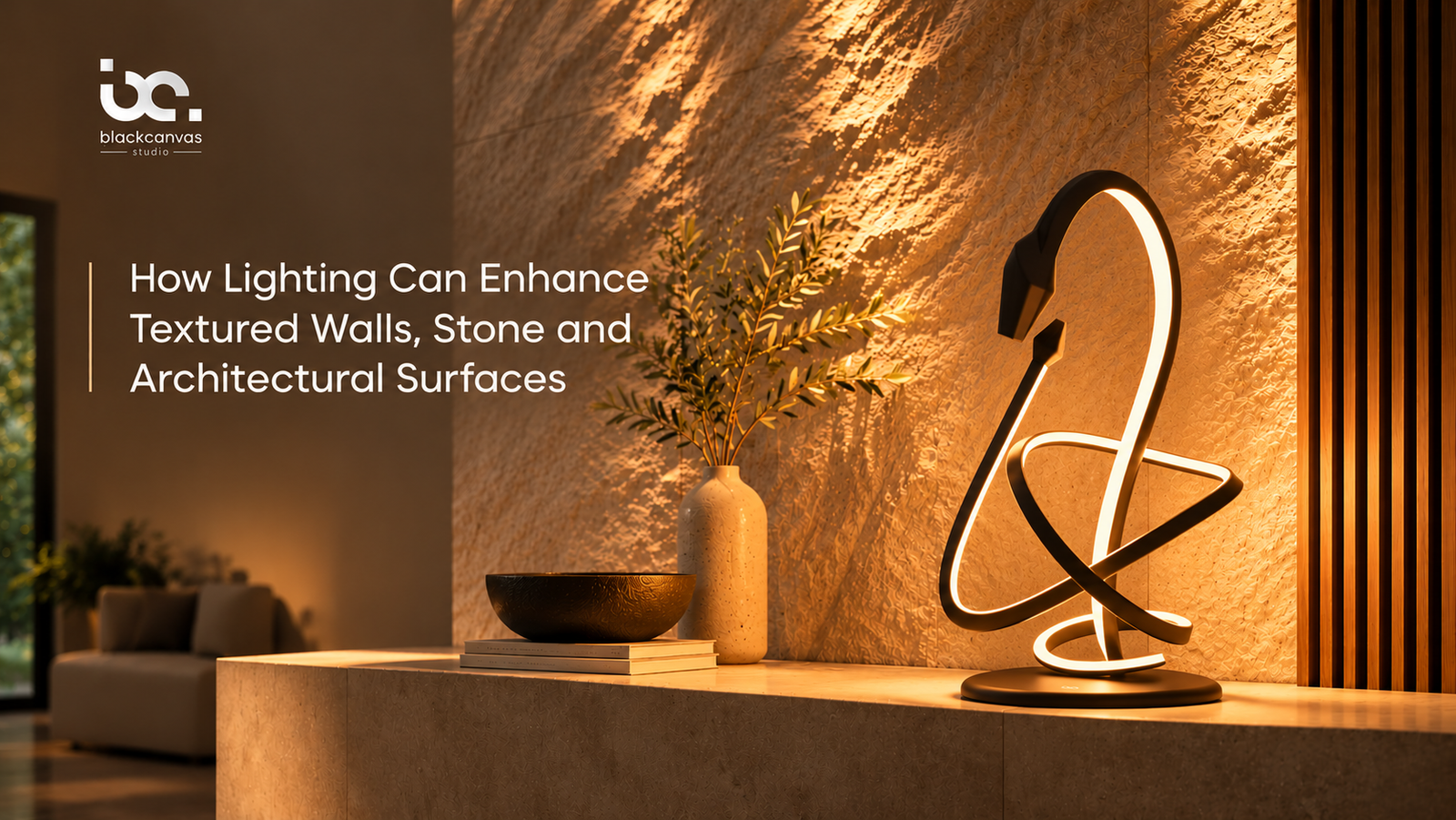
Some of the most memorable interiors are defined not by the objects within them, but by the surfaces that shape the space. A wall of natural stone, a finely fluted panel, a limewash finish, or a sculptural plaster surface can bring depth and individuality to an interior without demanding unnecessary decoration. Yet these materials reveal their full character only when light interacts with them thoughtfully.
Textured wall lighting plays an important role in this relationship between material and illumination. It can emphasise subtle irregularities, reveal the natural variation of stone, and create delicate shadows that change as the viewer moves through a room. A surface that appears understated in daylight can become a striking architectural feature after dark.
In luxury residences, boutique hotels, wellness spaces, and carefully considered commercial interiors, lighting textured surfaces is as much about restraint as it is about visual impact. The objective is not to make every detail prominent, but to reveal the qualities that make each material distinctive.
With the right combination of light direction, intensity, colour temperature, and fixture placement, architectural surfaces can become an integral part of the interior experience.
Lighting does more than make a room visible. It influences how materials are perceived, how architectural details are experienced, and where the eye naturally settles.
Smooth surfaces tend to reflect light relatively evenly, while textured materials create variations in brightness and shadow. These differences can give a wall a greater sense of depth and dimension. Carefully positioned illumination helps designers make use of these qualities without overwhelming the rest of the interior.
Textured wall lighting is particularly valuable when a project features materials with distinctive tactile qualities, including natural stone, exposed brick, decorative plaster, timber panelling, or carved surfaces.
Its benefits include:
The most successful approach begins with understanding the surface itself. A deeply carved stone wall will respond differently to light than a softly textured plaster finish. The lighting should complement these differences rather than treating every wall in the same way.
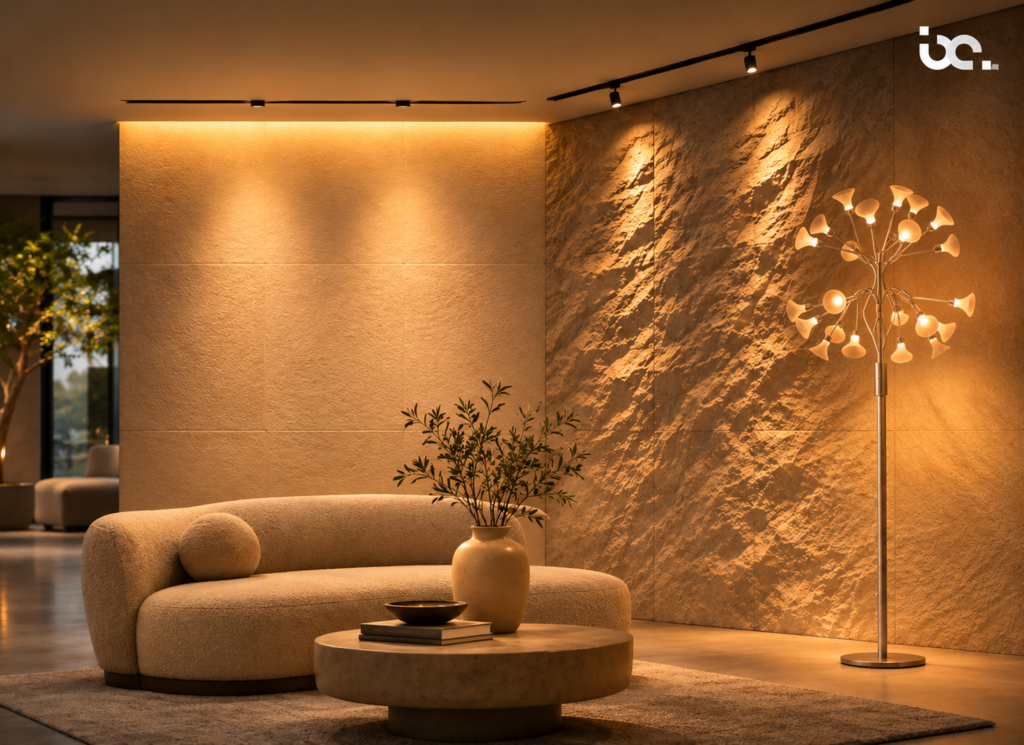
Grazing light is one of the most effective techniques for revealing architectural textures. It involves directing light across a surface at a shallow angle, allowing small variations in depth to create visible highlights and shadows.
Rather than illuminating a wall uniformly from the front, the light travels close to its surface. Raised details catch the illumination, while recessed areas remain comparatively shaded. This contrast gives the material a stronger visual presence.
Grazing light can be particularly effective on:
The technique is most successful when the surface has genuine variation for the light to reveal. On an almost smooth wall, grazing light may expose minor imperfections rather than create the intended architectural effect.
Fixture distance, beam angle, and mounting position should therefore be tested carefully. A light placed too close may produce excessive contrast, while an unsuitable beam can create distracting bright patches.
The objective is a controlled play of light and shadow that allows the material to remain the principal feature.
Stone introduces a particular richness to architectural interiors. Marble, limestone, travertine, slate, and other natural stones possess individual patterns, mineral variations, and surface finishes that cannot be replicated exactly.
Stone wall lighting helps reveal these qualities while establishing the desired mood. However, the best technique depends on whether the stone is polished, honed, split-faced, rough-cut, or carved.
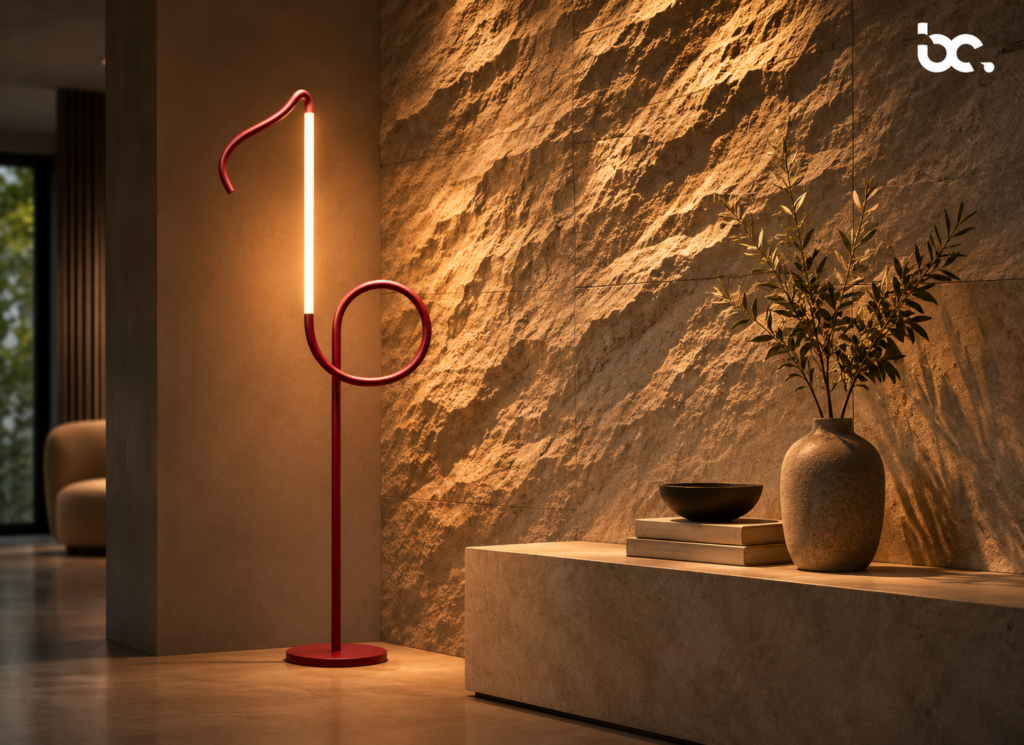
Rough and irregular stone often benefits from directional illumination that reveals its relief. A carefully positioned wall washer or grazing fixture can bring out changes in depth and create a more sculptural appearance.
Polished stone requires a different approach. Because its surface reflects light more strongly, direct illumination can create glare or distracting reflections. Indirect lighting or carefully controlled angles may provide a more refined result.
The stone’s natural colour also deserves attention. Warm illumination can complement beige limestone and earthy finishes, while neutral lighting may help preserve the appearance of cooler grey stone. The appropriate choice depends on the material, surrounding palette, and intended atmosphere.
Before finalising the specification, designers should examine actual stone samples under the proposed lighting. Photographs and showroom displays rarely reproduce the precise appearance of a finish in its eventual setting.
Surface illumination refers to the way light is distributed across a wall or architectural feature. It can be broad and even, deliberately directional, or layered to combine general visibility with more expressive highlights.
For textured materials, the distribution of light is especially important. Uneven illumination may create distracting bright spots, while excessive brightness can flatten the contrast that gives a surface its character.
A considered lighting scheme distinguishes between revealing the wall and illuminating the entire room.
Wall washing distributes light relatively evenly across a surface. It can make a wall appear visually expansive and is useful when the intention is to create a calm backdrop.
Grazing light, by contrast, emphasises surface relief through stronger variations in brightness.
Neither technique is inherently superior. A softly textured wall in a bedroom may benefit from gentle wall washing, while a deeply carved stone feature in a reception area may deserve a more directional treatment.
In some interiors, the two approaches can work together. Broad illumination provides a comfortable visual background, while a carefully positioned accent fixture draws attention to selected architectural details.
This balance allows the interior to feel layered rather than theatrically overlit.
Each material has a different relationship with light. Selecting suitable fixtures begins with identifying the qualities that should be emphasised and those that should remain understated.
Plaster and limewash finishes often feature subtle tonal variations rather than deep physical relief. Soft, carefully distributed illumination can reveal these changes without making every irregularity prominent.
Warm or neutral-white lighting may suit these surfaces, depending on the intended palette. Excessively harsh illumination can exaggerate application marks and create an uneven appearance.
For a restrained residential interior, concealed linear lighting or well-positioned wall washers can provide a gentle wash across the surface.
Fluted timber introduces a repeated pattern of ridges and recesses. Directional light can accentuate this rhythm, creating a sophisticated interplay of light and shadow.
The direction of illumination affects the result. Light travelling across the fluting can emphasise depth, while more frontal illumination may produce a softer and more uniform appearance.
Timber colour, grain, and finish should also influence the lighting choice. A suitable colour temperature can preserve the intended warmth without making the material appear excessively orange.
Exposed brick has a naturally varied surface, with differences in mortar depth, colour, and texture. Grazing light can bring out these qualities and create a sense of authenticity.
However, the irregularity of brickwork can produce strong shadows. Fixture placement should be reviewed at full scale to avoid a pattern that appears too harsh or uneven.
Concrete can appear understated or expressive depending on its finish. Directional illumination may reveal formwork marks, subtle tonal changes, and sculptural relief.
For architectural concrete, the lighting should respect the material’s character rather than attempting to conceal every variation. Controlled contrast often creates a more convincing result than uniform brightness.
Accent illumination gives selected architectural features greater visual emphasis. It can draw attention to a stone wall behind a reception desk, a textured surface in a living room, or a sculptural finish within a hotel corridor.
The purpose is to establish a visual hierarchy. When every surface receives the same intensity of light, important details can lose their distinction. A carefully chosen accent creates contrast and gives the eye a natural point of focus.
Accent illumination works best when coordinated with ambient and task lighting. In a living room, for example, a feature wall may receive directional illumination while seating areas retain softer, comfortable light. In a hospitality setting, accent lighting can distinguish architectural features without compromising circulation or practical visibility.
Dimming can add flexibility, allowing the same surface to appear more prominent during an evening gathering and more understated during other activities.
The key is to create emphasis without visual competition. Light should guide attention naturally rather than make every architectural feature compete for prominence.
The quality of textured wall lighting depends on more than fixture position. Colour temperature, glare control, colour rendering, and dimming performance also influence the final appearance.
Warm-white light often creates an inviting atmosphere and can complement earthy stone, timber, and plaster finishes. Neutral-white light may be appropriate when the design requires a more balanced presentation of cooler materials or when the space has a functional purpose.
However, colour temperature alone does not determine how accurately a material appears. Colour rendering also matters, particularly when subtle differences in stone, paint, or decorative finishes are important.
Glare deserves equal consideration. A fixture that produces an attractive wall effect from one viewing angle may become uncomfortable when seen directly from a sofa, dining table, or corridor.
Designers should consider:
These details help ensure that the wall remains visually engaging without making the room uncomfortable to occupy.
Even high-quality fixtures can produce disappointing results when their placement and optical characteristics are poorly matched to the material.
Common mistakes include:
A practical mock-up can prevent many of these issues. Testing a representative section of the wall allows designers to assess beam spread, shadow depth, fixture visibility, and material appearance before committing to a complete installation.
This process is particularly valuable for bespoke projects, where the finish may be unique and difficult to replace.
Textured wall lighting allows architectural materials to become an expressive part of an interior. Through grazing light, considered surface illumination, and carefully controlled accent illumination, stone, plaster, timber, and other finishes can reveal their depth and individuality.
The most successful schemes begin with the material itself. Its colour, relief, finish, and position within the room should guide the selection of fixtures, beam angles, colour temperature, and intensity. Attention to glare and visual comfort ensures that the resulting effect remains elegant rather than overwhelming.
In luxury interiors, the finest lighting solutions rarely depend on brightness alone. They rely on precision, restraint, and a clear understanding of how light interacts with architecture. When these elements are thoughtfully coordinated, even a simple wall can become a lasting feature of the interior experience.
Textured wall lighting is a lighting approach designed to reveal the depth, pattern, and material qualities of architectural surfaces. It commonly uses directional or carefully distributed illumination to emphasise texture and create visual interest.
Grazing light directs illumination across a surface at a shallow angle, creating highlights and shadows that reveal physical relief. It is often used on stone, brick, fluted panels, and textured plaster.
Neither is universally better. Wall washing creates a more even appearance, while grazing light emphasises surface texture. The right choice depends on the material, the intended visual effect, and the surrounding lighting scheme.
The best option depends on the stone’s finish and texture. Rough stone may benefit from carefully controlled grazing light, while polished stone often requires attention to reflections and glare. Testing samples under the intended fixtures helps establish the most suitable approach.
Designers can adjust fixture distance, mounting position, beam angle, and intensity. Testing a sample area before installation helps identify excessive contrast, unwanted bright spots, and distracting shadows.